You are viewing 1 of your 1 free articles
What I hope to achieve as a mayor of London design advocate
Design is increasingly expected to do more heavy lifting, mediating between policy intent, delivery reality and long-term outcomes, writes Yẹmí Aládérun, head of development at Ealing Council and a mayor of London design advocate



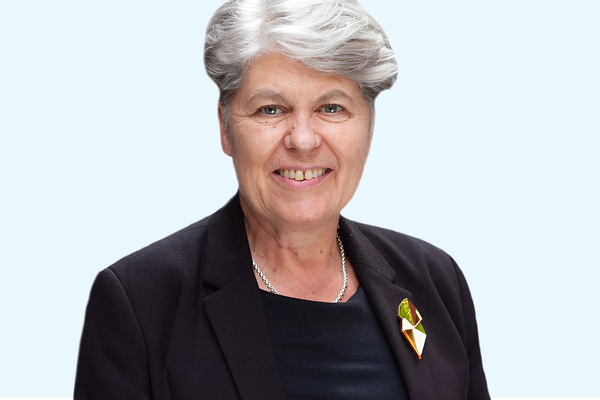
Yẹmí Aládérun is head of development at Ealing Council, and Mayor’s design advocates at the Greater London Authority
 Design is increasingly expected to do more heavy lifting, mediating between policy intent, delivery reality and long-term outcomes, writes Yẹmí Aládérun, head of development at Ealing Council and a Mayor of London design advocate #UKhousing
Housing and planning have been operating under sustained policy pressure for some time. Rapid reform is no longer exceptional.
What has been destabilising is the absence of certainty. Policy continues to evolve quickly, but with overlapping national and regional signals, shifting guidance and unresolved funding assumptions, delivery is left navigating ambiguity rather than direction.
For those tasked with turning policy into homes, this uncertainty is no longer background noise. It is a material issue.
It is in this context that the latest appointments of the mayor’s design advocates should be understood: not as a response to a sudden spike in ambition but as part of a longer arc in which design is increasingly expected to do more heavy lifting – mediating between policy intent, delivery reality and long-term outcomes for Londoners.
The mayor’s design advocates are a cohort of independent experts appointed to support the Good Growth by Design programme, bringing external challenge into the heart of London’s planning and development ecosystem. The role is about embedding design excellence across policy, planning and major projects as an operational expectation, ensuring that good growth delivers places that are inclusive, sustainable and capable of standing up to long-term social, environmental and economic scrutiny.
Read more
Recent months have seen the launch of the Warm Homes Plan, a restructured National Planning Policy Framework being absorbed across the sector, new national design guidance raising expectations for development and the New London Plan beginning to take shape. Alongside this sits a growing body of Good Growth by Design guidance already issued by the Greater London Authority.
There is no shortage of direction. The question is whether the system is equipped, financially, institutionally and politically, to act on it with consistency.
This is where the mayor’s design advocate role must be clear-eyed and purposeful. Design advocacy today cannot be about aspiration without consequence. It must engage directly with delivery, viability and economics, because projects that are not viable do not get built, no matter how well aligned they are with policy.
“Viability is too often treated as a settled position, with design expected to adjust around it”
Public sector leadership is not missing from this picture. Across London, councils and public bodies are taking on more risk, more responsibility and more direct delivery than at any point in a generation.
That leadership must continue to rise. It needs to be confident enough to insist on quality, while grounded enough to confront the financial realities shaping what is deliverable.
No one seriously argues that design solves viability. The issue is that viability is too often treated as a settled position, with design expected to adjust around it. When this happens, design becomes residual rather than strategic, and opportunities to reduce long-term cost, improve performance and avoid future liabilities are lost. Design leadership must therefore sit alongside funding, delivery and investment decisions from the outset.
Design leadership also needs to engage more directly with how homes are actually built. There is a clear opportunity for designers to work more closely with contractors and manufacturers to remove unnecessary complexity, improve build-ability and increase the speed of delivery.
Greater standardisation and economies of scale are not the enemy of good design. Much of what drives cost and programme sits in elements that are never seen once a building is complete. If affordability and scale are genuinely the objective, design leadership must be confident in championing more industrialised approaches that simplify delivery without sacrificing quality or character.
“Design advocacy has to test how policy lands on real sites, in real markets and with real funding constraints, interrogating schemes early rather than once options have narrowed”
This is where the Making Social Rent Homes Viable report is so important. Its analysis is blunt and evidence-led: social rent homes, at current rent levels, do not pay their way, even on free land and over long-term horizons.
The report estimates that delivering 90,000 social rent homes a year would require around £18.8bn of subsidy annually. While the government’s £39bn Social and Affordable Homes Programme represents the largest long-term investment in a generation, when analysed on an annual basis it still falls well short of what is required to deliver social rent at scale. Section 106 and cross-subsidy both do help, but sustained government support remains essential.
Why does this matter for design advocacy? Because design is often where these tensions surface first. Density, space standards, environmental performance and long-term adaptability are precisely the areas that come under pressure when viability is tight. Without a shared understanding of the economics, design standards risk being framed as obstacles rather than safeguards.
The Warm Homes Plan sharpens this further. Energy performance, retrofit readiness and operational cost are now central to affordability and resilience. Poorly designed homes simply displace cost onto residents, councils and the NHS. In this context, design is long-term fiscal responsibility.
The same applies to the forthcoming London Plan. Design advocacy has to test how policy lands on real sites, in real markets and with real funding constraints, interrogating schemes early rather than once options have narrowed.
Good growth is not about maximalism. It is about precision. We know what ‘good’ looks like. We increasingly understand what it costs. The challenge now is aligning the two and having the discipline and support to follow through.
Yẹmí Aládérun, head of development, Ealing Council and Mayor of London design advocate, Greater London Authority
Sign up to Inside Housing’s Development and Finance newsletter
Sign up to Inside Housing’s weekly Development and Finance newsletter, featuring a round-up of business, development and regeneration news and analysis.
Click here to register and receive the Development and Finance newsletter straight to your inbox.
And subscribe to Inside Housing by clicking here.
Already have an account? Click here to manage your newsletters.
Related stories