You are viewing 1 of your 1 free articles
Nature is not a retrofit: rethinking how Britain builds its new towns
We must see nature not as a decoration, but rather a structure that can shape the delivery of new towns, writes Kate Vincent, technical director of ecology and biodiversity at SLR Consulting


 We must see nature not as a decoration, but rather a structure that can shape the delivery of new towns, writes Kate Vincent, technical director of ecology and biodiversity at SLR Consulting #UKhousing
For decades, housebuilding has relied on a comforting fiction: that nature can be added later, once the “real” work of planning is complete. A park here, a buffer there, a spreadsheet promising biodiversity net gain (BNG) at the end. That approach no longer holds.
The next generation of new towns will be delivered in a context defined by climate volatility, biodiversity loss, strained public finances and growing scrutiny of long-term value. At the same time, we face a severe shortfall in social housing, with more than 1.3 million households in England on the social housing waiting list – a worrying rise of more than 10% in the last two years.
In that context, nature isn’t an amenity, an embellishment or a constraint to manage. Nature is the structure.
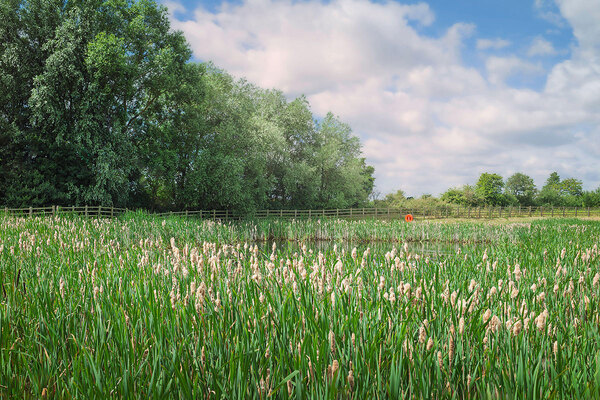
Most masterplans still follow the same sequence. Land uses are fixed. Highways are threaded through. Parcels are drawn. Only then does ecology arrive, tasked with making the plan work.
This choreography guarantees conflict: biodiversity versus density, drainage versus viability, green space versus programme. Ecology becomes a problem to solve rather than a system to design with.
This alternative isn’t radical – it’s simply inverted. This is something the integrated place team at SLR has been advocating and delivering for many years.
“Early ecological integration clarifies where density, infrastructure and amenity can coexist efficiently, reducing the risk of costly revisions later”
When landscape, water, soils and habitats form the first layer of a plan, they stop competing with development and start shaping it. Green and blue corridors define movement, topography and hydrology determine where density belongs. Retained habitats anchor neighbourhood identity and open space ceases to be residual land and instead becomes connective tissue.
At the scale of a new town, this creates a logic people can feel even if they can’t articulate it. Residents sense coherence in movement, views and neighbourhood character because the land itself sets the pattern. This in turn creates more desirable places that people actively choose to live in, and as a result creates enduring value for developers.
Early ecological integration clarifies where density, infrastructure and amenity can coexist efficiently, reducing the risk of costly revisions later. What may appear to be slower upfront planning often accelerates delivery overall by preventing abortive layouts and late-stage negotiations, strengthening the case for investment.
Government policy increasingly aligns with this thinking. The new towns agenda emphasises infrastructure, services, stewardship and environmental outcomes alongside housing numbers.
BNG often generates anxiety in development because it’s treated as a late-stage metric hurdle. If used properly, it does the opposite. When baseline surveys and habitat mapping are undertaken at the outset, they inform smarter density decisions and reduce reliance on remote offsetting.
Treating nature as primary infrastructure also reframes viability. For social housing residents, who are more likely to be exposed to poor air quality, overheating and limited access to private gardens, the quality and proximity of shared green space is not a luxury but a determinant of health and well-being.
“A town planned from the landscape outward isn’t anti-growth – it’s pro-quality, pro-certainty and pro-value”
Climate resilience is already influencing land value, insurance and long-term stewardship. New towns that rely primarily on engineered systems to manage water, heat and drought will struggle to adapt. Instead, what’s needed is a landscape-led design that integrates natural landscapes into urban planning. This approach is inherently flexible as healthy soils absorb water, shaded streets cool neighbourhoods and connected habitats evolve over time in ways rigid systems can’t.
The human dimension is often underplayed. When nature shapes neighbourhood character rather than sitting at the edges, it becomes part of how people move, meet and belong.
One persistent myth is that early ecology delays programmes when, in reality, desk studies, walkovers and early habitat mapping reduce uncertainty, which prevents abortive layouts and avoids last-minute redesigns that derail timelines and budgets.
When ecology, landscape, drainage and urban design work together from the start, schemes progress with confidence rather than caution. Programme certainty improves and costs become more predictable. Speed isn’t about doing less; it’s about doing things in the right order.
A town planned from the landscape outward isn’t anti-growth – it’s pro-quality, pro-certainty and pro-value. It creates places that continue to function ecologically, socially and commercially, decades later.
The challenge is cultural, not technical. We must stop asking how much nature a scheme can afford and start asking what kind of place the land itself can sustain. Some retrofit interventions work, but they will always have compromises.
Because the uncomfortable truth is this: you can’t retrofit a living place.
If the ambition is to build new towns that genuinely address the housing crisis then one principle must guide delivery from the start: nature comes first, or the place will never fully work.
Kate Vincent, technical director of ecology and biodiversity, SLR Consulting
Sign up to Inside Housing’s Sustainability newsletter
Sign up to Inside Housing’s weekly Sustainability newsletter, featuring our in-depth coverage of the sector’s journey to delivering net zero.
Already have an account? Click here to manage your newsletters.
Related stories