You are viewing 1 of your 1 free articles
New towns funding could be prioritised across two waves, top official says
Funding for new towns could be split into two waves, with the most promising settlements to receive grant earlier, a top civil servant has said.


 New towns funding could be prioritised across two waves, top official says #UKhousingFunding for new towns could be split into two waves, with the most promising settlements to receive grant earlier, a top civil servant has said #UKhousing
Joanna Key, director general of regeneration, housing and planning at the Ministry of Housing, Communities and Local Government, said that cash for new towns could be staggered to avoid being spread too thin.
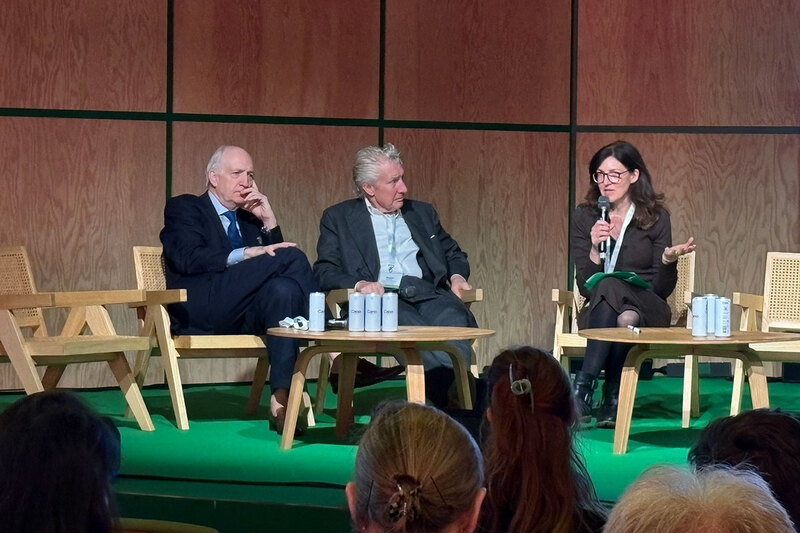
“There might be a wave one and a wave two, as it were, with the new towns,” she told a panel at the Urban Land Institute UK conference in London on Wednesday 11 February.
“That means that it might be a small number, maybe three [new towns]… that sort of order. And then you might have a second wave with some others in it as well.
“I think we can be quite definite in the summer about that phasing point.”
Read more

Last year, the independent New Towns Taskforce recommended 12 locations to the government for potential new towns. Ministers will confirm the locations that will be progressed as new towns this summer.
The government has pledged to begin building in at least three new towns in this parliament and said that sites at Tempsford in Bedfordshire, Crews Hill in Enfield and Leeds South Bank look the “most promising”.
Ms Key explained that funding for the new towns would not be released in one go.
She said: “Putting a huge amount of government support and investment in 12 places, I think it would be spread very thin, essentially. And I don’t think that would give us the outcomes that we want. So I think there will need to be some choices and priorities made.”
Ms Key continued: “The government has started to try and do that when it pointed to Leeds South Bank, Tempsford and Crews Hill as being particularly promising on the basis of the evidence we have before us.
“That’s not saying it’s the final decision on those three places, but I think it’s an indication of the direction of travel.”
She added that all 12 of the taskforce’s recommended places are “incredibly exciting and promising”.
Nigel Hugill, chief executive of master developer Urban & Civic, was also on the conference panel. “It’s encouraging for me because two of the 12 [new towns] we are directly involved in,” he said, referring to Tempsford and Milton Keynes, which were both recommended by the taskforce.
Urban & Civic acquired the option to build 15,000 homes in Tempsford in 2019. This means that when the company actually buys the land – which it will once the government finalises its plans – it will pay 2019 prices.
The master developer is also drawing up plans with house builder Taylor Wimpey to build up to 21,500 homes to the north of Milton Keynes.
Mr Hugill said that one of the core challenges of the new towns programme is working out how they will be financed.
“The previous new town programme was one where they were really quite value generative,” he said. “Famously, Harlow paid back at 14% interest rates over 17 years.
“But at that time the water company was Thames Water… The electricity company was London Electricity Board. The roads were built by the Department of Transport. And there was a bit of money given over from each ministerial department to fund it in the first instance.”
Mr Hugill added: “There is no ducking the fact that [with new towns], it’s what we call a hockey stick in terms of returns.
“They’re not very good at IRR [internal rate of return]. What they are good at… is cash on cash. So they produce good returns ultimately, but not strong outright.
“That takes out all of the closed-end funds. So there’s a much more limited pool of institutional capital than perhaps people realise.”
He added that calls for land value capture to improve viability for development “ignores the amount of Section 106 payments that are already in the system”.
“We have 20 schemes. As those progressively come through, that would be £2bn of Section 106 contributions,” he said.
Ms Key said that MHCLG is looking at different funding models for the new towns, from “full-fat development corporations” to more informal joint ventures. She added that “a different approach will be appropriate in different places”.
In terms of financing, she agreed that “there will need to be some government funding”, including “a bit of upfront grant” and the National Housing Bank, which will be able to “come together with investors to do joint financing”.
Sign up to Inside Housing’s Development and Finance newsletter
Sign up to Inside Housing’s weekly Development and Finance newsletter, featuring a round-up of business, development and regeneration news and analysis.
Click here to register and receive the Development and Finance newsletter straight to your inbox.
And subscribe to Inside Housing by clicking here.
Already have an account? Click here to manage your newsletters.
Related stories