You are viewing 1 of your 1 free articles
Alison Inman’s CIH Presidential Dinner speech: full text
Below is the full text of the speech given by Alison Inman at the Chartered Institute of Housing (CIH) Presidential Dinner in London tonight


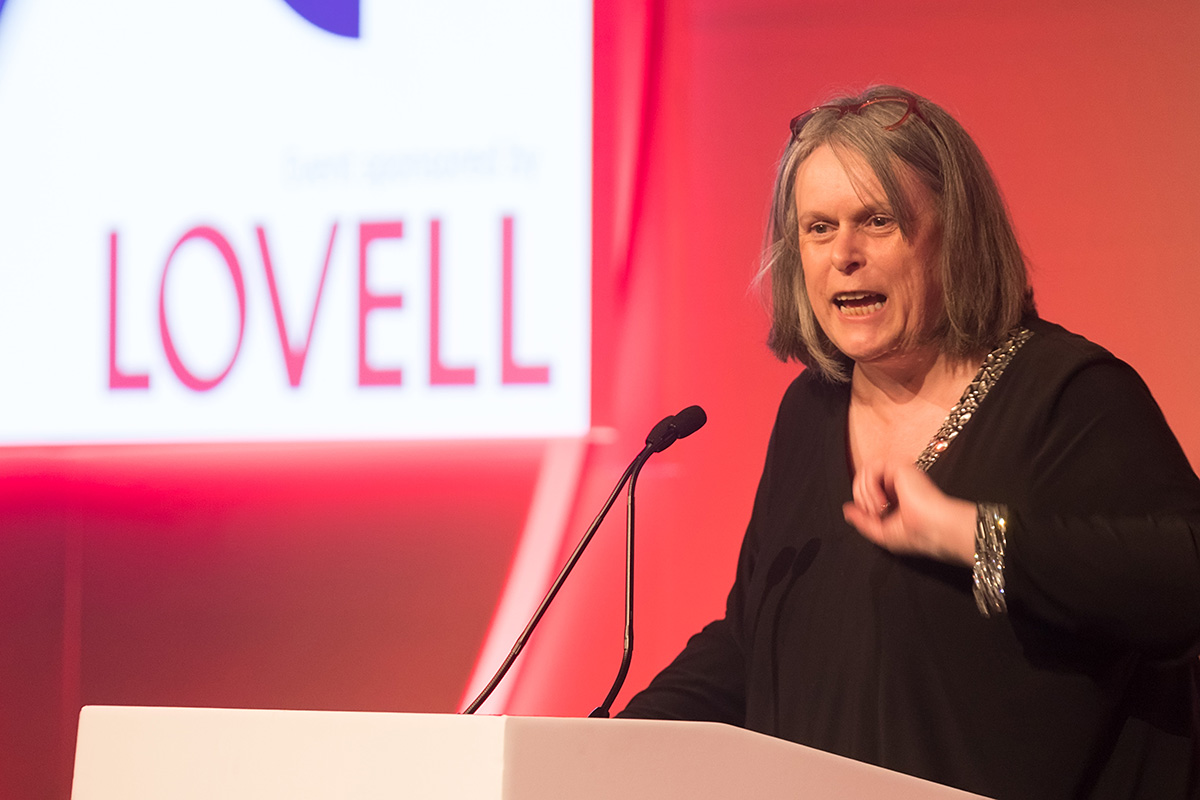 Full text of @alison_inman speech to the @CIHhousing Presidential Dinner #ukhousing
“Good evening everyone and thank you for being here tonight.
It’s tradition for the president to open this speech by talking through all of the major events of the last year, but I’d need a lot more than my allotted time to do that. And a wise man once said to me, never get in the way of a roomful of people and their dinner, so I won’t.
Change has become the norm in housing and the last year has been no exception.
In fact, since my predecessor Julie Fadden stood on this stage we’ve had a snap general election, three housing ministers in England, a notable shift in the UK government’s approach to housing and a raft of new policy measures to get our heads around.
But that’s not the only change.
The tragedy at Grenfell Tower has changed the way that we do things forever.
We must never forget that first and foremost Grenfell was a human tragedy.
For the families and friends of those who lost loved ones, for the survivors, and for the wider community, things will never be the same. And they should never be the same for us either.
We must do everything within our power to ensure a tragedy on this scale can never happen again.
And every member of our profession has a role to play.
Some of the change we have seen over the last year has been positive though.
There is an abiding feeling that the time for housing is now.
Read more
That we are beginning to have a proper conversation with government about the central role that we can play to build the right homes, in the right places, that people can afford.
So it does feel as though we enter 2018 with fresh optimism.
And tonight I want to talk about how I think this is the year in which we can make real progress, and how CIH can work with you to make that a reality.
Aileen Evans, the chief executive of Grand Union Housing and a great friend of CIH, said to me recently:
‘I want to build great homes. But only so people can live great lives.’
And I think that perfectly captures the challenge which lies ahead of us all.
How do we respond to the ever-changing landscape, build more homes and at the same time retain our sense of purpose?
Well, for a start, we need to remember that however we respond to these challenges, we are here to work with and within communities.
And we are here to help people lead the lives they want to lead.
‘With great power comes great responsibility.’
Some of you will recognise that quote from Spiderman.
And it’s a sentiment that is absolutely relevant for us.
Because although it doesn’t always feel like it, as a sector we do have the capacity to make a massive difference.
We work with people to build communities.
We support individuals and families within those communities, including some of the most vulnerable and marginalised people of all.
We help to create places from which people can thrive.
And we provide the vital support that turns a unit into a home.
But with all of that comes huge responsibility.
Responsibility to listen to the people we help and to respond.
Responsibility to make sure that we are building the right homes in the right places and providing great services.
And responsibility to continue to help people who need our support the most.
It’s all too easy to lose sight of that bigger picture, isn’t it?
To get sucked into a world of units, voids and arrears and lose our sense of what we are really talking about.
I don’t know about you, but I don’t live in a unit.
I live in a home.
And a home is not just a place in which we live. It’s a place from which we thrive.
It’s the foundation of our ability to live healthy, happy lives.
Wherever we are and whatever we do, it’s the place we always end up.
Everyone deserves to have that same security and same opportunity.
And I ask you, what could possibly be more important than that?
Many of us here tonight are lucky enough that most of our treasured memories will be in our homes.
But for too many people this is not the reality.
Today, too many people face a constant battle to afford their home.
Rising house prices and rents in many parts of the country have left many people with no option but to rent in an increasingly expensive private sector, where in the worst-hit areas they are now spending more than half of their wages on the cost of their housing.
Too many people live in poor and overcrowded conditions, with no real protection.
And far too many people sleep on our streets.
“The fact thousands of people live on our streets today is quite simply a national disgrace.”
And on that last point let me say this: the fact thousands of people live on our streets today is quite simply a national disgrace.
We’ve tackled homelessness before and we can do it again.
The Homelessness Reduction Act is a good start, but we now need to make sure the organisations tasked with delivering the new duties get the support and resources they need to protect more people.
And we need the government to think much more strategically about the relationship between affordable housing supply, welfare policy and homelessness if we are really going to tackle this problem.
We need action on this issue, and we need it now.
One of the things that makes me most proud to be CIH president is the fact that we continue to be a voice on all of these issues.
In the last year alone, across England, Wales, Scotland and Northern Ireland our policy teams have been able to highlight the awful consequences of the lack of affordable housing, the harsh impact of welfare policies like Universal Credit, the benefit cap and the LHA [Local Housing Allowance] cap, the need to drive up standards in the private rented sector and much more.
Not all of our work is visible. Not all of it is research that we publish. But I can tell you, because I see it every day – wherever you are in the UK, CIH is constantly working to give you and the people you help a voice.
We have been pleased to see significant progress in some areas, in particular the fact that the UK government has made housing its top domestic priority.
But of course, we still need more – much more – if we’re going to solve the housing challenges which lie ahead.
If we’re going to meet the ambitious target to build 300,000 new homes a year in England, we need more support so that everyone can play a part. That means SME builders, local authorities, ALMOs and housing associations.
Of course, it isn’t just about building new homes though; crucially, it’s about building homes that people can afford.
We need to find a way to plug the huge affordability gap in our housing market that leaves so many people with no options.
And for many people there is only one option that is truly affordable: homes offered at social rents.
Having long been a leading voice on this issue, we have been pleased to see the government recognise the need to build many more of these homes.
Elsewhere, after joining many others in opposing the LHA cap for social housing we were delighted to see this threat to supported housing providers and the people they support scrapped.
But we’ve still go so far to go.
Just this month our research revealed that in England we lost 150,000 social rented homes between 2012 and 2017. And we project that between 2012 and 2020 we will lose 230,000 mostly as a result of Right to Buy and conversions to higher rents.
That is a huge concern and a stark reminder of the need for significant new investment in the cheapest rented homes – and, indeed, for us to take a look at whether we are really making the most of our existing homes.
It’s even more worrying that our recent analysis revealed that of the £53bn earmarked for housing by the UK government until 2020/21, just 21% will directly support the building of new affordable housing.
And even though the scrapping of the LHA cap for supported housing is a positive, there are still serious concerns about the proposed funding arrangement for short-term providers of emergency accommodation, like my presidential charity Women’s Aid, which we will continue to scrutinise.
So, despite the positives, there is a still a significant gap between the government’s rhetoric on housing and the policy reality.
That’s why in 2018 we’ll be conducting new research which allows us to work with the government and provide a constructive challenge on behalf of our members.
In fact, we feel in the aftermath of the Grenfell tragedy and at this crucial time for housing, we need to ask some fundamental questions about the role and purpose of social housing itself. And we think the housing profession should lead that debate.
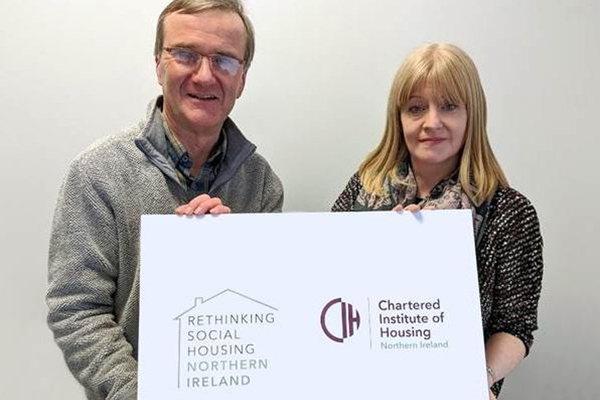
That is why in late 2017 we launched our Rethinking Social Housing project.
“There is a still a significant gap between the government’s rhetoric on housing and the policy reality.”
Working together with housing organisations from across the sector, the project is about getting to the heart of the role of social housing today.
We want you to join that debate by encouraging your teams, tenants and residents and anyone else you work with to share their views by taking part in one of our new workshops.
Anyone can take part and we have developed an online toolkit which is free to download.
You can find more information about the project and how you can get involved in your table guides and on our website.
For the same reason an understanding of our purpose and our contribution to society is important at this crucial time, we need to challenge ourselves to be the best housing professionals that we can be.
The Grenfell Tower tragedy thrust social housing into the spotlight like never before.
It has focused on the need for us to make sure that we have the skills, training and knowledge to fulfil our hugely important role.
And that is why CIH is here.
We’re here to help you to make a difference every day.
This year we’re giving our members more value than ever before.
We’ve committed to giving housing professionals more knowledge and expertise to excel in their roles – introducing new and improved content on our Knowledge Hub to make it the go-to source of housing information and support.
We’re introducing a new series of free training courses focused on core skills.
Meanwhile our events continue to provide a crucial opportunity for housing professionals to come together and explore how to respond to the unique challenges they face, wherever they are in the UK.
And we’re working in partnership with more housing organisations than ever before – providing training, qualifications and a raft of other services to help them to meet their priorities.
Recognising the need to bring through the next generation of housing talent, we recently introduced a new concessionary rate for under-30s.
And our professional standards team has been busy working with organisations to help them make the most of the changes to housing apprenticeships to bring through new talent.
So being a member of the CIH community, of your professional body, gives you more than it ever has.
And at times like this that really matters.
“CIH Futures has produced real results.”
It has never been more important to be part of something bigger… a place to learn and debate together, to inspire one another and to exert our collective influence.
We’re delighted to continue to extend our work across the UK, where a crucial understanding of the unique landscape in each country helps our teams to make a very real impact.
And we continue to expand further afield in Ireland, Canada, China and Hong Kong.
I want to say a few words now about a group of people who really embody the drive and determination to push our sector forward that I’ve just been talking about – the CIH Futures group.
We established this group of passionate young CIH members in 2017 to challenge our perception of our work and our understanding of the reality facing housing professionals today.
And their contribution has been, quite simply, outstanding.
CIH Futures has produced real results – helping us to shape our new membership recruitment campaign, starting up the superb Human Library series on Instagram, being a vital sounding board for our new services and helping us to reach new audiences.
I’m delighted that we’re setting up similar groups across the UK. Our Housing Futures Cymru group is already having a big impact in Wales, and we’re recruiting in Northern Ireland, too.
It’s this energy, drive, determination and ambition to be better and to help others to be better, which is typical of the work I have seen from CIH members wherever I have gone.
And I want to take this opportunity to thank everyone that supports our work.
To everyone who works for CIH.
To everyone who represents us on our regional and devolved boards.
To our new members joining us for the first time.
To the loyal CIH members who are retiring this year.
To everyone else who is an ambassador for housing’s professional body.
And to everyone who works with us.
Ultimately, without your buy-in for the work that we do, we couldn’t do it.
So thank you.
I said earlier that for many people, home is a sanctuary: a place of safety and security.
Sadly, for the millions of victims of domestic abuse across the UK, home is anything but safe.
The response I have had since choosing to raise awareness of domestic abuse and to support Women’s Aid has been overwhelming.
We know a limited amount about domestic abuse because so much of it goes unreported. But according to a survey conducted in 2016; more than four million women reported that they had experienced domestic abuse at some point since the age of 16.
Two women are killed every week by their partner or ex-partner in England and Wales and even with the low rates of reporting, domestic violence makes up a tenth of all reported crime – with police receiving an average of 100 calls an hour.
There is no doubt at all that this is one of the biggest issues facing our society today. And it happens to everyone.
So where do we come in?
Well the answer is simple – everyone lives in a home.
Even based on the domestic abuse we know about we can assume that everyone in this room is housing or employing someone who is, or has been, a victim.
Since I announced I would be raising awareness of this issue, not a week has gone by without someone revealing to me that they have been affected.
We can, and we should, all play a central role in tackling this problem.
“There is no doubt at all that domestic abuse is one of the biggest issues facing our society today.”
Let’s be honest – we don’t talk about this issue anywhere near as much as we should in society, and we certainly don’t in the housing sector.
Well it’s time we did.
I want to start conversations and I want to do all I can to help us to do more to tackle this problem.
I’m delighted that Jim Strang, my brilliant vice-president, has chosen to continue to support the same cause during his presidency.
That means we have two years to make a real difference.
And I challenge you all to look at your own organisation and ask yourself: ‘Could I do more?’
I want to praise a few people for doing exactly this, and taking action which has helped thousands of people.
First I want to pay tribute to a great champion of domestic abuse victims who died last year.
Carl Sargeant was the Welsh housing minister and did more than any man I have ever met to tackle violence against women and girls. His dedication to fighting domestic abuse was passionate, real and borne out of his own very personal experience. He will be greatly missed and remembered for his tireless efforts on this issue.
I also want to pay tribute to the work of the Domestic Abuse Housing Alliance [DAHA].
Much like our own history, DAHA came about because a group of women saw a gap and made it their mission to fill it. We can all learn from their example and I urge you to go away and look up the work that DAHA does.
And I also want to praise the brilliant work of my presidential charity Women’s Aid, which continues to lead the fight for domestic abuse victims.
You’ll be hearing from Katie Ghose, Women’s Aid’s chief executive, very shortly. And I hope that you can give generously this evening in the envelopes on your table and in our auction.
I’d like to thank all of our sponsors this evening, particularly our headline sponsor Lovell.
And finally, I want to pay one last tribute.
And it’s to you.
Because, the simple fact is – there is just no substitute for good people doing great work.
No substitute for housing professionals who believe in their power to make the world a better place and go out and play their part in making it happen every day.
No substitute for what you do.
We believe passionately in our role in helping you do that.
We are proud to be a voice for you.
We’re proud to help you be the best you can be.
And we will never stop working to help you make a difference.
Thank you for listening and enjoy the rest of your evening.
Alison Inman, president, Chartered Institute of Housing
Related stories