Defender of the earth
Sir Simon Jenkins won major changes to the national planning policy framework as chair of the National Trust. But is he also the enemy of social housing? Martin Hilditch finds out


Source: Julian Anderson
Sir Simon Jenkins might be charming but, boy, does he like a good scrap.
Today, as he leans back in his chair, letting his relaxed, stately tones fill the room, it’s easy to forget that over the past year he has been one of the leading figureheads of a fearsome - and stunningly successful - attack on the government’s proposals for planning reform.
We’re sitting in an upmarket terraced property in Queen Anne’s Gate, London - a stone’s throw from Buckingham Palace - which houses the National Trust, the organisation Sir Simon chairs.
Perfectly preserved himself, the 69-year-old fits right in among the bookcases, cabinets and cornices. One day his picture will slot neatly in place alongside those of previous National Trust chairs, like the Earl of Antrim and the Marquis of Zetland, which hang in the building’s reception area.
Anti-development stance
But if you thought the National Trust was all about tea and scones and country houses, think again. Its vociferous campaign against the coalition’s draft national planning policy framework was a painful thorn in the government’s side and prompted major changes to the final document.
The trust disliked the draft’s presumption that planning permission should be granted to ‘sustainable’ development and its removal of previous emphasis on building on brownfield land. Sir Simon, a journalist by trade and a former editor of both The Times and London Evening Standard, was one of the most public faces of the fight. He deployed his newspaper columns - he currently writes for The Guardian and the Evening Standard - like hand grenades, decrying the government’s ‘wretched capitulation’ to the development lobby. His television and radio appearances included a polite but brutal destruction of planning minister Greg Clark on BBC2’s Newsnight.
It wasn’t just the government that the trust rattled, however. Weeks before I meet Sir Simon, a senior figure in the social housing sector tells me that the National Trust is one of the biggest threats in the UK to the building of new affordable homes.
So does Sir Simon agree with this assessment? And does he think it’s possible to square the trust’s stance on development with any realistic attempt to build the new homes that are desperately needed to end the UK’s housing crisis?
He certainly takes a no-nonsense approach to answering the first question. As a former board member of a housing association - although this is in the distant past - he is no stranger to the sector. But the trust has a very different remit, he states.
‘The social housing sector is part of the housing lobby,’ he says. ‘As far as the trust is concerned, we are not social workers - we are about conserving the landscape.’
Social housing providers are heavily dependent on private developers to build the homes they need, he goes on, suggesting this means that conflict with the trust is inevitable.
‘The mere statement “the loss of open space” is regarded by the private housing sector as a menace and a threat because they hate building on brownfield sites. They hate building on complex urban developments. They want fields,’ he says. ‘And we want to protect fields - there’s no argument about that. The fact that the social housing sector is an adjunct now of that lobby, clearly puts it in contention with us.’
When it came down to the NPPF, the trust certainly had a very successful war. With the backing of The Daily Telegraph’s Hands off our Land campaign, the trust was barely out of the news in the latter half of 2011. The final document, published earlier this year, contained significant changes, including a much bigger emphasis on local planning and making the use of brownfield land one of 12 ‘planning principles’. Kate Henderson, chief executive of the Town and Country Planning Association, says the trust’s effectiveness was partly due to its ‘very broad and very large public membership’ - it has 4 million members nationally.
Ms Henderson adds that Sir Simon was a key part of that fight because he was ‘very effective in the media’.
‘He understands how to communicate passionately but also in a newsworthy way,’ she says.
Long-term heritage
The last point is evident again today. Sir Simon, who emphasises time and time again his love of the beautiful things in life, doesn’t deal in ugly sentences. Whether you agree or disagree with him, his arguments are always perfectly formed. They are also well-rehearsed: he has been campaigning on many of the issues we talk about today for the past 40 years. A founder member of Save Britain’s Heritage back in the late 1970s, his career history also includes a stint as deputy chair of English Heritage in the 1980s.
His interest in heritage dates back to the start of his journalistic career, rather than childhood. ‘My parents were perfectly civilised but they weren’t particularly interested in this topic,’ he says.

The good………………….
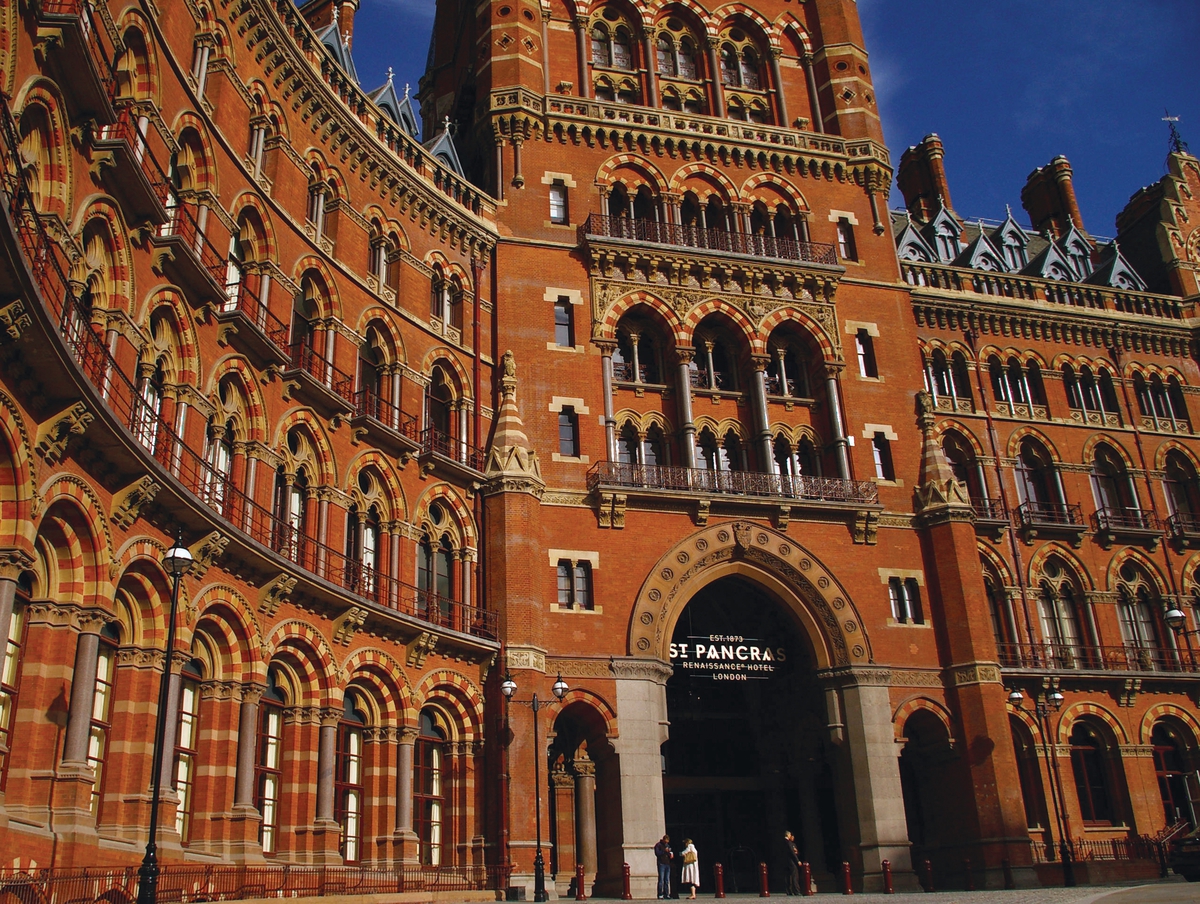
‘[My interest] arose through my work as a journalist and I was part of a group that was campaigning to save substantial areas of London’s historic buildings in the 1970s, when the threat was just massive. The whole of Whitehall was going, Carlton House Terrace, Mayfair, Covent Garden. You have to think what London would have been like if it hadn’t been for those campaigns, because the conventional wisdom was that they should be demolished.’ The newly revamped King’s Cross and St Pancras stations provide another good example of regeneration with conservation at its heart, he suggests.

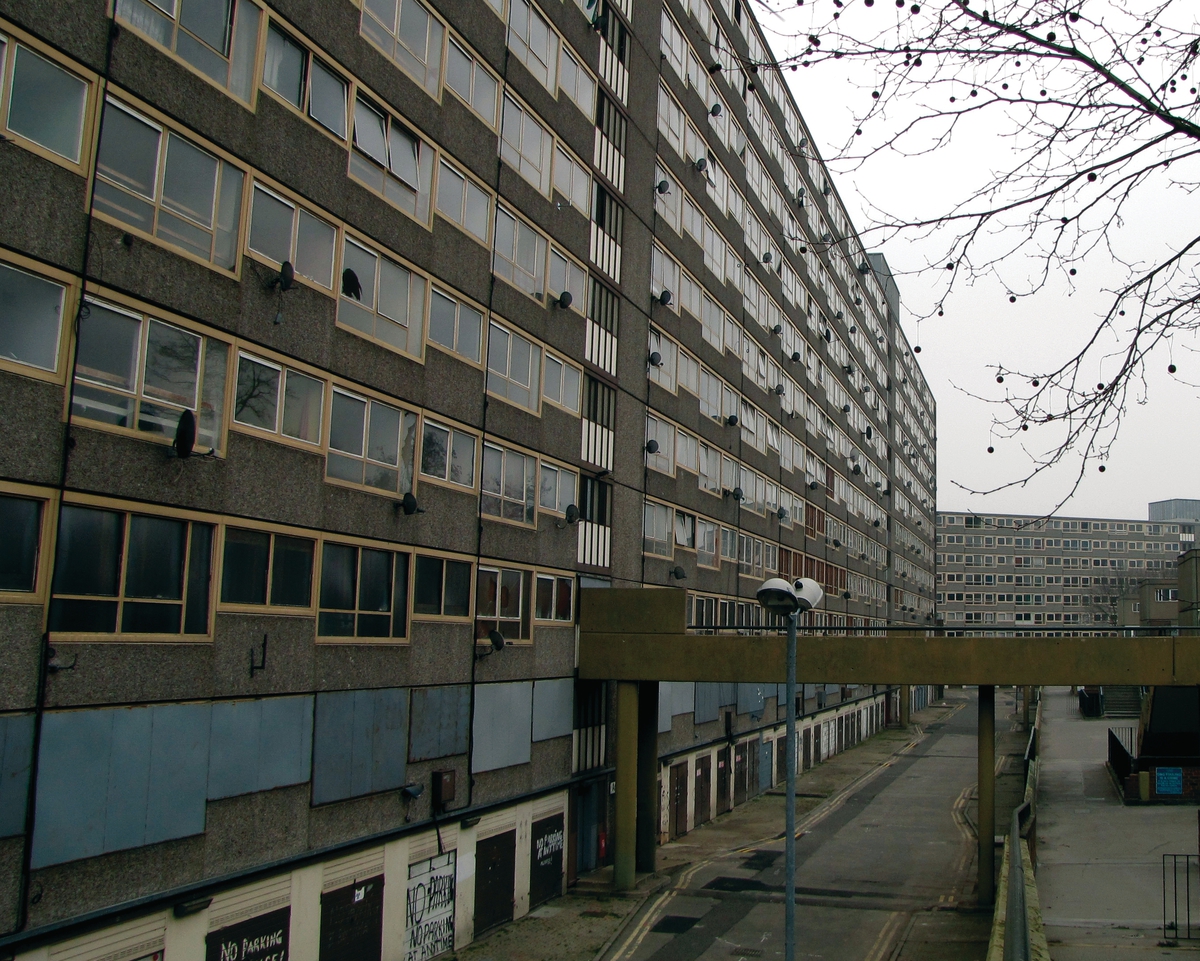
…………and the bad. Sir Simon says: St Pancras was worth saving. Southwark’s Heygate estate isn’t.
The recent campaign against the NPPF follows in this ‘perfectly reputable tradition’, he suggests.
So does he think that the final NPPF marked a major victory for the trust? The final document, he says, must be seen in the context of the draft, which was ‘just dreadful - on any showing’.
‘Even if I was the most flagrant free marketeer, I would have said this was a pretty dreadful way of proceeding,’ he adds. ‘It was virtually unusable. All I can tell you is what planning lawyers told me, which is that any planning lawyer worth his salt can make any building sustainable.’
Legal battles over what counted - or did not count - as sustainable development, would have been the inevitable result, he states. ‘Sustainable’ is certainly a word that Sir Simon has a big issue with.
‘It’s like the renewables thing,’ he says. ‘I mean what is “renewables”? There is nothing renewable about a wind turbine that has got components that have to be mined in Mongolia. These are weasel words. I try never to use the word sustainable.’
The new NPPF, on the other hand, is ‘reasonable’, Sir Simon says, because it re-establishes the importance of planning, rather than emphasising the need for development.
Is the trust’s campaign a sign, however, that it is an enemy of house building? Not so, Sir Simon states. He admits that he has no problem with nimbys - ‘everyone’s a nimby’ - but says that a workable planning system will see more homes built, not fewer.
‘The National Trust is seriously in favour of smart growth,’ he states. ‘Smart growth is building houses where people are, where infrastructure is, where roads, hospitals, sewers, transport are available or are a relatively low cost to provide. That is in towns.’
But it would be wrong to suggest that the trust’s utopia would never see any homes built on green space, he adds.
‘Although a meadow in Haringey is a meadow, it is usually just full of dead dogs,’ he states. ‘It is ridiculous to say because it is green belt that it can’t be built over.’
Ideally, Sir Simon would prefer to list the countryside ‘like we list buildings’, making aesthetic judgements about land in advance. A-grades would be awarded to national parks and Bs to areas of outstanding natural beauty, and would be incredibly difficult to build on. Beyond this, however, ‘there is a sizeable chunk of the countryside I would put into E and F’, he adds. This, he feels, would ‘release more land for development than is ever likely to be released under this document [the NPPF]’.
‘Everyone likes a field,’ he states. ‘But there are lots of fields where you just have to say “well, I’m sorry but I think housing of whatever sort is needed in this area. This is a good place to have it”.’
Largely, he implies, this will mean increasing densities in existing settlements. ‘Britain is totally exceptional [in Europe] in the low density of its urban living,’ he adds. ‘I don’t know how many politicians I’ve heard say that you’ve got a right to a house with a garden. It is just not true. It just eats up countryside.’
In some areas, however, Sir Simon is a remarkably destructive conservationist. He has little sympathy, for instance, with the brutalist architecture of the 1960s and 70s.
‘The problem with the Heygate and Aylesbury [estates], down in Southwark, is they were just terrible places,’ he states. ‘They were cruel at housing and I’ve got no sympathy with cruel housing. They were built by architects eager for glory and…’ he pauses, possibly fighting his inner conservationist, before finally adding ‘pull them down’.
Sir Simon on…
Social housing
‘We are aware of the strength of feeling locally [in the National Trust’s villages] that there should be social housing. I must admit I’ve never fully understood the argument. People want local housing for their children. Why should that be a privileged group? In London, I can’t go round Kensington and Chelsea and say “I want a house for my son”, however destitute he is. They would just laugh in my face.’
The garden city movement
‘It is just code for the developers. You know they want to build in the countryside because that is where the money is. Matter closed. It is nothing to do with planning.’
Accusations he has helped ‘Disney-fy’ the National Trust
‘I’m totally unrepentant. Disney World has extremely good visitor experiences. Anyone in this business who can’t learn from Disney is an idiot. Disney is very good at smiling.’

Related stories