You are viewing 1 of your 1 free articles
Elizabeth Froude: why I’m leaving Platform Housing for England’s biggest for-profit
Platform chief executive Elizabeth Froude reflects on six years in the role and tells James Riding about her next job as boss of Sage Homes – and why she keeps her email address accessible to residents


 Elizabeth Froude on six years at Platform and her next job as boss of Sage Homes #UKhousing
When Sage Homes, England’s biggest for-profit affordable housing provider, needed a new chief executive, it turned not to the private sector but to the housing association world.
More specifically, Sage chose Elizabeth Froude for the job, meaning she is leaving her position of chief executive at Platform Housing Group. This says a lot about how for-profit providers are maturing and what sort of organisation Sage wants to be in the medium term. In short: a good landlord.
Inside Housing met Ms Froude to discuss her transformation of Platform over the past six years and what attracted her to Sage, which she will join in early 2026. She also reflected on the way AI is transforming housing management and how she stays in touch with her residents.
Read more

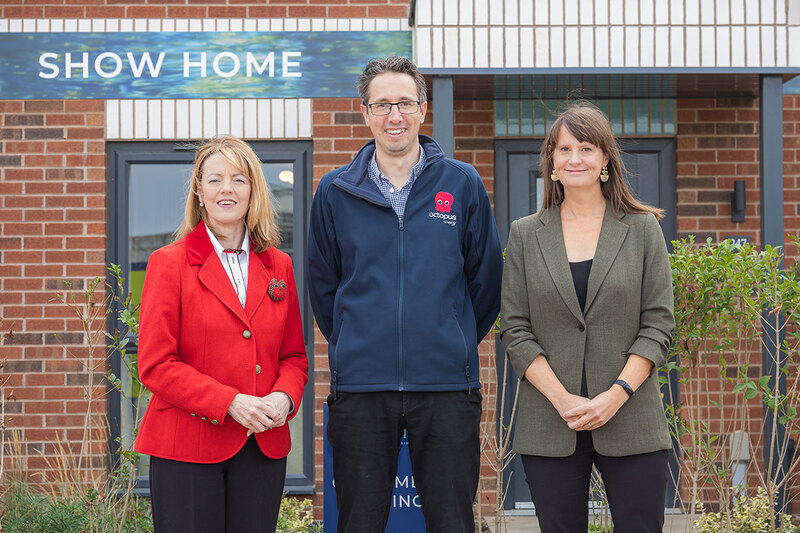
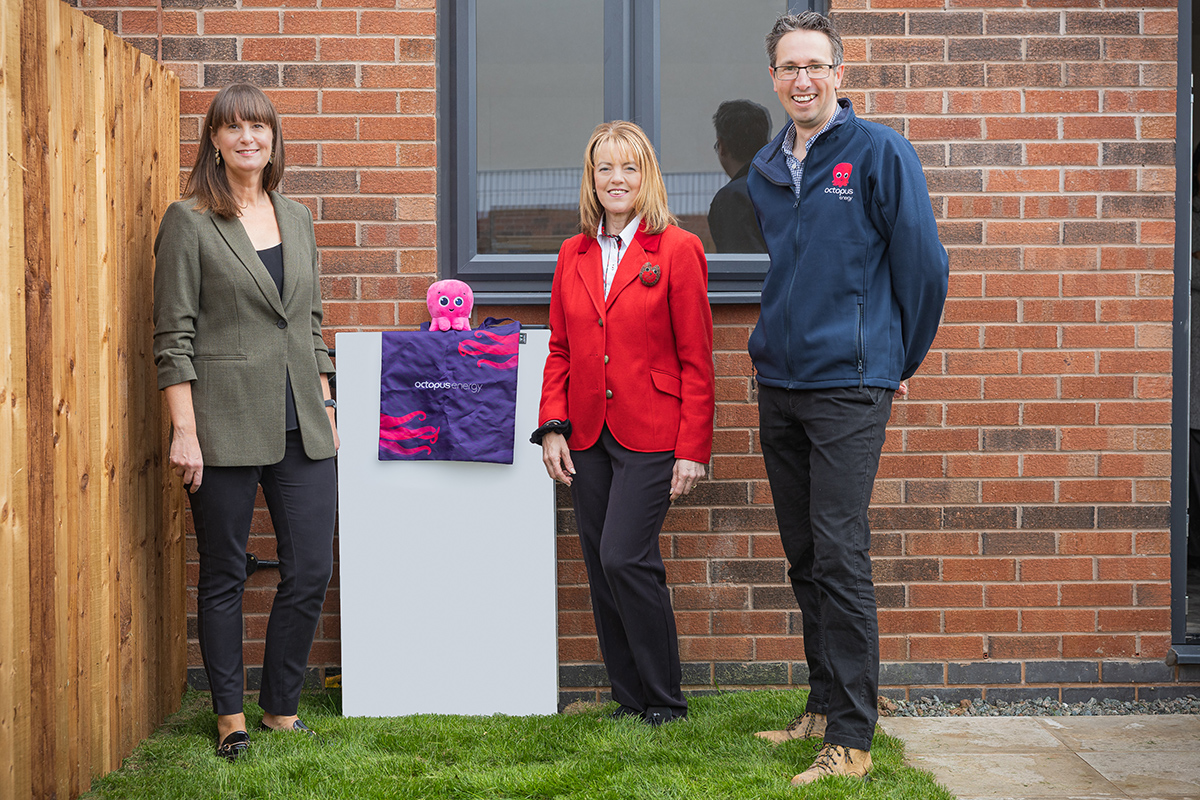
We meet in a new three-bedroom shared ownership house in Beeston Canalside in Nottingham. It is one of 319 homes for which Platform bought the land and appointed the contractor. They start from £115,500 for a 30% share; Ms Froude is proud of the fact that the apprentices and labourers who built the homes can afford to buy one. She has been showing people around the site all day: before I arrived, she hosted National Housing Federation boss Kate Henderson and Octopus Energy, which is offering its ‘zero bills’ tariff on the homes.
When she joined Platform as chief executive in 2019, the Midlands housing association owned 40,000 homes. Six years on, its portfolio has grown by a quarter, to 50,000.
“I will be really sad in a lot of ways to leave Platform,” she says. “It was a really hard decision, because it wasn’t something I was looking for.” Blackstone-backed Sage “came in and knocked at the door, and it kind of caught my imagination”, she says. It also felt right, given her personal experience: she spent the first 20 years of her career in the private sector. (Her biography on Platform’s website describes her time in the commercial world as working for large FTSE companies in the UK and Europe, mostly involved in process improvement, mergers and buyouts.)
Her logic is simple: the government’s goal is one-and-a-half million new homes, but how do we get there? Under the leadership of outgoing chief executive Mark Sater, who joined from Velcro, Sage has funded the building of more homes than any landlord for the past four years and has “the backing and the capacity to continue to operate at that level or higher”.
Meanwhile, the social housing sector is dealing with a “massive historic tail” of old stock and fire safety repairs. “Have we got the capacity to double up our production of new homes? We haven’t at Platform, and we’ve got one of the strongest credit profiles in the sector,” she says.
“I’m not trying to be evangelical about this, but me going to an institutionally backed landlord is saying, ‘You know what, these guys have pretty much got a very common agenda to us.’ If I took the badge off Sage and looked at their stock, it could be a smaller version of Platform.” Sage currently owns around 16,000 homes. “They’re working with all the same house builders, they’re trying hard to support the government agenda.”
During the recruitment process, she spoke to the people who set up Sage about their motivations. (Sage was set up by Regis Group, a housing investor and operator, and Blackstone, the US private equity giant that is also a big owner of real estate.) “It’s not an evil agenda,” she says. “It’s not off-message with the social housing sector. So why not embrace it?”
Even the term ‘for-profit’ is “a bit of a misinformation piece”, she argues. Platform is not-for-profit, but “we’re absolutely about profit, actually, all of us. Because what we’re trying to do is maximise profit, to do something with it.”
The real difference is where the backing is. While housing associations such as Platform have private investment in the form of bank loans and bonds, Sage’s institutional investors are closer to the process. In some ways, this gives Sage “greater certainty about the future funding of the business, the cost of it and the availability of it”.
Not all for-profits are the same, she admits. “There are definitely ones whose business models I wouldn’t want to work with.” Sage’s backers, Blackstone and Regis, “get being a landlord”, she says.
However, Blackstone hadn’t owned social rent homes in the UK before Sage. “They’re seeing the complexities of anti-social behaviour and all those community things, rather than portfolios of private rent,” she says. “But how did they respond? They built their own operations centres and took ownership of being a good landlord, and they built some really good customer-facing technology.
“Despite the fact that, for a long time, our sector has pushed the for-profits to the other side of the river, and seen them as the opposition, they’ve seen us as part of the destination. If you look at Sage, they’ve sold stock back into… the social housing sector.”
Speaking to Inside Housing in 2020 at the start of her time at Platform, Ms Froude said that she was “agnostic” about for-profits, adding: “I don’t think an investor building a social housing portfolio has the same motivational drive or real long-term view of social housing as we do.” Has her view changed?
Yes, because now you can see “the next evolution” of for-profits, she says. “You’ve got… very regulated organisations coming at it in a much more structured way. That’s helped to give a face of professionalism, and less of a belief that they’re just going to come in somehow and try and run away from it quickly.”
Ms Froude was adamant that “I’m leaving a social landlord and want to continue to work for a social landlord”. Blackstone, she says, sees itself still owning a big social landlord in 10 years’ time. “You can’t ask for more than that from institutional finance.”
What Blackstone also sees is “the difference between private equity and patient capital, and they understand that you’ve got to convert one to the other, but the private equity side of it is still going to be there for the opportunity of growth”.
But she continues: “Maybe I’ll bring a much stronger focus on patient capital than they would have had. I don’t know. I’ve got to get inside the organisation to really understand it.”
Joining Platform
When Ms Froude joined Platform, the housing association was only a year old. It was formed in 2018 from a merger between Waterloo Housing and Fortis Living. “We very quickly started to shape ourselves into a single organisation, from technology platforms, to websites, to infrastructure. And so actually, what I’ve got is a really can-do exec team, and the business behind it has been fabulous in its emotional intelligence about change.”
Early on, she split management of the organisation’s homes, which run coast to coast through England’s Midlands, into three ‘localities’. This has helped the group to benefit from the efficiencies of scale, while tailoring customer service to different areas.
Covid struck a year into Ms Froude’s tenure, but the business transitioned well to remote working. When lockdown lifted, she asked staff how they wanted to work. About 10% wanted a desk in the office and “everybody else said, ‘I’d like to keep working like this.’ To my surprise, it works,” she says.
“What we have tried to do out of all of that is protect the financial strength of Platform. We are still building 1,600 [Energy Performance Certificate] A and B-grade homes a year. My land team are out buying land for 2028,” she says. “It doesn’t mean we don’t have all the same problems that other people have around legacy stock, energy standards, the impact of four years of rent cuts… but we try to look at it in the round.”
Ms Froude is also adopting artificial intelligence (AI) across Platform’s services. “AI does our security checks,” she says. “It writes our FAQs for us for our chatbot, it processes invoices.”
The landlord is now doing a three-year AI project with the University of Warwick, examining the organisation’s data to find trends in anti-social behaviour, maintenance and damp and mould. “The ultimate goal is what’s called a digital twin, so it becomes a digital version of Platform and its homes and its data, so they can throw the machine at it and see what comes out,” she says.
“Do I think every penny that is spent on legislation [and] regulation changes is delivering the best thing for our customers? Not every penny”
She has also tried to get other housing associations to join in to develop an “ethical framework” for the use of AI. “There are quite a few in the sector who got that,” she says. The goal is to make it clear to residents that “we are custodians of your data, so we’re not going to compromise you”. No residents have got in touch with any concerns about AI, she says. “They get that we’re trying to use technology to create efficiency.”
But won’t the real efficiencies come when the housing association is able to use AI to make job cuts? No, she says.
“The machine is doing what the machine can do… Then you can move the people to doing the stuff that really needs people. And there’s still loads of stuff that needs people.” For example, Platform’s 24/7 contact centre. Likewise, AI processing invoices frees up employees to spend more time making “smart decisions” in the finance department.
In fact, Platform’s payroll has doubled under Ms Froude’s tenure from 1,000 to 2,000 staff. A lot of this extra resource has gone into “regulation, legislation and compliance”, she says.
“We’ve got a building safety team we didn’t have before,” while Platform’s customer experience team, which deals with complaints, is “probably 10 times the size of what it was when I joined”, she says.
She considers this a necessary investment. “At the moment… the level of unhappiness in society is tangible, and our people at the coalface, dealing with our customers and wider communities, have been a concern for me for a long time. [But] do I think every penny that is spent on legislation [and] regulation changes is delivering the best thing for our customers? Not every penny. There’s another layer of it that is just about administrating the process.”
One way Ms Froude stays aware of her residents’ complaints is by using a single, publicly available chief executive email address. Residents Google her, she says. “By the time they’re writing to me, we’ve probably let them down quite a few times, they’re already really pissed off and they’re desperate for someone to help them, so they kind of do deserve a little bit of priority.” Sometimes they come back and say thank you. “That’s why it’s worth doing it,” she says.
One story that recently hit home for her began when a Platform gas engineer went to do a compliance check. “He found a house that was dark, cold and someone who was living in a very desperate situation,” she says. “When he came back to the business, he connected that person up with all the other functions in the business.”
Platform discovered that the resident was ex-military and had chronic PTSD, and therefore had never reached out for support. “We got him a fridge, we got him food, we put money on his electric and gas meter, and we started helping him figure out what benefits and support he could get,” she says. “They managed to get a massive amount of money backdated for him, of enhanced benefits. And he wrote to me and said, ‘I think you as an organisation have saved my life.’”
“That’s all through the power of a gas engineer realising that Platform is bigger than a gas check. And so, I suppose one of my proudest things is that we’ve built this massive maintenance business that sees itself as a part of Platform.”
No doubt Blackstone hopes she can repeat her success at Sage.
Sign up to our new Living newsletter

Sign up to Inside Housing’s new Living newsletter, bringing you exclusive analysis and big deals from the wider residential market, including build to rent, student living, later living, for-profit registered providers and more.
New to Inside Housing? Click here to register and receive our Living round-up straight to your inbox
Already have an account? Click here to manage your newsletters.
Related stories