You are viewing 1 of your 1 free articles
Homes England’s Shahi Islam: ‘Be bold and ambitious with your bid’
The long-awaited prospectus for the new grant programme has been published. Shahi Islam, director of affordable housing at Homes England, tells Eliza Parr what the agency is looking for from housing providers bidding for a slice of that development money


 Shahi Islam, Homes England’s director of affordable housing, tells Eliza Parr what the agency is looking for from housing providers bidding for grant money #UKhousing
Having spent almost 13 years at Homes England – and the past two as director of affordable housing – Shahi Islam is no stranger to the development challenges facing the sector.
With bidding set to open in February for the new 10-year Social and Affordable Homes Programme (SAHP), Inside Housing had a video call with Mr Islam to find out about the key changes revealed earlier this month in the SAHP prospectus, and what he is looking for from social landlords and other developers under the new programme.
Read more

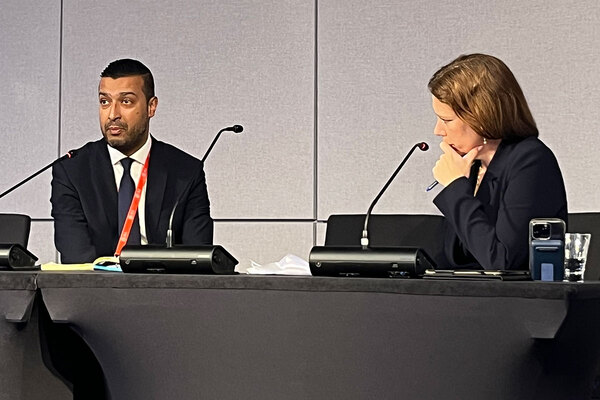
First off, he urges providers to aim high. “While we do have at least £27bn, [we’re] trying to ask partners to be bold and ambitious with their bid with us, noting that we are still going to drive value for money and deliverability.”
This will be the eighth affordable housing programme Mr Islam has been involved with. According to him, the SAHP is pretty similar to the current Affordable Homes Programme. “The government doesn’t want to change the programme parameters too much, because we want to make sure that there’s certainty and stability in the sector,” he says.
But some things are certainly different this time around. In June, the Spending Review announced £39bn of investment over 10 years in the new SAHP. This is nearly double the investment under the previous AHP, which provided £11.5bn over five years.
And it is not just that the agency has more cash at its disposal. It has also allocated billions to metro mayors to support regional priorities, opened up a new bidding route to enable more strategic pipeline thinking, and made the programme more flexible for regeneration projects.
New ‘elevated’ engagement route
Social landlords and other providers will be able to bid via two routes, just like under the current AHP. They can put forward one-off projects under ‘continuous market engagement’ (CME), or they can become strategic partners.
The strategic partnership route is designed for bigger partners with a track record of delivering large numbers of new homes, allowing them to access funding on a long-term basis with more certainty over the 10 years.
In order to attract bolder bids, developing landlords will be able access up to £700m of funding under the new ‘strategic partnership plus’ route, which is almost triple the cap under the current programme. And some strategic partners may even secure more than this, if Homes England has “certainty and confidence in deliverability”, Mr Islam says.
Under the current CME process, a housing association, council or other developer goes to Homes England on a scheme-by-scheme basis. Mr Islam says the “bulk” of partners use this route, including small and mid-sized housing associations, for-profits, newer entrants and local authorities.
These two distinct routes will remain, but Homes England has expanded CME to include a ‘portfolio’ route from 2026, which Mr Islam describes as an “elevated version of CME”.
“Rather than partners coming to us one scheme at a time, we are looking for partners that can bring to us maybe five, six, seven schemes, where they have some visibility and certainty over the deliverability of those schemes, and [we] are willing to give a slightly larger allocation to commit to those schemes,” he says.
While the portfolio CME approach can offer longer-term funding across sites, like strategic partnerships, it doesn’t have the same high entry thresholds when it comes to scale of delivery.
The aim here is to give developing housing providers confidence that there is a funding commitment in place across multiple schemes, and also provide confidence to Homes England that the providers are “being more strategic around developing the pipeline”.
“I think it’s about making councils understand that they don’t need to do it alone, that the agency also has a role to support them”
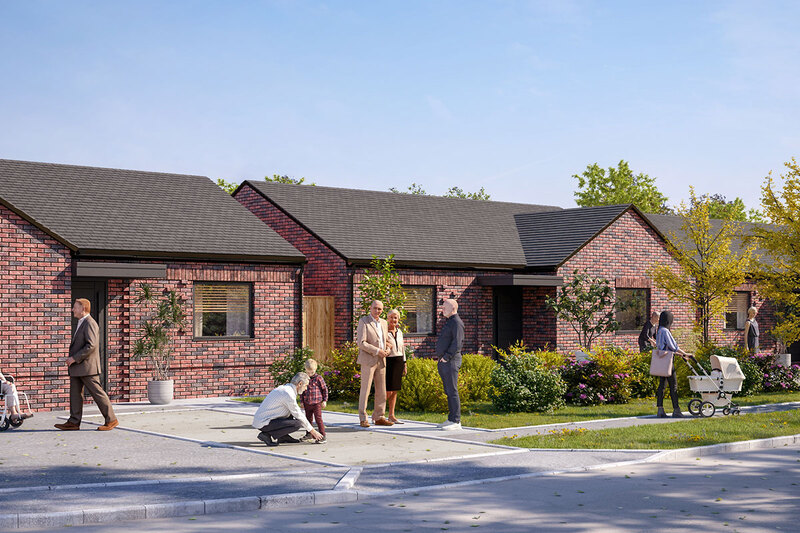
Mr Islam suggests councils could particularly benefit from this new route, pointing to a recent pilot the agency ran with Wolverhampton City Council, in which the city planned to build energy-efficient bungalows.
“It just meant that the council, for example, had confidence that in a year’s time, even if things have changed with the budget, or, worst case, if the budget was completely taken away, we have made that legal commitment to give them the funding.”
Under the current programme, around 90 councils are directly partnered with Homes England to deliver council housing, but none have become strategic partners. Mr Islam is hoping some will sign up under the new grant programme.
“We’re looking to hopefully entice more councils to become strategic partners, and that’s hopefully a positive piece in connection with rules around Right to Buy receipts being combined with grant as well, giving councils a bit more flexibility to use their finances a bit differently,” the affordable housing director says.
Indeed, the new SAHP prospectus confirmed that housing providers will be able to combine Right to Buy receipts with grant in their bids – which the government said was in response to “longstanding calls from councils” to allow them to cross-subsidise delivery.
As well as this increased flexibility, the agency will emphasise to local authorities the “power of partnerships”. Councils across England take a variety of approaches to development, including direct builds and partnering with housing providers to deliver more complex sites and regeneration projects, which Mr Islam says usually “need a number of partners to move on”.
Of local council development plans, he says: “I think we’re definitely seeing the ambition increasing. What I would say is that it is the power of partnerships.
“I think it’s about making councils understand that they don’t need to do it alone, that the agency also has a role to support them, which is why we’re moving to a regional model, to ensure that local priorities, considerations and capacity measures are met.”
This focus on devolution and placemaking is the driving force behind the new allocations to mayoral combined authorities. For the first time, Homes England’s programme will give six metro mayors the ability to set the strategic direction in their area, including the tenure mix and priority sites for development.
This “brings the mayors much closer into a working relationship with the agency than previously,” Mr Islam says. But the programme will not be able to support all combined authority priorities.
“As with any kind of delivery issue, we can’t fulfil every single priority across the country. There are 300-plus local authorities in the country, everyone has housing need, waiting lists, housing issues.”
Instead, he says this new relationship with combined authorities is about ensuring mayors can share their priorities with Homes England, and the agency can then “direct” housing providers and developers to work in those areas.
‘Relief’ for providers in regeneration flexibility
Across the sector, regeneration is high on the agenda. The Northern Housing Consortium (NHC) recently launched an inquiry into how housing-led regeneration can help tackle the housing crisis. And in London, councils have called for “funding firepower” to unlock estate regeneration.
Mr Islam says the sector “has been pushing regeneration funding for a long time”. Back in 2023, Homes England responded to this by relaxing the rules to allow AHP funding to be used on replacement homes as part of estate regeneration; previously, providers could only get grant for additional homes.
But this was only in place in a “limited, caveated way”, meaning there was “nervousness” it would not be reintroduced as part of the new programme, Mr Islam says.
However, the full SAHP prospectus published this month confirmed support for estate regeneration schemes, stating that Homes England will, for the first time, assess additionality across small portfolios of sites, rather than for one specific development. Additionality can be demonstrated through densification within the existing site boundary, or by replacing one-bed homes with family homes.
“I think the regeneration piece now being formally confirmed as part of the 10-year programme does bring some relief to our partners, and to the sector,” Mr Islam says. Indeed, the NHC has welcomed this flexibility, saying that the inclusion of regeneration at the start of the programme is “huge” for the sector.
But, of course, there are limits to what the SAHP can support. The prospectus outlined that replacement social and affordable homes can form no more than 10% of a strategic partnership application. And Mr Islam highlights that the government’s “driver” is still “overall brand new supply”.

There are, however, other ways the agency can support regeneration. Mr Islam points to the new National Housing Bank, which has £16bn of new investment, as well as Homes England’s powers to assemble land.
“Using the different colours of money, such as loans, equity, etc, there [are] opportunities to think about being more creative with that,” the affordable housing director adds.
Mr Islam emphasises again the “power of partnerships”, which includes the private institutional sector, citing Homes England’s joint ventures with Lloyds and Barratt, and Habiko and Muse. He and his team are “trying to push more of those types of partnerships where the agency’s cornerstone investment helps unlock further capacity”.
But these projects still require strong partnership with local authorities, which bring their “resources and expertise to the table” as “stewards and managers of the communities”, he says.
“We want to make sure that the schemes that come to the table contribute towards local placemaking and creating really decent communities”
There are some issues about which Mr Islam cannot provide more detail. On shared ownership, the Homes England prospectus promises to “introduce measures to improve fairness and transparency for shared owners”. But this policy sits with the Ministry of Housing, Communities and Local Government, which is working on more detailed guidance to address post-sales issues around service charges, staircasing and disposals.
Any changes to shared ownership would not therefore be enabled via the SAHP. “In terms of funding for the 10 years, at the moment there are no anticipated changes to the overall product,” Mr Islam says.
And on the new towns programme, Homes England’s affordable housing director says he cannot yet comment on how the SAHP will factor in, with the government’s planning still in its early stages. He does, however, suggest that the timing of the two programmes aligns well.
“I’d say the confirmation of new towns ties in well with the longevity of the new programme. Because 10 years means that we’re not going to say to partners, ‘You have to wait for the next programme to come in about this.’ As and when plans are mature when it comes to new towns, hopefully the programme will still be open and running for business.”
Making places
Giving advice to providers ahead of bids opening in February, Mr Islam highlights the importance of considering local impact and local outcomes linked to their schemes. “We want to make sure that the schemes that come to the table contribute towards local placemaking and creating really decent communities,” he says.
This means looking beyond the numbers alone, and thinking about connections to the wider local sense of place and other schemes being built in the area. “It’s not just that we want 100 homes here and 100 homes there. Are [providers] thinking about being more strategic with how they’re going to engage with different partners in different communities as well?”
And the affordable housing director is not just thinking about the next 10 years. “I don’t want the legacy of this programme to be, in 10 years’ time, looking back and thinking we could have done better. I want long-lasting places and homes to be created.”
Sign up to Inside Housing’s Development and Finance newsletter
Sign up to Inside Housing’s weekly Development and Finance newsletter, featuring a round-up of business, development and regeneration news and analysis.
Already have an account? Click here to manage your newsletters.
Related stories