You are viewing 1 of your 1 free articles
London councils call for £3 rent convergence and ‘funding firepower’ to unlock estate regeneration
London councils have called for “funding firepower” to boost estate regeneration across the capital, estimating that 10,000 social homes could be unlocked.


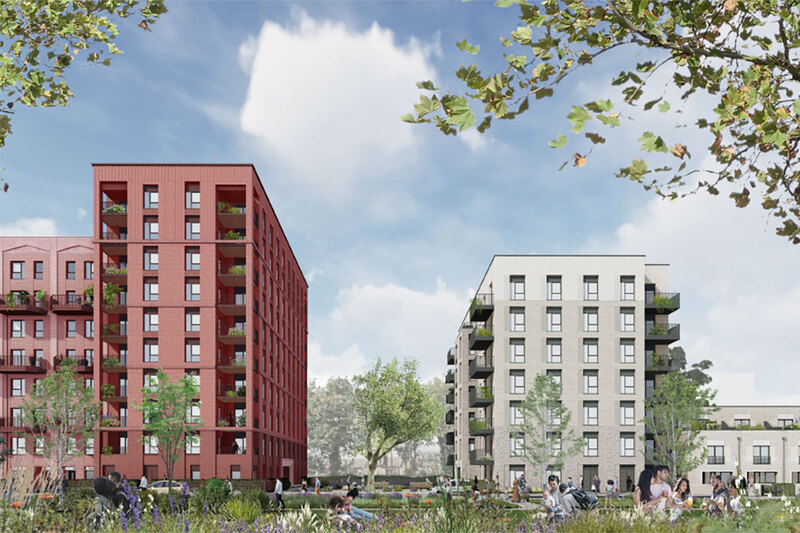 London councils have called for “funding firepower” to boost estate regeneration across the capital, estimating that 10,000 social homes could be unlocked #UKhousing
A new report from London Councils and the London Housing Directors’ Group has argued that modernising existing homes should be “core” to tackling London’s housing crisis.
The cross-party group highlighted the need for national or regional “co-ordinated programmes focused on estate regeneration”, backed by “flexible, long-term funding to sustain delivery”.
Ahead of the Autumn Budget, London Councils called for a social rent convergence rate of at least £3 per week in order to shore up the sector’s finances.
Read more


The mechanism allows housing associations to gradually raise rents that are below the earnings-linked social rent formula, so people pay a similar rent for similar properties.
Analysis by the collective of London boroughs has suggested that they are “being forced to plan a real-terms spending reduction of £269m” on social housing repairs and investment over the next four years, as a result of squeezed resources.
The report highlighted the benefits of regeneration not just to housing supply but also to local employment and skills opportunities, environmental standards and health and well-being.
Last week, the Social and Affordable Homes (SAHP) prospectus for 2026-2036 introduced more flexibility around regeneration and what constitutes “net additionality”, a move which the Northern Housing Consortium has welcomed.
But London Councils and the London Housing Directors’ Group said mechanisms such as the SAHP are “too narrow in scope” as “funding restrictions limit support for replacement homes”.
Under the government’s housing targets – which in the capital equate to 88,000 new homes per year – London would need to build the “equivalent of an entire borough’s worth of homes every 16 months”, according to the report.
“To deliver all of the homes needed, boroughs must maximise all available housing sources, and estate regeneration is an essential source of delivery,” it said.
The report pointed to projects in Camden and Kingston where regeneration has already delivered over 750 homes. Combined with a pipeline of seven other potential projects, these case studies could deliver 10,000 council homes, including new, additional and replacement homes.
The report added: “In the absence of a comprehensive funding strategy for regeneration that sufficiently supports the replacement of existing homes, the provision of new infrastructure and the delivery of more homes, it is inevitable that regeneration schemes will run into viability roadblocks.
“This stalls progress and increases costs, including the potential for abortive costs and wasted effort.”
Grace Williams, London Councils’ executive member for housing and regeneration, said regenerating council estates “offers exciting opportunities to deliver new social housing fit for the 21st century”.
She continued: “London is grappling with enormous housing challenges, and estate regeneration should be a core part of our approach to tackling the crisis.
“However, the continuing squeeze on our resources holds us back. We urgently need more funding firepower if we are to unlock stalled sites and ramp up regeneration. The coming Budget and government decision on social rent convergence will be pivotal for making this happen.”
Joanne Drew, co-chair of the London Housing Directors’ Group, said: “Regeneration can help London meet its housing targets, while also improving the quality, safety and sustainability of our estates.
“But we are also encountering significant barriers, not least the immense pressures on our council housing budgets.
“To realise the full potential of estate regeneration in London, we need the right tools, financial footing and policy direction. Boroughs are keen to work in partnership with the government to achieve this.”
This week, the Northern Housing Consortium (NHC) launched a call for evidence as part of its inquiry into how housing-led regeneration can help tackle the housing crisis.
Inside Housing has partnered with the NHC on this inquiry as part of its Spotlight on Regeneration series, which in September explored how to restart regeneration, as well as highlighting a project in west London focusing on outdoor space.
Sign up for our development and finance newsletter

Already have an account? Click here to manage your newsletters
Related stories