You are viewing 1 of your 1 free articles
Inside Riverside’s development plans – and possible return to Section 106
Jess McCabe goes to see one of Riverside’s developments under construction and finds out more about the landlord’s 1,000-a-year development and regeneration plans


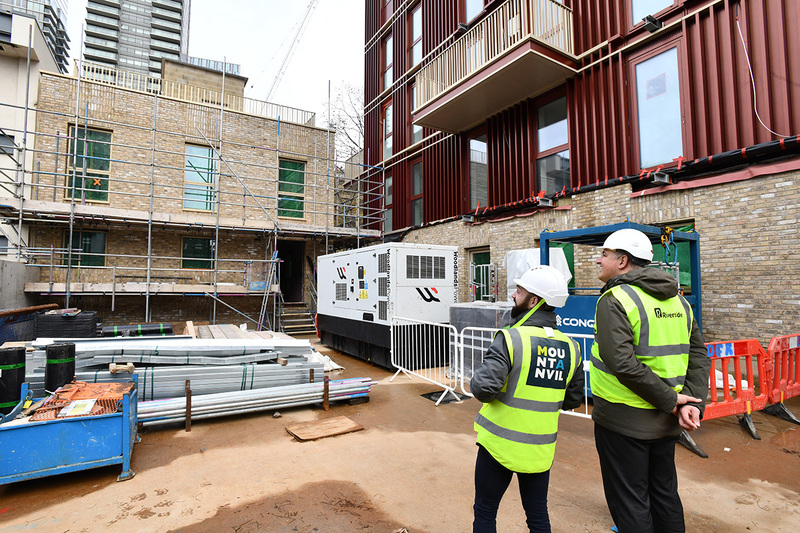 Jess McCabe goes to see one of Riverside’s developments under construction, and finds out more about the landlord’s 1,000-a-year development and regeneration plans #UKhousing
At a time when most of the chat about development is far from positive, Riverside is one of the housing associations with significant development ambitions. It wants to build between 500 and 1,000 homes a year for 10 years, as chief executive Paul Dolan told us in an interview published earlier this week.
One of these projects – Bellamy & Byng – is located on the Isle of Dogs, only a few minutes’ walk from Canary Wharf.
Inside Housing went to tour the building and had a chance to catch up with Riverside’s development director Robert Marcantoni along the way. So what did he have to say about the landlord’s development and regeneration plans, the housing supply crisis and the Building Safety Regulator?
Read more
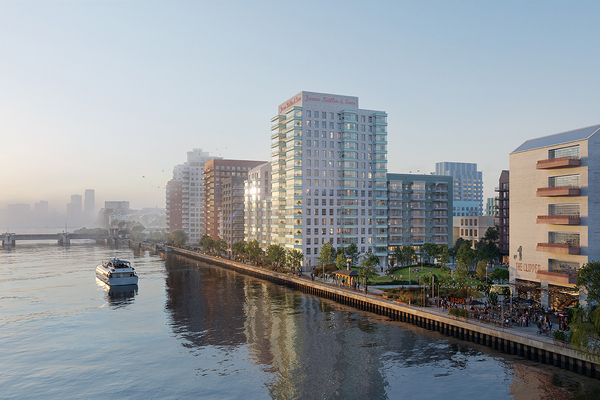

Aerial views
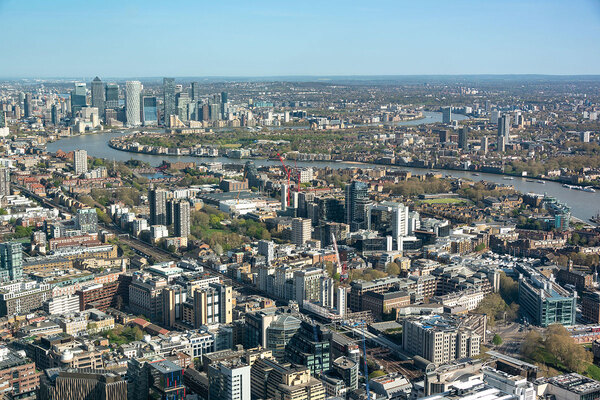
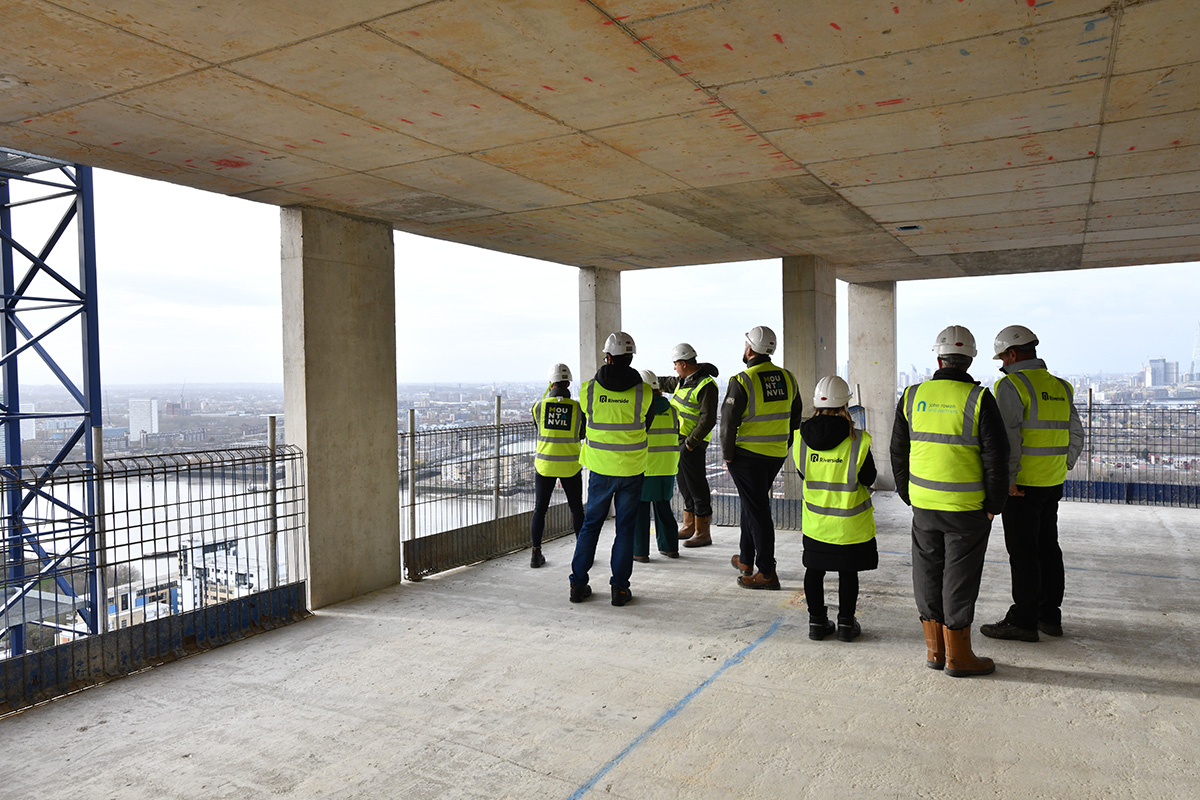
We go up to the 31st floor of the building to talk – when finished, this will be the highest habitable level. At the time of Inside Housing’s visit just before Christmas, the façade is unfinished, so we get a spectacular version of the views that future residents will enjoy when the building is complete – Canary Wharf’s towers, and the Thames snaking below. We can’t quite see Inside Housing’s offices to the east, even though they are just a short walk away, because of the cluster of office buildings and apartment blocks that have sprouted up around the area.
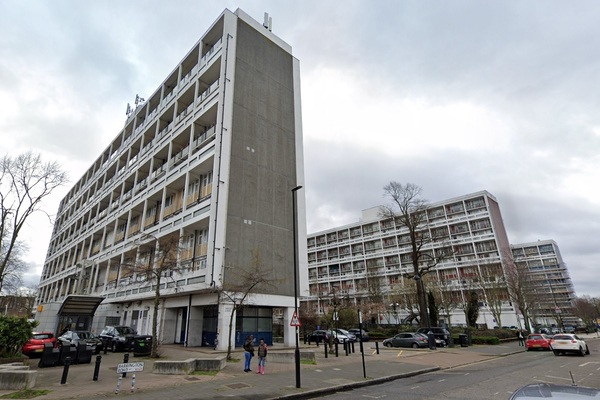
You can, however, see plenty of Riverside’s stock from up here. Mr Marcantoni points out several other Riverside estates, including low-rise houses and mid-century concrete blocks that increasingly stand out as the Isle of Dogs quickly develops.
We’re standing in one of Riverside’s regeneration projects, and it has more in the works nearby – one project that Mr Marcantoni points out has the potential for 1,300 or more homes. Pointing out another block, he explains the landlord recently got planning permission for a project that will add 400 new homes on the site.
Another block, Kingsbridge, has had a resident ballot in favour of regeneration. “But we’re struggling to make that viable,” Mr Marcantoni adds, even with the potential to cross-subsidise with market sale flats directly on the Thames. One reason is the higher proportion of leaseholders; another the high cost of relocating residents during the work. “The residents were very in favour of regeneration there, but we’re just struggling to make it work,” he says.
Back in August 2024, Inside Housing reported that Riverside had stopped bidding on Section 106 homes, as it focused investment on existing homes, regeneration projects – like Bellamy & Byng – and projects it was already under contract for.
Priority on regeneration
Fast forward to today, and Mr Marcantoni has a slightly more moderate take than the 2024 headlines suggested. He describes Riverside’s strategy more as an order of priorities with regeneration at the top, rather than completely ruling out Section 106. “We’re ordering regeneration first, then 106,” he says. “I’m still pro-seeing what it can deliver.”
Recently, he went to visit residents in Section 106 homes on a development in Newham, east London. “70% of them, their last address was a Travelodge,” he says. “The difference it makes – it changes people’s lives.”
How about greenfield development? Mr Marcantoni’s view on this is “not in London”. Riverside has 18,377 homes in London, and around 57,000 outside. “I think we’ve got quite a bit to be getting on with as well,” he notes.
Riverside is experiencing the same development challenges as other landlords: building costs are up, labour costs are up and projects need to pass the new Building Safety Regulator’s Gateway process. Mr Marcantoni says this has had a particular impact on the economic viability of mid-rise blocks between eight and 12 floors, because the lower density of homes makes it hard to stack up financially.
The recent shake-up at the Building Safety Regulator does seem to be having a positive effect, though. “There’s more engagement now than there was before,” Mr Marcantoni observes. “But I think there’s still quite a lot of changes that are needed in terms of submission and documentation.”
And how has this impacted the Bellamy & Byng project we’re standing in? “We delayed it significantly to incorporate second staircases,” Mr Marcantoni says.
On the other hand, the government’s 10-year grant programme is poised to open for bids. Mr Marcantoni says he’s “still waiting really on a bit more detail” to work out what the impact will be.
That includes finishing up the project we’re standing in. Before building work started here, it was low-rise housing.
“Part of the catalyst for regeneration was this quite large tower here,” Mr Marcantoni says, pointing out a large private residential tower across the road. “And that was going quite a number of storeys below ground, about 30cm from residents.” Given they were going to experience quite significant disturbance from that building work, the idea of a redevelopment was popular.
Residents voted 86% in favour of the project, on a 100% turnout to the ballot.
The project is a joint venture between Riverside and the developer Mount Anvil. The pair are already signed up to work together on a second joint venture for 300 homes on the Isle of Dogs.
Out of 218 of the homes projected to be completed, 155 will be sold on the open market. These were snapped up off-plan within a couple of weeks of this project launching, with some two-bedroom flats advertised for around £800,000 by Mount Anvil.
“70% of them, their last address was a Travelodge. The difference it makes – it changes people’s lives”
Sixty-three flats are for social rent, with 24 going to residents of the houses that used to be located on this site. “Where we can get social rents on new schemes, that’s what we will always strive to do,” Mr Marcantoni says.
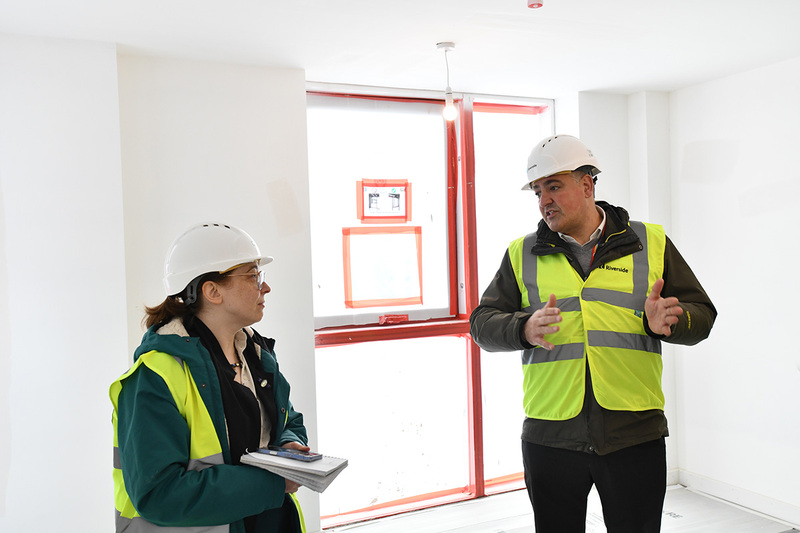
We go back down in the construction lift to levels two and 10, to look at some of the nearly finished flats which will be social housing. One is a spacious four-bedroom family home with a balcony.
Energy is supplied by air source heat pumps on the 32nd floor, and the building will be able to connect to a district heat network in future. Nearby is a playground that the developer built as part of the project, which opened ahead of the summer holidays last year, and the development has prioritised resident engagement.
With more regeneration in the pipeline here on the Isle of Dogs, Mr Marcantoni sees this project as a bit of a calling card for Riverside. “This is really important for us to showcase future projects on the island,” he says. “Our other residents are watching quite keenly how this progresses.”
Update: at 8.53am, 23.1.26
This story originally stated that Riverside is aiming to build more than 1,000 homes a year over 10 years. This was in error, and has been replaced with the correct figure of 500-1,000 homes a year.
Sign up to Inside Housing’s Development and Finance newsletter
Sign up to Inside Housing’s weekly Development and Finance newsletter, featuring a round-up of business, development and regeneration news and analysis.
Already have an account? Click here to manage your newsletters.
Related stories