You are viewing 1 of your 1 free articles
Homes for veterans
Veterans in Bristol are building their own affordable rent homes, with the help of a project funded by bank fines from the financial crisis. But are such projects sustainable? David Blackman reports


Video:
Code
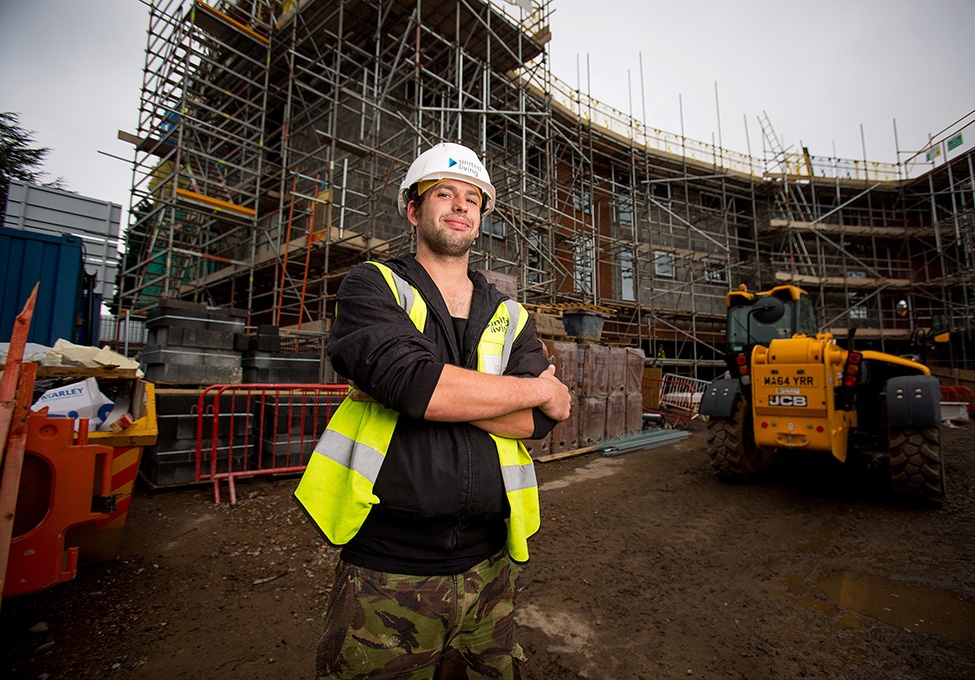
“When you’re in the army, you can fight anything and take on anything,” says Danny.
But like too many of his fellow veterans, the former Grenadier Guardsman went into a downward spiral after leaving the army.
To see why, you only have to talk to 29-year-old Danny about how military conditioning can make it very hard to switch back into civilian mode. Danny is one of the many veterans who have found it hard to reintegrate back into the humdrum of civilian life. And housing can be one of the key difficulties.
“We drink to forget and with some of the things we have been through.”
Danny, veteran
Around 9,000 ex-servicemen and servicewomen are reckoned to be homeless, according to the charity Crisis. And that figure is likely to get bigger as the government cuts mean that the army’s numbers will halve to 50,000 over the next five years, according to a recent estimate by the Royal United Services Institute, a defence thinktank.
“They turn you into something that you are not meant to be. The human body is taught to run away, but the army pitches you to a level where you don’t run away: you are switched on to fight.
“It makes it hard to settle down in jobs or life because you are looking for the next fight: there’s always a battle in front of you.”
This even extends to evenings out, he adds.
“If I walk into a pub, the first place I’d be looking for is the exit: you’re in a war zone, everything has to be covered before you can settle down and have a pint,” says Danny, who admits that he ended up alienated even from old friends.
Video:
Ad slot
Reintegration
One of the few ways Danny could switch off was through the bottle. “We drink to forget and with some of the things we have been through, it takes more than a little drink to forget.”
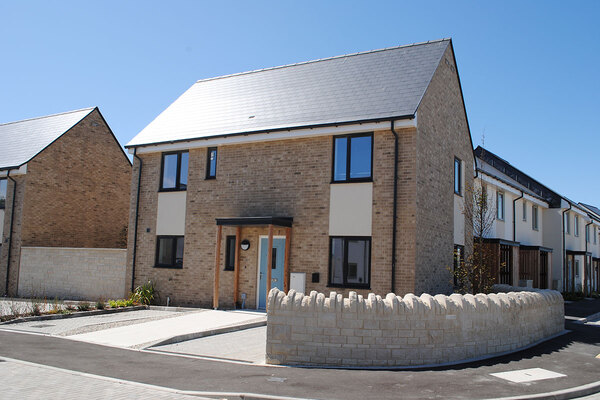
Danny, though is one of the lucky ones. He has landed a place on a project which enables veterans to build their own homes in Bristol, run by housing association Knightstone.
He is the beneficiary of one of a wave of such projects, which have popped up all over the country since the Treasury decided to use bank fines to pay for projects to help ex-servicepeople reintegrate back into civilian life. Knightstone itself has another self-build scheme in the pipeline at Weston-super-Mare. Similar projects are also under development in Plymouth and Wrexham. Yet there are questions about how difficult it is to carry out such projects - and long-term funding remains uncertain.
The self-build initiative was the brainchild of former army major Ken Hames and the Bristol-based chair of the Community Self Build Agency (CSBA) Stella Clarke, whose brother Lord King served as defence secretary under Margaret Thatcher.
Local issues
Bristol was a natural place to set up a project for homeless veterans. The South West’s biggest city is a magnet for all kinds of homeless people, including former servicepeople, many of whom have gravitated towards a makeshift rough sleeping camp in the city. Research carried out by Mr Hames in 2011 showed that one in four of homeless people in Bristol had served in the military.
Mr Hames saw the potential for self-build to help provide both housing and training opportunities. The CBSA’s projects are not self-build in the purest sense, though.
“When they come on site they feel like they are back in a troop and work as a team: they like being a unit.”
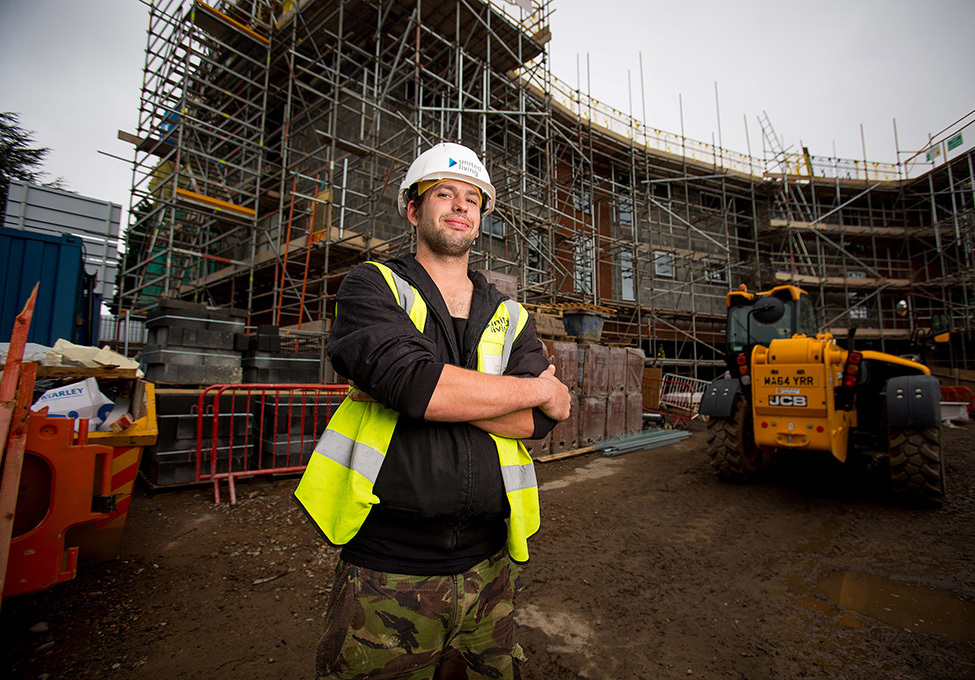
Jason Ivens, site trainer, United Living
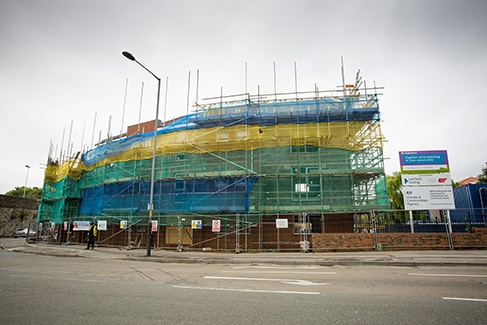
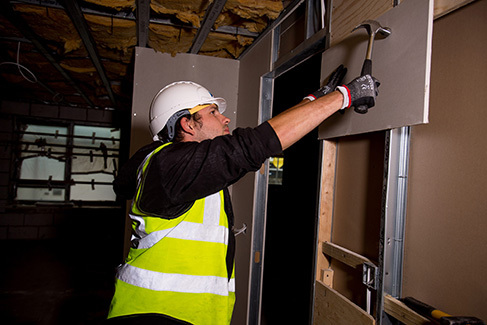
To build the project, the housing association hires a contractor which will then offer on-the-job training to the veterans who help out on the building site. In return for their unpaid labour, which can be up to 20 hours per week, those participating will be offered one of the homes that are built at affordable rent.
Those selected to take part in the project receive a mix of construction and life skills training.
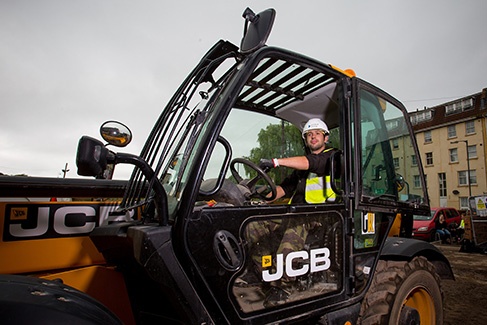
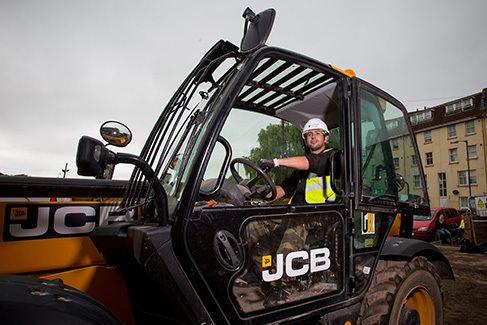
The booming construction market means there is plenty of demand for those who stay the course, with forklift drivers able to command around £14 per hour in Bristol, for example.
John Gillespie, national development director at the CSBA, argues that self-build is potentially a more sustainable option than a conventional let because it involves people in their housing solution. “If you involve people it gives a sense of purpose,” he says.
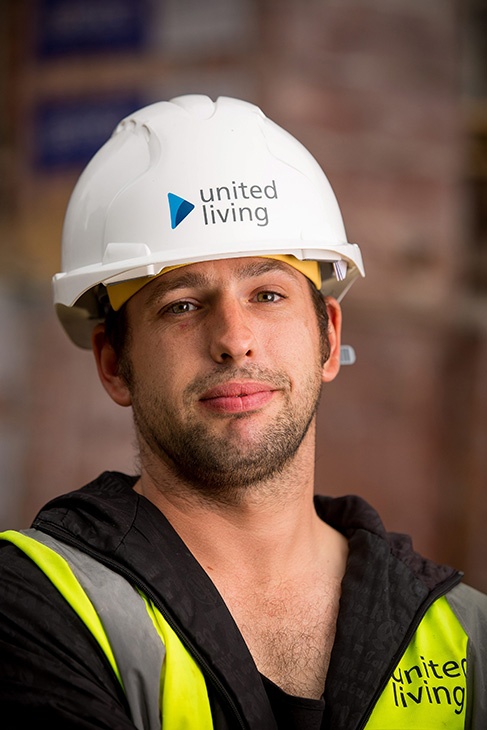
In addition, the structured and team-based nature of construction work often suits those who have been in the forces, says Jason Ivens, site trainer for United Living, contractor on the central Bristol project.
“Their main problem can be loss of structure, and the close camaraderie without which the world can be a bit of a blur,” says Geoffrey Willis, campaign director at the homelessness charity Alabare, which is working with the CSBA on the self-build project at Wrexham and has referred clients from its Bristol hostel.
Mr Ivens says: “It can take a few months to get back into a routine, but once they are there they quite enjoy it. They like an organised life, they like to be told when to get up and what they are going to do.
“When they come on site they feel like they are back in a troop and work as a team: they like being a unit.”
The construction industry is full of ex-military personnel, who are often comfortable on rough and ready building sites. “People who have gone into construction are not generally from a college background,” says Caroline Hughes, head of development at Knightstone.
However, she acknowledges that Knightstone’s first project has not been plain sailing. The first group of self-builders were sceptical that they would get a flat in return for their labour. Referring to those working on the latest project, Ms Hughes says: “These guys have seen the reality of the first scheme so they know it’s going to happen. The first group didn’t believe it until the end.”
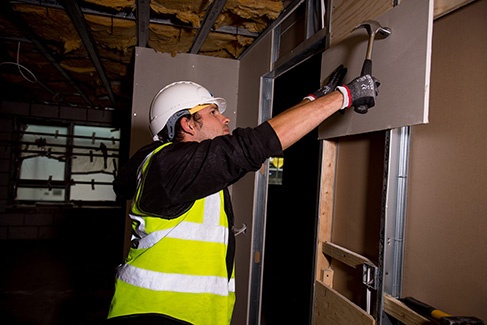
In exchange for working on these homes, Danny will get an affordable rent flat
Set up for success
Another problem was the intensive needs of the first tenants selected for the first development, as many had a long history of rough sleeping. Ms Hughes says: “If you have 10 very needy people, it’s difficult to keep them on board and create employment for them: you don’t want to set people up to fail.”
As a result, Knightstone has chosen a less needy group for its latest scheme, with participants drawn from hostels, with a shorter history of rough sleeping.
Rent arrears have been another problem at the development - resulting in the eviction of one of the original tenants - while another is on the verge of being kicked out for the same cause. These arrears issues have been exacerbated by the bedroom tax, which had not been implemented when the Bedminster project was being developed, Ms Hughes adds.
Self-build involving any more than 15 residents is “a bit of a nightmare”, she adds.
“£1m only lasts so long. The more I open, the bigger the bill gets.”
Geoffrey Willis, campaign director, Alabare
Despite teething troubles, Mr Gillespie argues that turnover at the first Bristol project has been relatively low, while Ms Hughes points out that eight out of 10 of its residents are in employment. However, like any type of social housing project in the current climate, funding is a headache.
Ms Hughes says Knightstone has secured funding for its projects from the Homes and Communities Agency’s affordable housing programme. Meanwhile, in Wrexham, Wales, 204-home First Choice Housing Association is using a £1.4m grant from the bank fine-funded Ministry of Defence’s £40m Veterans Accommodation Fund to finance the construction of the town’s self-build veterans’ project, which will be built on land donated by the local council as part of its commitment to help veterans after signing up to the Armed Forces Covenant. (Organisations, such as councils, sign up to the covenant pledge that ex-servicepeople should not face disadvantage in the provision of public and commercial services with special consideration in some cases, especially for the injured and the bereaved.)
Revenue costs have proved even more of a headache for the self-build projects.
Training and welfare costs, which cover expenses like travel to work and site clothes, can soak up £10,000 per self builder, says Ms Hughes. At the Wrexham project, the charity Alabare is assisting First Choice, and the armed forces charity Help for Heroes has provided welfare costs in Bristol.
Mr Willis, from Alabare, says: “The problem is that once we open a home and appoint staff, we have to pay the next year as well - £1m only lasts so long. The more I open, the bigger the bill gets.”
Nevertheless, the charity is keen to continue its involvement with self-build veterans’ projects, and has plans for a similar project in the Gosport area, where the navy has traditionally had a very strong presence.
Mr Gillespie is currently fielding queries from towns and cities as far flung as Middlesbrough, Nottingham and rural Essex.
Mr Ivens, from United Living, though, is concentrating on making sure that the Bristol project works. He says: “If I come back six months after I have finished here and I knock on the door and they are all in, I will have failed. The ideal situation will be to knock on the doors and not get an answer: that will be a success because they will be in work.”
28.08.2015 2.47pm UPDATE
This article originally referred to the contractor involved in this project as United House. This was an error. The contractor involved was United Living, a company that was formed last year after a merger of United House and Bullock.

Related stories