You are viewing 1 of your 1 free articles
‘Meaningful, disappointing and missed opportunity’: sector’s response to Autumn Budget 2025
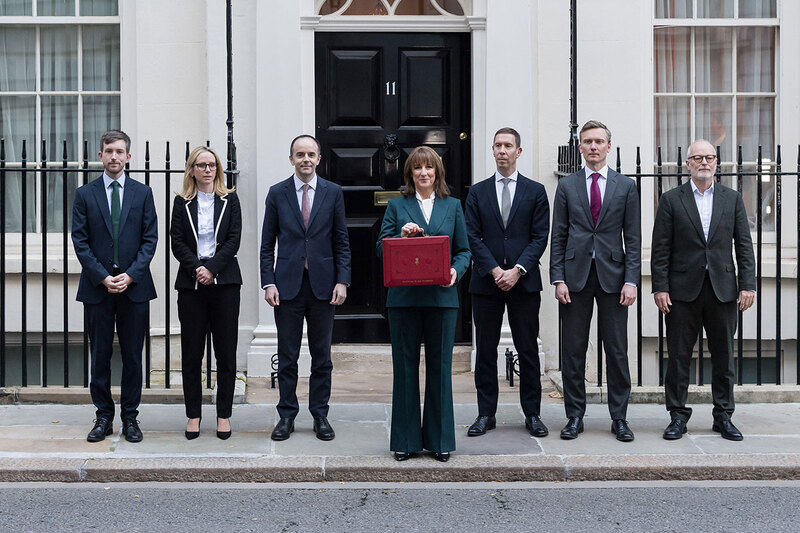
The chancellor delivered the delayed Autumn Budget on Wednesday. Despite additional welfare spending and cuts to energy bills to provide relief for many in social housing, some in the sector believe Rachel Reeves could have done more. Stephen Delahunty has the sector’s response


 ‘Meaningful, disappointing and missed opportunity’: sector’s response to Autumn Budget 2025 #UKhousingDespite additional welfare spending in the Budget, some in the sector believe the chancellor could have done more. Stephen Delahunty has the sector’s response #UKhousing
Arguably it could not have been more chaotic in Whitehall, as the Office for Budget Responsibility (OBR) appeared unaware it had uploaded its critical economic and fiscal analysis of the Budget well ahead of time.
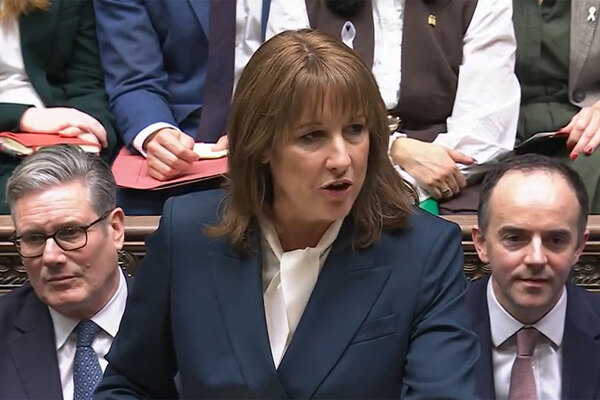
The yield on 10-year UK government bonds initially dropped by four basis points before chancellor Rachel Reeves even stood at the despatch box in the House of Commons.
The OBR acknowledged its mistake. But Nusrat Ghani, a deputy speaker of the commons, who presided over Ms Reeves’s Budget speech, said: “This all falls short of the standards that the House expects.”
The speech itself was short on key points for the housing sector, but the full Treasury document outlined some changes for social landlords and the residents they support.
The leaked OBR report estimated net additions to housing stock to rise above 300,000 per year by 2029-30 due to the impact of planning reforms. Spending on asylum accommodation is expected to top £15bn over the next decade.
An expected decision on rent convergence was pushed back until the new year, the two-child benefit cap was scrapped and there was benefit relief for people who live in supported or temporary housing.
In addition, there was more money for planning and warm homes, as well as the much-trialled tax hike on private landlord rental income.
The housing sector had hoped for Local Housing Allowance (LHA) and temporary accommodation subsidy rates to be uprated, but this never came.
Inside Housing has some key initial sector reaction below.
Read more

Kate Henderson, chief executive of the National Housing Federation: “We had expected the government to announce how rent convergence, which equalises historical differences in rents over time, will be reintroduced.
“This policy is both fair for tenants and vital in ensuring the social housing sector has enough income to maintain existing homes and build new ones.
“However, this decision has now been delayed. It’s positive to see an additional £1.5bn to tackle fuel poverty through the Warm Homes Plan, and we look forward to seeing the detail on this.
“However, it is disappointing not to see any funding announced for supported housing, with many schemes closing across the country due to years of cuts and rising costs. We will work with the government to protect this vital resource.”
Ian McDermott, chief executive of Peabody and chair of the G15: “Target social rents offer a substantial discount to market rents and significant savings for the taxpayer. In London last year, the monthly target social rent for a three-bedroom home was just under £760 a month, but fewer than 10% of London’s social homes collect rent at target level. This shortfall is unsustainable and will continue to constrain investment in existing homes and new supply.
“We therefore look forward to receiving clarity and certainty on future rental income early in the new year. A modest increase of £3 a week from April 2026 would keep rents extremely affordable while creating the foundation to accelerate housebuilding in the capital.”
Cross-party group London Councils also called for £3 rent convergence “to reverse funding pressures and boost resources for investing in existing stock and new homes”.
Stephen Teagle, chair of The Housing Forum: “We are particularly pleased to see that the government has listened to the concerns from across the sector about the proposals for massive increases in landfill tax, which could have added up to £25,000 to the cost of building each new home.
“We are also very pleased to see a consultation on the VAT treatment of sites destined as social housing. This is something we’ve been calling for and will help ease cashflow pressures.
“The review announced into the costs to councils of temporary accommodation is also welcome. We note that the OBR has also flagged the escalating costs of temporary accommodation as one of the key risks facing local authorities.”
Josie Parsons, chief executive of Local Space: “Scrapping the two-child limit is a welcome step that will ease pressure on many families. Yet, the wider picture for councils remains largely unchanged.
“Local authorities are still managing rising homelessness and higher temporary accommodation costs, but without the long-term funding certainty needed to plan realistic solutions. The Budget recognises the pressure in the system, but provides no new settlement for housing or homelessness and local authority borrowing continues to rise.”
Gavin Smart, chief executive at the Chartered Institute of Housing: “[The] Budget takes welcome steps on the cost-of-living crisis, including ending the two-child limit. But without changes to the benefit cap, LHA, and long-term investment in supported housing and energy efficiency, too many people and services will continue to struggle.
"Affordable, good quality housing remains central to tackling poverty. We look forward to seeing the outcome on rent convergence early in the new year so that the social housing sector can plan with confidence and support with delivery of the government’s housing ambitions.”
Greg Reed, group chief executive of Places for People: “We eagerly await the outcome of the rent convergence consultation.
“Certainty is vital for confident investment in new and existing homes, ensuring customers have decent, safe and well-maintained homes for the rent they pay.
“We welcome the measures to boost apprenticeship funding – essential for meeting housing targets alongside rent convergence and long-term grant certainty.
“We know significant challenges remain. Details on the long-term housing and homelessness strategy to prevent the loss of 50,000 supported homes at risk of closure and address the 390,000-home shortfall for vulnerable people are critical.”
Housing secretary Steve Reed confirmed earlier this month that the homelessness and long-term housing strategies could be delayed until after Christmas.
Tracy Harrison, chief executive of the Northern Housing Consortium: “The Budget was a missed opportunity to provide social housing providers with the clarity they need.
“Social housing providers in the North are ready to step up to the challenge, but are still waiting critical details such as confirmation on the level of rent convergence, now delayed to January 2026, as well as the Warm Homes Plan and final details of the Decent Homes Standard and Minimum Energy Efficiency Standards. All of this will impact how quickly the sector can build much-needed new homes.
“The chancellor spoke about her commitment to tackle child poverty, but has not taken action on the LHA freeze. By keeping LHA at the same level while rents rise, the government risks pushing more people, including children and families, into poverty. The continued freeze will increase the number of Northerners facing arrears, eviction, homelessness and temporary accommodation.
“It is good news for the North that the government remains committed to devolution with further devolution of skills and growth funding and £1.3bn of the new National Housing Delivery Fund to be allocated to mayoral strategic authorities.”
Mark Perry, chief executive of Vivid: “With energy costs disproportionately impacting those on lower incomes, many of whom are customers, measures to reduce energy bills is a welcome step.
“With the Warm Homes Plan expected shortly, we’ll see if these changes have implications for future warm homes investment given improving energy efficiency is the best way to permanently protect customers from high energy costs.
“Given the announcements around minimum and living wage increases and the short-term fuel duty freeze, current cost burdens for many in social housing should be lifted a little. It’s disappointing the government didn’t acknowledge the sector’s call to raise LHA given the pressures record high rents are having for many people today.”
Graeme Anderson, chief executive of BDHT: “The chancellor’s decision to scrap the two-child benefit cap in full will ease pressures on families.
“The lack of clarity on rent convergence at this stage is disappointing, but we are pleased by the news of £3.4bn over the next three years from the Warm Homes Plan. For organisations like ours, this investment will help us maintain affordability for tenants while continuing to protect the long-term sustainability of our homes.
“However, significant investment means nothing if there continues to be a bottleneck in the delivery of homes. That’s why the announcement of £48m for 350 new planners within the wider planning reform is another important move.”
Rosemary Farrar, chief financial officer at Platform Housing Group: “The removal of the two-child benefit cap is a very welcome step toward reducing child poverty, which disproportionately affects families in social housing.
“We are also pleased to see the government maintain full funding of the Warm Homes Plan at £13.2bn. We look forward to hearing a further announcement on rent convergence to show the government has listened to the sector’s calls to help align rents fairly.
“An uplift of at least £2 per week from 2026 will ensure consistency in future social rent levels for our customers, while also generating income and unlocking private borrowing.”
Carole Easton, chief executive of the Centre for Ageing Better: “As the UK pays some of the highest electricity charges in the world, moves in this Budget to cut average energy bills by £150 from next April are welcome. Too many older people are forced to heat their homes based on what their energy meter is telling them, not what their body is telling them.
“We eagerly await the details of the Warm Homes Plan. To ensure it is delivered effectively, the government should consider creating a national network of local one-stop Good Home Hubs that people can rely upon to deliver reliable and effective home improvement advice and services.”
Gary Orr, group chief executive of Abri: “While affordable housing wasn’t the centrepiece of this Budget, we’re pleased to see the government stick to its commitments in what is clearly a challenging fiscal environment. The removal of the two-child benefit cap is a particularly welcome step that will make a meaningful difference to many of our customers.”
Paul Dolan, group chief executive of Riverside: “Scrapping the two-child benefit cap will help to prevent homelessness and improve the lives of hundreds of thousands of children by lifting them out of poverty.
“We are pleased to see the financial boost for the Warm Homes Plan, which will create warmer, energy-efficient homes and improve the health and well-being of residents.
“However, we are disappointed that no funding for supported housing has been announced. We are deeply concerned about the perilous state of supported housing and homeless prevention services such as floating support.”
Catherine Ryder, chief executive of PlaceShapers: “Measures to ease the cost-of-living crisis, removing the two-child benefit cap and initiatives aimed at strengthening employment prospects are all welcome steps that will help reduce the pressures that many households are facing. However, we remain concerned that the freeze to the LHA is pushing people in private rent into unnecessary hardship.
“The reintroduction of rent convergence will further help housing associations to shore up their plans to build new homes and invest in their existing homes, and we look forward to seeing further detail on this soon.”
Phil Andrew, chief executive of Orbit: “Given the positive housing measures announced in the Spending Review, it came as no surprise that today’s Budget focused on driving other areas of economic growth.
“However, we remain confident in the government’s continued commitment to tackling the UK’s housing crisis. While it’s a positive sign that the OBR predicts that net additions will rise sharply in 2029-30, it’s also a firm reminder that making an impactful difference will take perseverance and time.”
Paul Rickard, chief executive at Pocket Living: “As the OBR has pointed out in its Budget response, the positive planning reforms will take time to materialise and a marked increase in housebuilding is only currently expected to take place from 2027-28.
“It is therefore imperative that all steps are taken to remove the current barriers to delivery, including tackling the issue of viability. This is especially important for the ‘vital to delivery’ SME housebuilding sector, which has the potential to deliver tens of thousands of extra homes across the country.”
Francesca Albanese, executive director of policy and social change at Crisis: “Families will be breathing a sigh of relief to hear the chancellor commit to scrapping the two-child benefit limit. This is hugely welcome and will help struggling parents with the rising cost of day-to-day living.
“What this Budget doesn’t do, however, is help hundreds of thousands of households across Great Britain who are homeless or at risk [of homelessness]. The choice to keep housing benefit frozen, and wildly out of step with the true cost of rents, will directly lead to a rise in homelessness and pile additional pressure on councils whose combined temporary accommodation bill in England alone is nearly £3bn a year.”
Melanie Leech, chief executive of the British Property Federation: “There wasn’t a single thing said in the chancellor’s speech that wasn’t leaked in its chaotic build-up.
“However, the lack of surprises doesn’t hide the disappointment that many in the development industry will feel after today. While she [Ms Reeves] spoke positively about the importance of business investment and maintained full expensing and the headline rate of corporation tax, there was little to cheer from an investor perspective.
“While it was always going to be a challenge for the chancellor to both balance the books and support economic growth, it is disappointing that there was nothing introduced to alleviate acute development viability issues.”
Kevin Bentley, senior vice-chair at the Local Government Association (LGA): “Local government finances remain under severe pressure, with councils facing huge cost pressures in areas including adult social care, temporary accommodation, SEND [special educational needs and disabilities] and home-to-school transport.
“The government has acted on the LGA’s calls to provide greater financial certainty and a simpler funding system, which are hugely important for councils. While funding levels have increased in recent years, councils will be rightly anxious that [the] Budget does not provide the increase in funding they desperately need to ensure their financial sustainability, protect services, support local communities and address national priorities.”
Emma Haddad, chief executive of St Mungo’s: “We see how vital work is to a person’s recovery from homelessness, which is why we warmly welcome the chancellor’s decision to address the long-standing anomaly in the benefits system that discourages people in supported housing from entering work.
“These reforms will help clients living in supported accommodation return to work and rebuild their lives. We look forward to working with government to ensure that this solution benefits everyone affected.
“However, we cannot ignore that we are in the middle of a homelessness crisis, which is being driven by a persistent shortage of affordable and social housing.
“Therefore, the chancellor’s decision not to unfreeze LHA rates or lift the benefit cap is disappointing and a missed opportunity, particularly as it would have protected thousands from homelessness by bringing housing benefit in line with real rental prices.”
Marcus Dixon, director of UK residential research at JLL: “The greatest value this Budget was always going to deliver was clarity.
“Months of speculation has slowed activity, meaning simply knowing what is and is not changing could well provide hesitant buyers and sellers with the confidence to re-enter the market in the new year.
“There were, however, clear (and missed) chances to go further in supporting transactions and unlocking much-needed development. Reforming taxes such as stamp duty, which continues to hold up the market by discouraging people from moving, would have made a meaningful difference.
“We still expect clarity around cost and timescales will result in a rise in buyer activity in the new year, but simply layering further costs on the top end does little to address the pressure point of affordability for first-time buyers.
“Targeted support at the entry level would have made a far greater difference to market mobility, particularly with the OBR acknowledging they expect further falls in housing net additions through to 2027.
“Increases in tax rates on landlords’ rental income also risk further exacerbating the supply demand imbalance within the private rented market as landlords, already feeling the pressure from higher taxes and changing regulation, may choose to exit rather than swallow additional cost – all of which means less supply and the prospect of higher rents.”
Richard Meade, chief executive of the Scottish Federation of Housing Associations: “It is greatly welcome that the UK government has finally abolished the two-child [benefit] limit.
“With the UK Budget now published, we look forward to the Scottish government confirming its spending priorities and committing to the promised £4.9bn over four years to support affordable housebuilding in Scotland.
“Given that housing associations will attract significant private financial investment in building new affordable rented homes, the Scottish government must contribute considerable public investment to make these projects viable.”
Community Housing Cymru: “[Yesterday’s] Budget provides over £500m in consequential funding for Wales. We urge the Welsh government to prioritise this additional investment in the homes and essential support needed to chart a course out of the housing emergency in Wales.”
Sign up to Inside Housing’s Daily News bulletin
Sign up to Inside Housing’s Daily News bulletin, featuring the latest social housing news delivered to your inbox.
Already have an account? Click here to manage your newsletters.
Related stories