You are viewing 1 of your 1 free articles
Peabody’s head of delivery on the outlook for development and her drive to get more women working in construction
Kate Beesley’s mum, Mo Slade, worked in a council housing job her whole life. The head of delivery at Peabody talks to Jess McCabe about getting into a development career, and how to attract more women and girls into construction


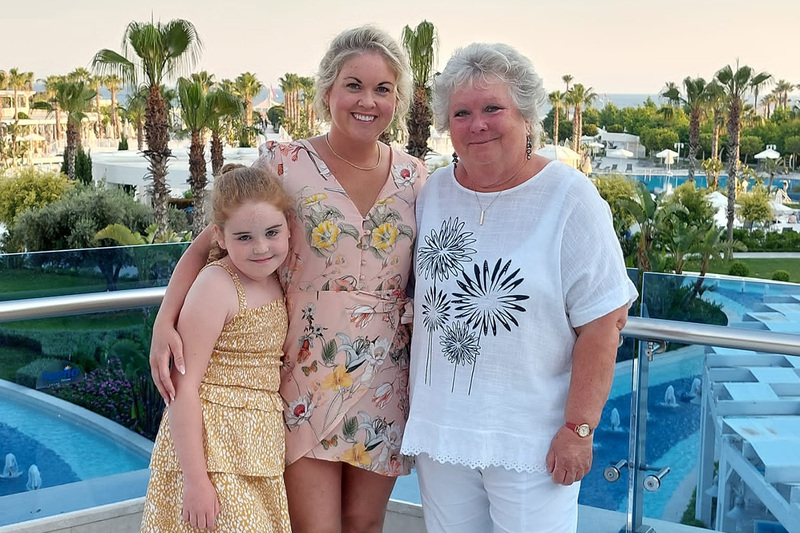 Kate Beesley, head of delivery at Peabody, talks about getting into a development career, and how to attract more women and girls into construction #UKhousing
“I don’t think people really are aware of the fact that you can be in development within social housing. I think they see Berkeley and Hill and all of those [developers], and not necessarily that we do the same thing,” says Ms Beesley.
On the other hand, she adds, there are “people out there who see us as a developer and I’m like, ‘No, we’re not for profit. Please don’t put me in the same bracket. We’re here for the greater good.’”
This has come up because we’re talking about Ms Beesley’s career path to her current job as head of delivery, north and west at housing association Peabody. We touch on the ever-present topic of how to encourage more people, particularly more girls and women, to consider a career in construction and development.
“I think it’s really important to promote housing and development as a career to children, and particularly girls, who still seem to believe that construction is just for men and only means getting dirty on site,” she says.
We’re chatting on Teams as part of Inside Housing’s series on women in development, which was started to address this issue. Some facts inspired this series: women are underrepresented on executive teams of housing associations – the Chartered Institute of Housing’s diversity data tool found that 47% of executives are women, compared with 54% of the housing workforce.
Read more


Representation among development directors is believed to be even lower. Vicky Savage, outgoing development director at housing association L&Q, set up the G15 group of large London landlords’ mentoring project for women to redress the balance. She told us earlier this year: “They’re not pushing through to become directors, and they’re certainly not pushing through to become executive leads.”
It is an important issue for Ms Beesley, too. When her daughter was eight, she brought her along to Peabody’s bring-your-child-to-work day.
She adds: “Her secondary school is also hosting a number of career events which I’ll be taking part in to tell Year 8s about what I do and what it involves.
“I really want to challenge that perception and show that women are integral to the industry and can be anything from site managers to [quantity surveyors] to directors.”
Ms Beesley’s own journey into development was a matter of chance rather than planning.
“My mum [Mo Slade] worked in social housing for 45 years. She unfortunately passed away two years ago, but she worked for Basildon Council her entire life. She started when she was 19, and worked her way the whole way up,” Ms Beesley says.
“She was very respected by the local MPs and everyone. They all came to her funeral, which was lovely. And growing up, I was always helping out around the office; it was the old filing systems of everything in rows in alphabetical order, and all that kind of thing.”
Ms Beesley did media studies at the University of Sussex. (It has “the most hours of sunshine of any university – and media studies was fun”.) During the holidays, she temped through a local agency. “I did allocations and lettings. I did repairs, housing, their comms team. I did environmental health. I did everything, so I knew a bit about all of that kind of stuff.”
After university, she worked as an assistant photographer, temping at the council the whole time. When a maternity cover job came up at Family Mosaic (the housing association that became part of Peabody in 2017), she recalls thinking: “I might as well go for it.”
Later came a job in resident liaison in the asset management team, dealing with major works.
“I was finding I was having the neighbourhoods teams come to me and say, ‘Kate, I’m sorry, we’ve had this development for a couple of years now, but the door entry system’s broken. It’s not working. We’ve had constant issues with it.’ I’m like, hang on a second. This [development] is two years old. We shouldn’t be spending on stuff we’ve just done. Surely that should be the top spec.
“So I started working with a lot of our suppliers to find out what was really going wrong, what wasn’t working and how we could make it work for us.”
Her manager at the time saw her potential, and offered her the chance to do a course to build a development career. She did a part-time construction management master’s at Anglia Ruskin University.
Finishing up the master’s when she was on maternity leave, Ms Beesley “rewrote large sections of our employees’ requirements. So lots of our appendices on door entry systems, CCTV, I put together, and we’re still using them today.
“It wasn’t long after I came back from maternity leave that a job opened up for development manager, and so I went for it,” she recalls. She was immediately landed with three projects; one was the Queen Elizabeth Children’s Hospital redevelopment in Tower Hamlets.
“It was a huge learning curve,” she says, as she immediately started to put what she had learned on the construction management master’s into practice.
“I think it’s really important to promote housing and development as a career to children, and particularly girls, who still seem to believe that construction is just for men and only means getting dirty on site”
Ms Beesley comes across as a passionate advocate for working in the sector. Has that held up, despite the difficult times for development recently? Peabody built the second-largest number of homes for social rent in England over the past 10 years and was the seventh-biggest builder of new homes in the housing association sector last year, handing over 1,381 – but that is a drop of more than 40% on the year before.
It was expected; Peabody and the rest of the G15 had been signalling to the sector and the government that development had to slow down. A spokesperson for the housing association at the time of our Biggest Builders survey told Inside Housing: “We need more public investment in social housing to complement our own and bring them forward.”
How does the outlook appear from Ms Beesley’s perspective?
“At the moment, we’re getting things through planning very easily, which is great,” she says, a bit bemused at the emphasis the government has placed on reforming planning to speed up housebuilding.
“Two of our projects recently achieved planning approval – very large regional developments – but it’s becoming trickier, with higher-risk building gateway costs [related to building safety requirements]. And I feel like, every other week, a poor sub-contractor’s gone bust.”
This comes back to the subject of skills. “It’s tricky to navigate. A lot of those jobs are going to be needed to get things moving again.”
Still, you won’t find many more passionate advocates for a career at a housing association. “At one time, my entire family worked [in housing]. I used to joke to Brendan [Sarsfield, previous chief executive of Peabody] and say we were going to stage a coup and take over.”
Her brother works in the marketing department (having applied on her suggestion), and her sister-in-law works in finance at another housing association.
It is still this kind of chance connection that brings people to a career in the sector, Ms Beesley muses. “We were never in council housing. My parents bought their home. I had friends that had council houses, but I never really knew what it was about. I think, if it wasn’t for my mum, I wouldn’t have had a clue about any of it.”
Sign up for our development and finance newsletter

Already have an account? Click here to manage your newsletters
Related stories