Q&A: Defining fuel poverty
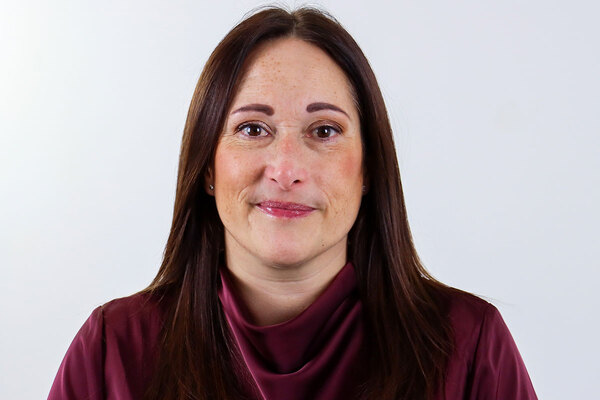
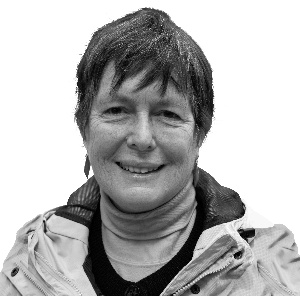
In 1988, Oxford fellow Brenda Boardman wrote the definition of fuel poverty which is ingrained in English law. As the government mulls scrapping her definition, she shares her views with Austin Macauley


You created the definition of fuel poverty we use today (you’re in fuel poverty if you spend 10 per cent or more of your income on energy bills). Last year, Professor John Hills came up with a new version, which could be adopted by government. Is it an improvement?
It was always quite clear in my mind that my definition was for people on low incomes. The real problem with what Professor Hills has done is he has based it on whether a household’s fuel costs are above the median level. So even if fuel prices were to triple, it’s still [based on] the median. Lots of smaller properties won’t ever qualify because they are below the median. What Professor Hills has come up with is totally unresponsive to fuel prices. He’s ignored the problem of affordability. Why not just stick to something everyone understands?
What do you expect the impact to be if the Hills review is adopted?
It’s a gift to the Treasury. Under Professor Hills’ measure there are 2.7 million households in England in fuel poverty. That means 2.7 million forever if you base it on a median. As a result there’s no incentive for the Treasury to put any investment into it, because you’re not going to shift the level up or down.
In the past decade, fuel poverty has become more widely understood. Does that give you hope for the future?
It’s immensely satisfying that it’s being taken seriously but horrific that the number of people in fuel poverty is still rising and that after 30 years of campaigning, our aims have still not been realised. There are 6 million households in fuel poverty in the UK [under the current definition] - it’s not going away.
So is the target to eradicate fuel poverty by 2016 a pipe dream? How will we get there?
It’s a mammoth task in a short period. We need to create a specific standard in a geographical area like that seen in warm zones [local partnerships focused on making homes energy efficient]. I’d like to see that replicated in every local authority area. Every property should be A or B rated. The cost of doing it as a community-wide intervention is going to be less than any other effort. We’ve got to carry out large-scale interventions in low carbon zones.
Do you see a role for social landlords in this?
If a local authority initiates a low carbon zone, it could use housing associations to do the work. They are people-friendly, used to dealing with people with problems, they know the issues as a landlord and probably have the knowledge to carry out energy efficiency measures. I think there’s a role for local authorities and housing associations to work together to deal with all tenures in a geographical area.
We now have the green deal. How can it succeed where other initiatives have failed?
The policies we’ve had have been utterly wrong. Individual measures for individual houses - for example, schemes to help people invest in insulation - when more than half the money is going to the non-fuel poor. The energy company obligation is going to be the only scheme for the fuel poor. There’s a lot of uncertainty as to whether the green deal will work - those on middle incomes may be put off by the costs.
If we’re down to a single scheme, what hope do we realistically have of tackling fuel poverty?
The Energy Bill Revolution campaign is the key. Utilities companies now have to purchase their EU emissions trading allowances. But what happens to that money? It goes to the Treasury. We’re talking about £4 billion a year. The campaign is trying to get that money dedicated to expenditure on fuel poverty.
You’re the leading expert on fuel poverty, but how do you stay in touch with the human side?
Recently I’ve been knocking on a few doors in north Oxford, finding out what a local community group could do to help people get access to government funding. It’s hard. Why should I have the right to nose around in their loft to see whether they have adequate insulation? And by the way, even when people say they have, they usually haven’t. On a one-to-one basis, helping the fuel poor is really quite complex and requires a lot of skill.
Do you ever stop thinking about energy efficiency? It must be a nightmare when you visit friends.
I’m awful. I’ll be down on my hands and knees with my hand up their chimney to see if there’s a draught.
And does your knowledge extend to hardware?
Oh yes. We’ve just extended our kitchen and three of the windows are triple-glazed. They’re brilliant. I’m interested in knowing what works and what doesn’t.
What’s the first thing you would do if you were energy secretary?
I’d introduce mandatory energy efficiency standards for all buildings from today, with all reaching grade A by 2050. It would make it clear that energy efficiency matters.
You’ve said in the past that you want every building in the UK to meet the Passivhaus standard by 2050.
It’s a hope. One of the severest targets the UK has is in the Climate Change Act: an 80 per cent reduction in greenhouse gas emissions by 2050. It’s absolutely essential but seems undeliverable. If we’re to reach that target, there must be zero carbon dioxide emissions from all buildings - that means Passivhaus standard for all 26 million homes.
Brenda Boardman is a fellow at the University of Oxford’s Environmental Change Institute
Related stories