You are viewing 1 of your 1 free articles
Second time round
Over a decade after Carlisle suffered extreme flooding, it has been deluged again. Sophie Barnes asks what lessons were learned after 2005


Video:
features code
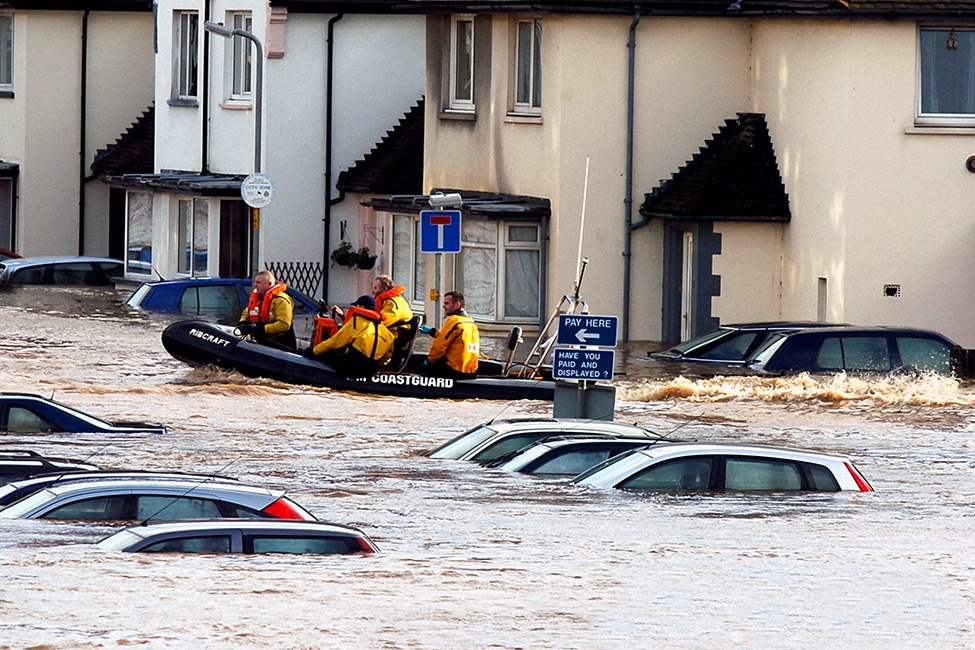
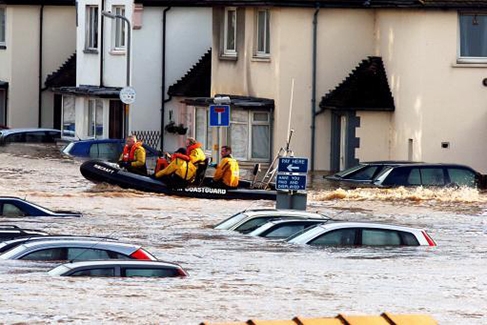
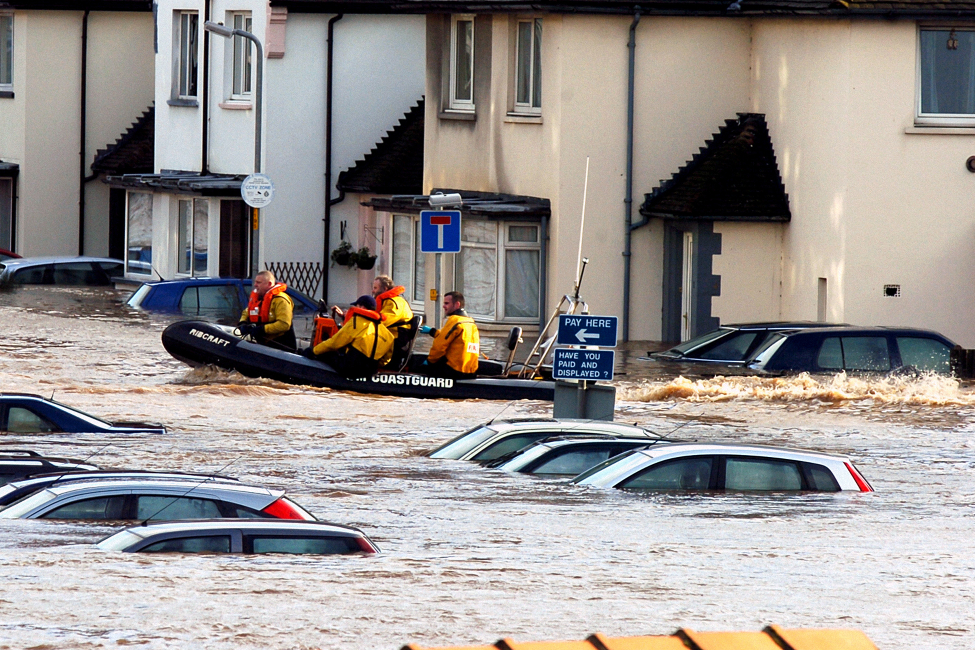
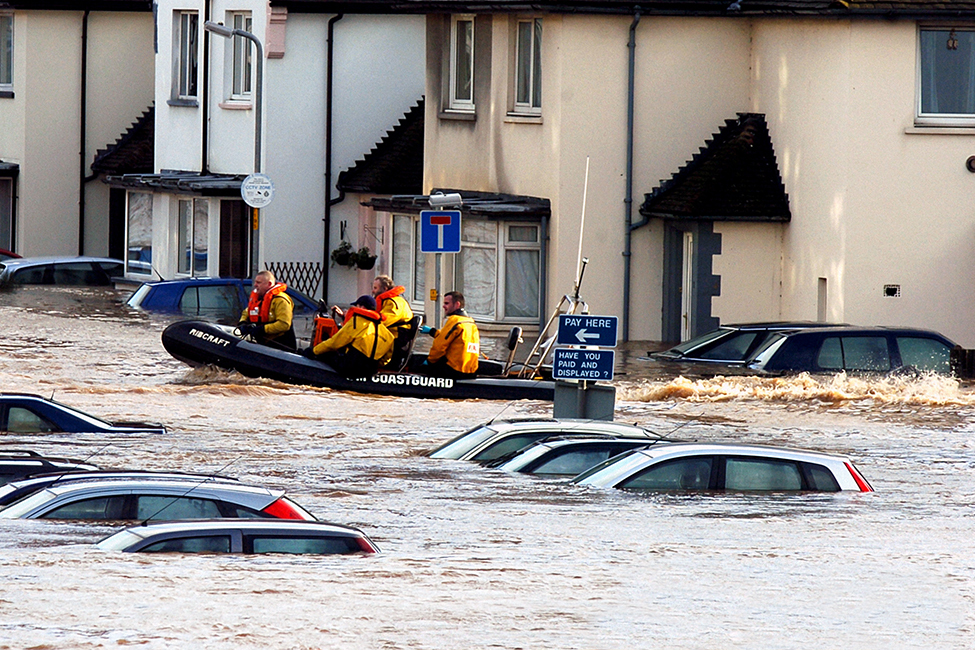
Eleven years on from massive floods that deluged Carlisle, forcing emergency services to row out to rescue people from their homes in wooden boats, the rivers broke their banks once again.
On 6 December 2015, more than a month’s rain fell within 24 hours and all main rivers across Cumbria were at their highest ever recorded levels.
Video:
Ad slot
Once water came over the flood defences, it spread so far that koi carp were found swimming beneath the iced-over pitch of the local rugby ground. They had swum from a garden pond.
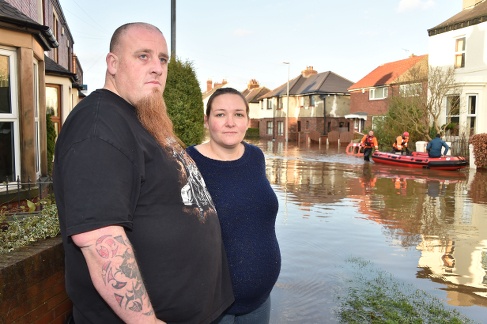
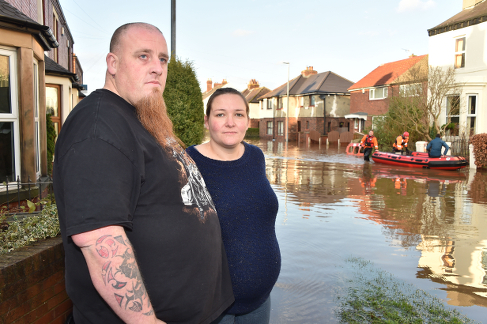
Riverside tenants Craig and Chloe Brownlee-Chapman were among many Carlisle residents who had their lives turned upside down by the floods. Ms Brownlee-Chapman was heavily pregnant when the water hit their home and she gave birth to their daughter, Skye, two days later.
Source: Mirrorpix
Craig and Chloe Brownlee-Chapman, Riverside tenants, were flooded two days before Chloe gave birth
The Brownlee-Chapmans are used to coping with a crisis after the huge flood in 2005 and smaller incidents in recent years. But this time the rain kept coming.
“We got back to the house and the water was about three feet deep. We went out to the supermarket and by the time we got back it had risen another foot,” Ms Brownlee-Chapman explains.
“There were big waves by the motorway. It was like Noah’s ark, all that water banging against the motorway, like the sea,” she adds.
Re-housing families
The Brownlee-Chapmans are not alone. Housing associations in Carlisle and the surrounding area have re-housed many other flooded households. Has the previous devastating flood meant that landlords in Carlisle have been able to respond better and more quickly this time round, though? Have lessons been learned and what role did social housing providers play as the waters rose?
“I need to move back in. I desperately want to go back to that property.”
Craig Brownlee-Chapman
For the Brownlee-Chapmans, this winter’s floods were worse in some ways. “In 2005 the water receded quicker,” Ms Brownlee-Chapman says. “This time, I thought we’d get flooded and the water would be gone by the morning, but we came back the next day and the water was still all over the road.”
A dark water mark stain at waist height on the red wallpaper shows how high the water rose this time.
The Brownlee-Chapmans stayed with family for a few nights before their landlord, 52,000-home Riverside, moved them into an empty property a few streets away from their flooded house.
Mr Brownlee-Chapman has lived in the house - in which his mother was originally a tenant - for 36 years.
He has no intention of leaving and plans to purchase the house through Right to Buy, despite the risk of it flooding again.
“I need to move back in. I desperately want to go back to that property,” he tearfully states.
His mother died in this house, and he lost all his photographs of her when the floods hit in 2005.
The water came in over the top of the flood defences rather than up through the drains as in 2005.
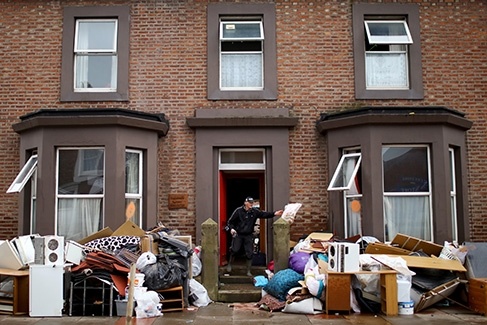
In 2005, the water mixed with sewage waste to create a thick, pungent sludge. This time, when walking around the Brownlee-Chapmans’ house, there is only the smell of damp, whereas Craig still remembers the foul smell from 2005.
“The worst hit homes are now looking more like building sites than homes at the moment.”
John Mansergh, assistant director of business improvement, South Lakes
“In 2005, I was flooded and I lost everything. There was less warning last time. The police came to the door and said, ‘You’re about to get flooded’, and that was it.” This time the Brownlee-Chapmans were signed up to the Environment Agency’s flood alerts and so they were able to move their white goods upstairs before the water hit, but still lost around £5,000-worth of possessions.
Serious damage
Sixty-two of South Lakes Housing’s 3,108 homes flooded, leaving 32 households stranded. They had to move in with relatives, into Church of England vicarages, empty housing association properties, local bed and breakfasts and hotels.
South Lakes estimates the repair work will cost £2m, but the majority of this is being covered by its insurance provider. The floods hit a sheltered housing scheme for the elderly and those with dementia, owned by South Lakes, and five feet of black water came surging through the corridors of the building. Eight flats were severely damaged.
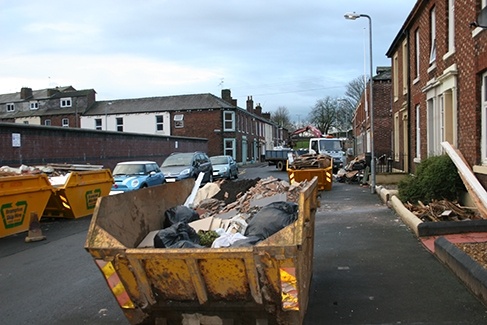
“It is a massive challenge to get these properties back into full use. Some properties have been really badly affected and the worst hit homes are now looking more like building sites than homes at the moment,” says John Mansergh, assistant director of business improvement at South Lakes.
None of South Lakes’ properties were flooded in 2005 but some were at risk, which prompted the housing association to put a plan in place. The team sand-bagged properties in known flood spots and regularly checked and cleared culverts on some estates.
Mr Mansergh said one of the biggest lessons South Lakes had learned from the recent floods is even estates nowhere near a river and on high ground can get localised flooding from water running down from fields and roads. He says the team are working to make these homes more flood-resilient in the future and a number of surveys are underway.
Although housing associations tried to move tenants into empty properties where possible, their efforts were hampered by having to put tenants into equal-sized properties to ensure they were not hit by the bedroom tax. They managed to avoid this scenario, but only after a great deal of manoeuvring.
“It will take six to 12 months for individuals to get back into their properties.”
John Stevenson, local Conservative MP
Riverside manages the majority of housing association properties in Carlisle. Nineteen of its properties were flooded, and 59 suffered water damage. The landlord has 6,000 homes in Cumbria and was able to house 10 families in empty properties. Three families moved into fully decorated homes because these had been prepared for the arrival of refugees from Syria. Cumbria County Council has received an exemption on housing refugees from the government. The council wants to prioritise flood victims and says refugees have been successfully housed elsewhere in the country.
Carlisle City Council approached Riverside to ask if they could help with re-housing 2,000 residents who had been forced out of accommodation by the floods. Dean Butterworth, divisional director at Riverside, said his response was “yes, but no”.
“Obviously one of my driving indicators is not to have any empty properties standing at any point, so we haven’t got any. Through better housing management we can’t really contribute to their disaster planning,” he explains.
Disaster recovery
“Do we divest of them and sell them to someone else who’s prepared to take the risk? Do we demolish them because we know the risk is too great for anybody?”
Dean Butterworth, divisional director, Riverside
Riverside, along with other housing associations in the area, is now keen to be included in local authorities’ disaster recovery discussions, in part to avoid last-minute requests for help.
Mr Butterworth says the 2,000 people who were temporarily homeless have been re-housed, “but hotels are making a lot of money in Carlisle at the moment”.
Local authority disaster recovery groups have gold, silver and bronze commands across the country.
“What I found out through the whole of Cumbria, which is different to other parts of the country, is that housing is not represented on many of those groups so we’re kind of an afterthought until they recognise that people need re-housing, and then they’ll contact the housing services.
“The fact that [housing associations] in Carlisle have a sixth of the constituents within the city means we should at least be on the bronze command so we are there to share that information and offer our resources,” Mr Butterworth reasons. According to Office for National Statistics data from 2014, social housing makes up 14.7% of Carlisle’s housing stock. Carlisle has a population of around 108,000.
Tenants will not be back in their homes for another six to eight months at least. First the properties need to be dried out and then refurbished. Riverside estimates this will come to £1m for the 19 properties that were severely flooded. It also has an eye on the future as it is well aware flooding is likely to happen again.
“The challenge for us is what can we do now? Particularly from an insurance perspective, because we know those properties flood so we’re now doing a risk map of flood plains across Carlisle - where our stock is and what the future risk is,” Mr Butterworth explains.
“The Met Office is saying it’s a once in a 200-year event but we’ve had three floods in the last 11. It’s not going to be 200 years before it happens again.”
After the 2005 floods, Riverside gave flood guards to tenants in flood-prone areas. Prior to 2005 they had no defences.
The emergency team at Riverside has non-electric phones so it was not hit by a power blackout, as happened previously. The team has also discovered hydrosnakes, which are a lightweight alternative to sand bags and can absorb up to 20 litres of water.
Riverside now has to decide what to do with its properties that are prone to flooding. “Do we divest of them and sell them to someone else who’s prepared to take the risk? Do we demolish them because we know the risk is too great for anybody? Or do we just invest our resources on increasing the flood defences? We’re doing that piece of work now.”
The housing association has identified “at least” five properties it wants to sell.
Elsewhere in the area, Impact Housing saw 61 of its 3,000 houses flooded across Cumbria, including an extra care scheme for the elderly and a student halls of residence.
A further 55 properties were affected by flood damage.
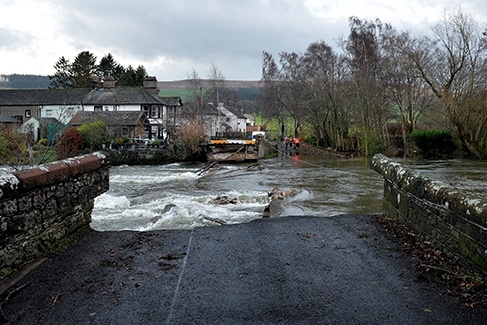
Households in Keswick were severely affected, with 34 properties flooded. The road to Keswick collapsed, cutting off the community from the outside world.
Families have been moved into holiday cottage lets which, says Julie Monk, director of assets and homes at Impact Housing, is “very expensive”.
Some tenants had to temporarily move out of the holiday lets over the Christmas week to make way for holiday bookings that had been made months ago.
Insurance policy
The insurance situation is a mixed landscape for Carlisle and the surrounding area. The housing associations have praised their insurers for reacting quickly when the floods hit and their willingness to cover the costs of drying out and refurbishing homes.
Riverside says its insurance provider has been “absolutely fantastic, they were here from day one”, while South Lakes says its provider has agreed to cover most of the costs it faces. However, the cost of contents insurance is out of reach for most tenants.
The Brownlee-Chapmans looked into getting insurance but decided it was unaffordable. “The latest quote we got about a year-and-a-half ago was £98 a month and the excess for water-related damage was £6,000. We just said it wasn’t worth it and we can’t afford it on a monthly basis. And then they got back in touch to say they wouldn’t offer it in the end anyway,” Ms Brownlee-Chapman explains.
Local Conservative MP John Stevenson tells Inside Housing “some support” for uninsured families would be given by the government and some would be given through the Cumbria Community Foundation appeal, a local charity. He says the chancellor has agreed to match-fund the charity up to £2m.
“Looking ahead, the government policy of Flood Re will be enormously beneficial for owner-occupiers,” he adds.
Flood Re is a flood re-insurance agreement between the government and insurance providers to support 350,000 households at highest flood risk. The scheme will be in place for 25 years and is designed to make flood cover affordable for those households at highest risk of flooding and increase availability and choice of insurers for customers. Flood Re has been met with scepticism by some, however, because it will not cover houses that were built after 2009. The scheme hasn’t yet paid out after the recent floods, but 1,212 households in Carlisle have received £500 each for flood damage from emergency government funding.
In answer to a recent parliamentary question, floods minister Rory Stewart said “New housing development should be located to avoid flood risk, or where development in a flood risk area is necessary, it should be designed to be safe, appropriately resilient to flooding and not increase flood risk elsewhere, in line with the national planning policies in place. This means properties built from 2009 should already be insurable at affordable prices”.
However, a recent analysis by Greenpeace found that nine of the 20 Housing Zones on brownfield sites announced by George Osborne last year are at risk of partial or serious flooding.
A 2013 paper by London School of Economics academics says the scheme did not taken climate change into account and how this affects flood risk. It adds the scheme is “likely to be put under increasing pressure and may prove to be unsustainable, because the number of properties in future that will be at moderate and high probability of flooding has been significantly underestimated”.
To go back to the local MP, Mr Stevenson says in 2005 the residents of Carlisle were “very much shell-shocked” when the floods hit.
He adds: “I don’t think we were as resilient and I think it took an awfully long time for us to recover. I think this time there’s experience of what happens. People are able to respond more quickly, they know what needs to be done, and the insurance companies are much better prepared and organised. It will take six to 12 months for individuals to get back into their properties, but I think the city as a whole is going to bounce back much more quickly this time, which is a positive.”
Eleven years ago, Carlisle Housing Association - which later merged into Riverside - had around 100 properties that were flooded. This time only 19 households had to leave their properties due to flooding. Riverside partly attributes this to speedy reactions on its staff’s part. Once the flooding alerts went out staff volunteered to sandbag Riverside properties.
Less households have been forced to leave their homes, but Mr Stevenson warns about the “emotional impact” this can have.
“The younger generation are maybe more resilient and can bounce back more quickly. It’s affected some people badly. But people are getting on with it, they are being resilient. I think there will be a degree of anger as well. The important thing now is to get the city back to normal as quickly as possible, and to get residents back into their homes as quickly as possible.”

Related stories