You are viewing 1 of your 1 free articles
Sector responds to changes under Future Homes Standard
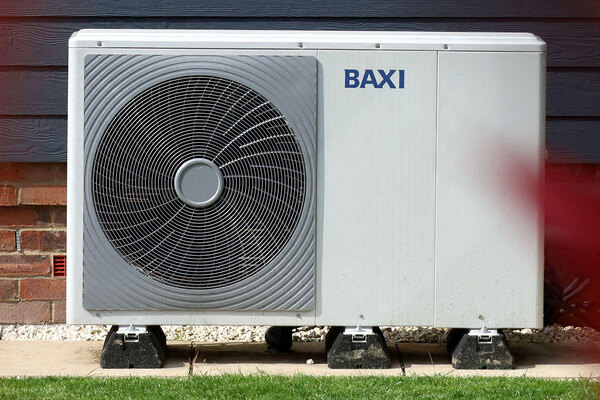
The government has revealed that all new homes will require a heat pump and most must include a form of renewable technology under the new Future Homes Standard. Stephen Delahunty rounds up the sector’s response


 Sector responds to changes under Future Homes Standard #UKhousingStephen Delahunty rounds up the sector’s response to changes under the government’s Future Homes Standard, including all new homes requiring a heat pump #UKhousing
Under the proposals, new builds will also need to have wastewater heat recovery, better airtightness and decentralised mechanical extract ventilation.
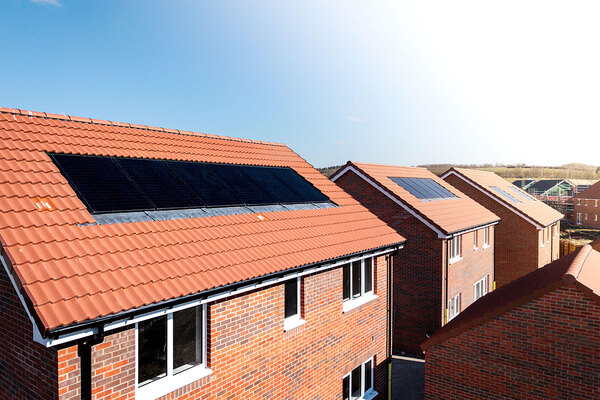
While solar panels are not mandatory, it is expected that most buildings will use these to meet renewable energy rules.
But high-risk buildings will be exempt and government guidance will include cases when it is acceptable not to install solar panels, such as where there are issues with roof design or shading.
The measures are being brought in through changes to building regulations, which will be in force from March 2027, however there will be a year-long transitional period.
Here, Inside Housing rounds up responses from key sector figures.
Read more
Matthew Scott, a policy manager at the Chartered Institute of Housing: “The publication of the Future Homes Standard is the final piece of the jigsaw that will give housing professionals the certainty they need to expand their housebuilding programmes.
“We welcome the government’s decision that all new homes will be built with low-carbon technology and higher levels of fabric performance, which will future-proof current and future generations from fuel poverty.”
Jonathan Layzell, chief executive of Stonewater: “The Future Homes Standard is an important step towards improving the quality and performance of new homes.
“For customers, this is about real, practical outcomes – homes that are warmer, more comfortable and cheaper to run from the moment they move in.
“Across our newest developments, customers are already telling us about the difference energy-efficient design makes. Families moving from older, less efficient homes have seen energy bills fall significantly, in some cases nearly halved, helping to reduce financial pressure while improving day-to-day comfort and well-being.
“That is why sustainability and environmental efficiency underpin every new home we develop. By prioritising fabric-first design, low-carbon heating and smart technologies that help customers understand and manage their energy use, we are reducing energy demand at source and helping people feel the benefits in their everyday lives.
“With the right clarity on implementation, the Future Homes Standard can embed energy-efficiency across the sector, ensuring more people can move into homes that are affordable to live in and built for the future.”
Richard Cook, chief development officer at Clarion: “We welcome the publication of the Future Homes Standard as an important step forward for the sector, providing greater clarity on how we collectively deliver the low carbon homes the country needs.
“At Latimer [Clarion’s development arm], this is something we have been actively preparing for over a number of years. While we will take time to review the detail of the standard, its direction of travel is clear.
“We remain committed to working with partners across the sector to deliver high-quality, sustainable homes that are not only better for the environment, but more affordable to run for our residents.”
Anna Clarke, director of policy and public affairs at The Housing Forum, said the long delays in publishing the standard have caused uncertainty over the details of what will be required and when.
She added: “This contributed to some of the problems we have seen with social landlords being unwilling to take on new homes built with gas boilers, even though these are inline with current regulations.
“Recent world events have highlighted how important it is to insulate people from the effects of volatile gas prices – homes built to the Future Homes Standard will use much less energy than older homes. Being off-gas also means that once the grid if fully decarbonised, they will be zero carbon, with rooftop solar giving further financial savings on bills.
“Now that we know the detail and timelines, the housing sector can plan ahead with certainty – designing, planning and building new homes for a low-carbon future.”
Dan Nicholls, chief product officer at SNRG: “Mandating solar on new homes through the Future Homes Standard is the right direction and an important step for cutting emissions and household energy bills.
“The focus now must shift to delivery. The debate has largely centred on what standards new homes should meet, but less on how developers are expected to deliver them in practice, particularly given grid constraints, infrastructure requirements and upfront expenditure.
“New approaches are needed to ensure that costs do not fall on developers or homebuyers. Models such as smart grids, which fund solar upfront and manage it at a site level, offer a solution – reducing costs by thousands per home and making compliance with the Future Homes Standard both affordable and practical.”
Lucy Haynes, partner in the residential development team at law firm Shakespeare Martineau: “This is a classic case of good policy, bad timing.
“No one is arguing that making renewable energy more widely available doesn’t cut energy bills and benefit the environment, but this unnecessarily piles the pressure on house builders at an already challenging time.
“The government’s push on housebuilding, combined with geopolitical conflict disrupting supply chains, means development is already complex and costly. Adding more requirements and red tape will only inflate those costs, and pretty soon many developments will become unviable.
“Unfortunately, SME house builders will be hit the hardest, as they will have to invest in advice to wade through the regulation to ensure they comply. However, all house builders, regardless of size, should start reviewing their design codes and shoring up their supply chain as soon as possible to work out how they will be able to deliver these new regulations.”
Nick Houghton-Best, national head of new builds at Daikin UK: “We welcome the announcement on the Future Homes Standard and the next evolution of Part L of the building standards.
“It provides much-needed clarity and sends a strong signal to the industry that it must prioritise sustainable alternatives over polluting and inefficient fossil fuel boilers. It is clear that heat pumps have a central role in delivering on the government’s housebuilding and net zero priorities.
“When combined with solar panels, an air-to-water heat pump can create one of the most efficient home-energy systems available. Solar can generate much of the electricity used to power the system, further reducing bills and emissions. In some configurations, solar can offset nearly all of the electricity required for heating and hot water.
“We’re committed to working closely with government and partners across the sector to help turn policy into practical, well-performing homes that people are genuinely comfortable living in.”
Chris Hewett, chief executive of Solar Energy UK: “With grants to be made available soon for low-income groups under the Warm Homes Plan, more new homes being built with rooftop PV [photovoltaics] and now with plug-in systems coming for homes where that can’t be deployed, plus accelerating demand from the public, 2026 is bound to set a record for smaller-scale solar installations.”
Ben Rowlands, head of solar PV at the National Federation of Roofing Contractors (NFRC): “The direction of travel is right, and we want solar to succeed.
“But rooftop solar is a roofing system decision as much as an electrical one, and the current accreditation framework does not reflect that. [The] industry is still working through where responsibilities between trades begin and end, and consumers are bearing the risk in the meantime.
“The more solar we put into the built environment, the more important it becomes to get the basics right. Solar-related fires are already rising at roughly twice the rate of installations. We cannot keep scaling deployment and hope the safety framework catches up. This not only risks homeowner safety, but also the future of the industry.”
Membership body the NFRC is calling on the government to ensure roofing expertise is represented in the workforce that will deliver the Future Homes Standard and Warm Homes Plan, and to treat rooftop solar as part of the building envelope, not a bolt-on electrical product distinct from the built environment.
Deepika Singhal, head of ESG and sustainability at built environment consultancy Hollis: “The Future Homes and Buildings Standard is a long-overdue reset for new domestic and non-domestic buildings.
“The direction is right, but the sector can no longer afford to treat emissions from buildings as someone else’s problem if net zero by 2050 is going to mean anything.
“Now the challenge is whether the industry fully understands the requirements and starts implementing the standard. The transition period should not be an excuse for delay. Designers, developers and contractors need to get to grips with the new rules now for this to be effective.”
Dr Benjamin Ralph, director and head of building safety and fire service at Hollis: “The building safety implications of plug-in solar have not been addressed in this announcement.
“Panels and battery units on balconies introduce fire risk, falling hazards and additional loading, all of which are particularly concerning in higher-risk residential buildings. We have already heard from a local authority client whose residents are asking about fitting panels to balconies with cable ties. We need to understand what safeguards will apply to the buildings where the risks are greatest.”
Sign up to Inside Housing’s Asset Management newsletter
Inside Housing’s Asset Management newsletter brings you comprehensive in-depth news, comment, insight and analysis of how affordable housing providers are managing their homes.
Already have an account? Click here to manage your newsletters.
Related stories