You are viewing 1 of your 1 free articles
The housing association that runs a recycling plant
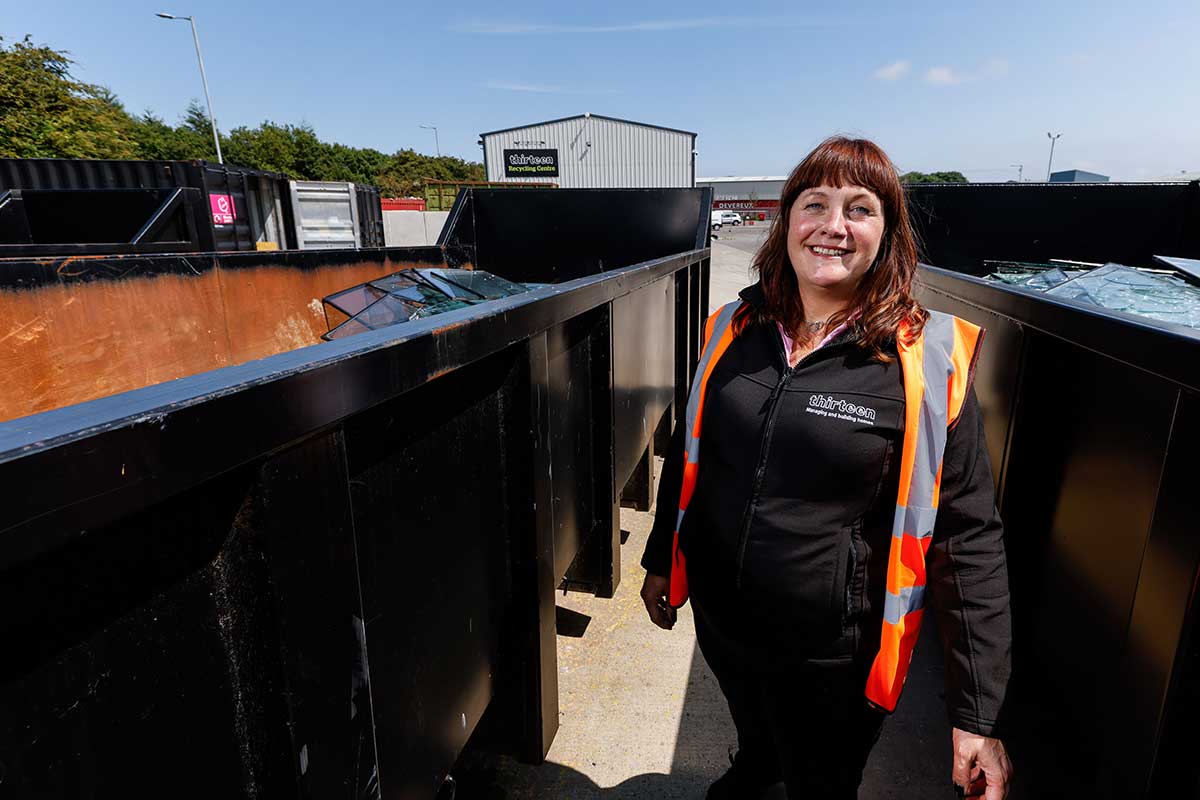
Why would a housing association set up a recycling plant? Emma Chesworth visits Teesside to find out how Thirteen is reducing waste. Photography by Dave Charnley


 Why would a housing association set up a recycling plant? Emma Chesworth visits Teesside to find out how Thirteen is reducing waste #UKhousing
In the middle of a North East industrial estate, a social landlord is doing something very different.
Thirteen owns and manages around 34,000 properties from North Tyneside to Yorkshire, making it the largest landlord in the North East of England. Now it has expanded its portfolio to include its very own state-of-the-art recycling centre – the first of its kind in the country – allowing it to manage the waste it generates through maintenance, repairs, environmental improvements, void properties and fly-tipping on land owned by Thirteen.
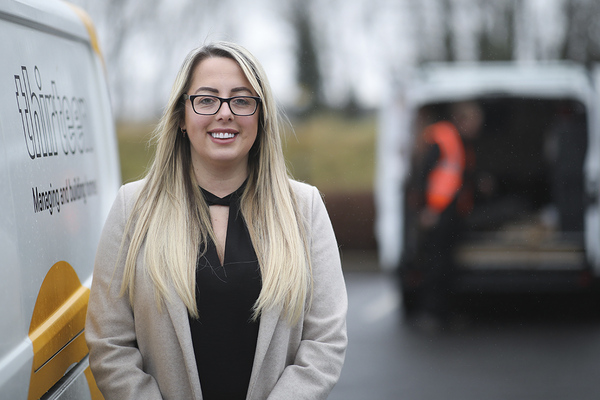
Based in Billingham, Teesside, the centre is run by waste management expert Helen Beaman. It opened in January and is reducing the amount of waste going to landfill, boiler by boiler and fridge by fridge.
“By having our own recycling centre we have far greater flexibility to do more with our waste, reduce the amount that goes to landfill and reduce the costs that are associated with waste generated in day-to-day housing management,” Ms Beaman explains.
Thirteen refused to disclose any financial information about the plant, saying that the motivations for setting it up were environmental, and the information is commercially sensitive.
A report by government recycling body WRAP suggests that most councils in the UK charge a ‘gate fee’ of about £40-45 per tonne to process waste. This includes both recycling and waste going to landfill. Landlords Inside Housing spoke to said that waste from construction and maintenance is largely packaged into contractor fees, so it is hard to pin down a cost.
One mid-sized Welsh housing association told Inside Housing that it spends £100,000 a year on waste disposal, not including waste dealt with by external contractors, or time spent transporting waste.
Data from the SHIFT index, which gathers detailed environmental data from its housing association members, suggests that most waste is already recycled in this way.
SHIFT analysed a sample of recent data from six landlords for Inside Housing, and found that 82% of waste from maintenance is recycled on average, while 15% is diverted to energy from waste plants. Only 3% goes to landfill. For construction, recycling rates are higher – with 95% recycled, 4% burned for energy and 1% going to landfill.
Read more


Partnering up
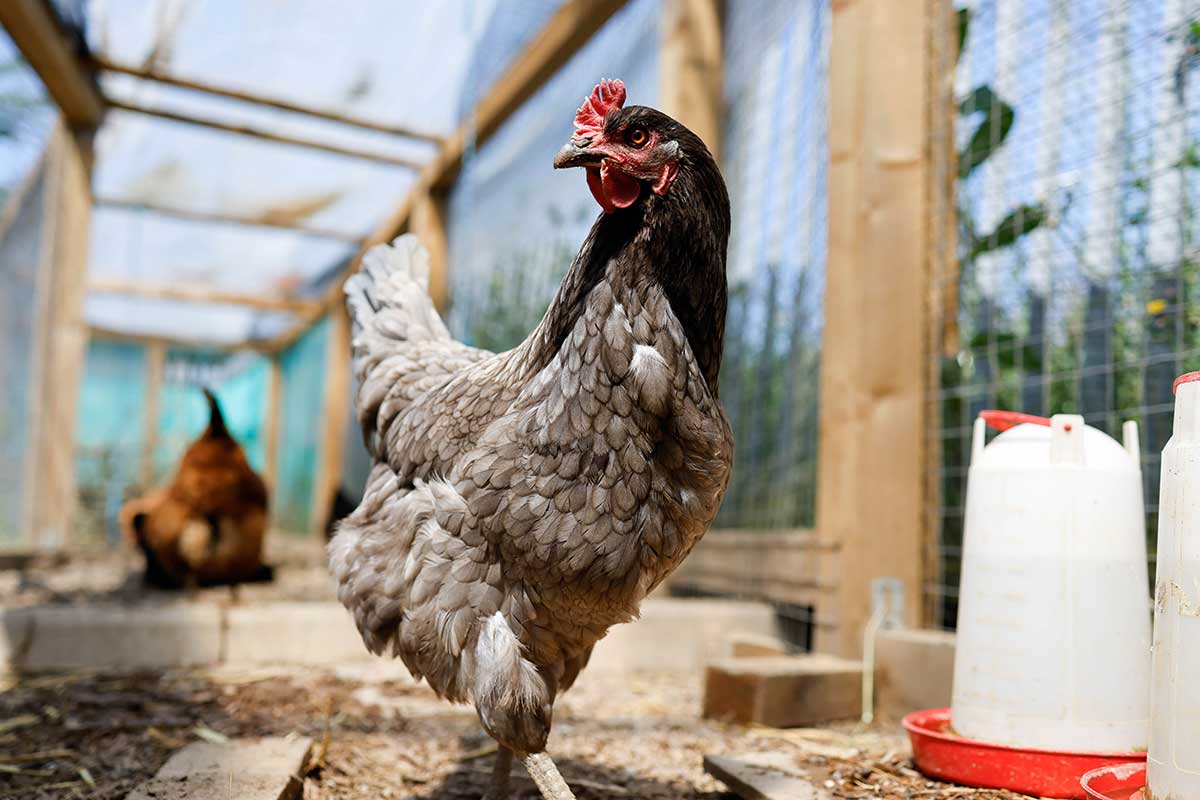
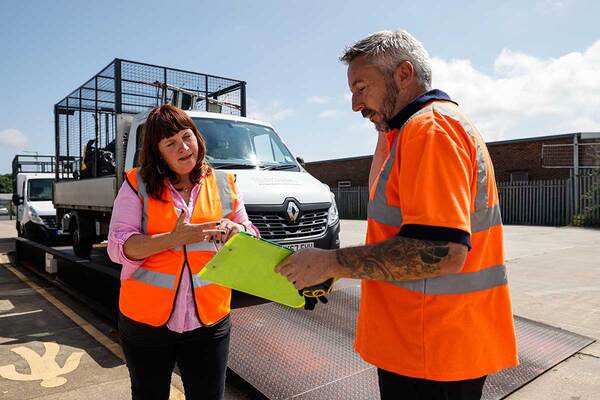
As you walk into Thirteen’s recycling site, you can immediately see the weighbridge – a massive scale that allows truckloads of materials to be weighed, and means Thirteen can closely audit what comes into and goes out of the centre. Surprisingly, you can also hear the distinctive sound of chickens clucking as you walk around. More on that later.
“The weighbridge is a vital part of the operation and it was our initial major investment as it allows us to see what type of waste is coming in and from where,” says Ms Beaman. “Every vehicle coming on site with waste is registered, weighed and then sorted.”
Since opening at the start of 2020, the centre has reclaimed 150 tonnes of wood, 20 tonnes of metal including 150 boilers, 300 tyres, 275 televisions, 250 fridges and approximately six tonnes of small electrical appliances. During that time, half of the bulky items received have been broken down and materials recovered.
“The North East is blessed with a great range of well-established, high-quality waste management companies and it is still growing and technologies are continually advancing,” says Ms Beaman, who began her career at the Environment Agency in 1995.
“We want to partner up with as many of those companies as possible to find the best people to work with to get the optimum solution for our waste. So, for instance, our waste wood is sold to a nearby biomass power station. Over the past two months, we have reclaimed almost 20 tonnes of uPVC windows which, once we have removed the glass, we then sell the frames to a company which uses them to make new uPVC frames. There is a large cost associated with waste so we are always looking at cost-neutral solutions or ways to provide an income through the waste.”
Having started out as a freshwater ecologist and pollution prevention officer, Ms Beaman soon developed a passion for working in waste management. After moving to the North East in 1998, she worked for a council for 22 years, before joining Thirteen last year to run the recycling centre and develop waste reduction and education projects.
“We will create starter packs to allow people to have a sustainable tenancy and a comfortable home from day one”
While some of Thirteen’s waste has to go to landfill, the centre aims to reduce that amount by 95% by 2025 through reducing, upcycling and recycling the waste.
The site – which employs a supervisor, three site operatives and an admin assistant – is completely carbon neutral, thanks to the solar photovoltaic panels that produce enough electricity to power the site as well as a pool of five electric cars and vans.
In numbers
20 tonnes
Amount of metal reclaimed by Thirteen since the start of 2020
£40-45
Average cost of sending a tonne of waste to local authority to be recycled or landfilled
95%
Thirteen’s target reduction of waste going to landfill by 2025
Furniture for tenants
Next to the bank of skips where the waste is separated is a warehouse full of furniture, paint and household items. Starting this autumn, there will be an upcycling department for furniture from empty properties and offices, and unsaleable stock from furniture stores, which will be refurbished to help its tenants.
“We will have a joinery workshop and a sewing room and volunteers to help upcycle the furniture, and make curtains and bedding, in order for us to be able to support our most vulnerable customers,” Ms Beaman says. “We will create starter packs to allow people to have a sustainable tenancy and a comfortable home from day one. For many different reasons, we have some customers who are starting out with absolutely nothing and these starter packs and furniture will help them. It makes sense to do, as the benefits see us reducing waste and at the same time supporting people when they most need it. We will also be working closely with our employability team who support tenants not in work, training or education.”
Once the furniture and household item service is up and running, Thirteen will look to create an app for customers – all the items available, from mattresses to pots and pans, and from cans of paint to toys, will be listed, allowing tenants to browse and book them with the click of a button.
Above the furniture store is office space and meeting rooms to support agile working for employees at Thirteen. It also has a community resource and a classroom for schoolchildren to learn about reducing waste and showcasing the site’s biodiversity. A screen in the classroom shows links to live cameras on the site’s bird boxes and bat boxes.
“We have chickens, a pond, trees and bird boxes, including an owl box, and 200,000 bees here at the centre,” Ms Beaman says. “This ecology aspect is hugely important, both as part of our education programme but also to increase our biodiversity. The hens are really popular – staff bring in veg peelings from home for them to eat and in return we get a steady supply of eggs to take away. We have a seating area by the hen house and pond and we have been using that outdoor space to hold well-being sessions for our staff who, like many, have been working from home. To be able to come along, sit outside and talk to colleagues has been a vital way of staying connected.
“I am really proud that our recycling centre will continue to evolve and will no doubt be a landmark scheme for the housing sector. Having the ability to control our own waste and its processing, as well as being able to educate and engage people on the impacts on the environment, is a real leap forward that will contribute towards cleaner, greener communities.”
Sign up to our Best of In-Depth newsletter

We have recently relaunched our weekly Long Read newsletter as Best of In-Depth. The idea is to bring you a shorter selection of the very best analysis and comment we are publishing each week.
Already have an account? Click here to manage your newsletters.
Related stories