You are viewing 1 of your 1 free articles
What impact will the Building Safety Bill have? The key takeaways
Four years after the Grenfell Tower fire, the government has published its Building Safety Bill. But what exactly is in it and how will it affect safety in tall buildings? The Inside Housing news team has pored through the 218-page document for the key takeaways


 The @insidehousing news team has analysed the Building Safety Bill in full and brought a list of the key takeaways from the 218-page document #UKhousing
Yesterday the government published its Building Safety Bill. It comes nearly 12 months after a draft version was first made public and more than four years after the Grenfell Tower fire forced the country to overhaul its building safety regime which has since been found to be wholly inadequate.
The government has sold the Building Safety Bill as the biggest change to building safety regulation in a generation and that it will transform the way we design, construct and manage our tall buildings.
The changes being introduced via the bill are wide-ranging and will have a huge impact on those involved in the construction and management of residential blocks.
While some of these changes have been known for a while, yesterday’s bill provides more detail and how exactly these changes will be implemented and when we can expect them.
Inside Housing has summarised the key changes being introduced via the legislation, as well as some of the reaction to the reforms.
Read more


 Hundreds of dangerous buildings to miss out on chance to sue developer after building safety changes
The Building Safety Regulator
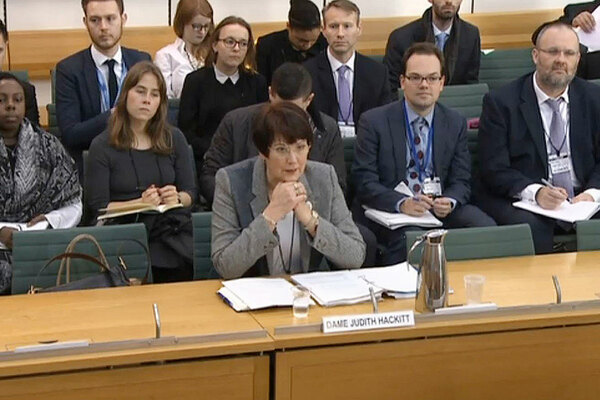
The creation of a new Building Safety Regulator is at the heart of the Building Safety Bill. It comes more than three years after Dame Judith Hackitt first called for a new regulatory body to oversee the built environment as part of her independent review of building regulations and fire safety following Grenfell.
As outlined in the bill, the regulator will have three main functions: overseeing the safety and performance system for all buildings, encouraging the improvement of competence in the built environment sector, and leading the implementation of the new regulatory regime for higher-risk buildings.
The regulator will have a range of enforcement powers in relation to high-rise buildings, too. To support its work, the bill also gives the regulator a duty to maintain three committees to advise on building functions: a residents’ panel, an industry competence committee and a building advisory committee.
The government said the Building Safety Regulator will be operating at scale within 12 to 18 months, but is already working in shadow form. In February it was announced that Peter Baker, who was director of building safety and construction at the Health and Safety Executive, will lead the work to set up the Building Safety Regulator.
Strengthening the building control profession and oversight of the built environment
To drive up the competence of the building control profession, the Building Safety Regulator will maintain a register of building inspectors and building control approvers.
The building control sector has faced heavy scrutiny since the Grenfell Tower fire, with hundreds of buildings being signed off by both local authority and private approved inspectors, only to be subsequently found to have not met building standards at the time.
A new framework will also be introduced to oversee the performance of building control bodies and give the regulator far more power to act against those found to be underperforming.
The Building Safety Regulator will set minimum performance standards that building control bodies must meet and will also set reporting requirements.
It will continuously assess the performance of building control bodies and will have investigatory powers when these bodies breach the standards, alongside a series of escalating sanction and enforcement powers. These will include removal from the register and the power to advise the secretary of state to make an order to take over a local authority building control department by appointing officers from another authority.
The Building Safety Regulator will also work with the construction industry and technical experts to make recommendations to government for changes to the building regulations.
All of the above measures are due to come within 12 to 18 months of royal assent.
The new regime and dutyholders

The new regime will introduce a number of regulatory measures for buildings that are at least 18m tall or have at least seven storeys and two residential units.
It will include the introduction of dutyholders who will be responsible for a building’s safety at different points in its lifetime.
For example, the principal designer will be responsible for the design phase and then the principal contractor will look after the construction phase. Responsibilities given to dutyholders will include sharing information and appointing people with the right skills and experience.
The building’s cycle will be split into different ‘gateways’ and the building owner must demonstrate compliance at each of these points, for example prior to construction beginning and prior to occupation.
The new regime also introduces the requirement for a ‘golden thread’ of building information that will be stored digitally and updated throughout a building’s lifecycle, including information such as material product details and inspection reports. This will apply to both new and existing buildings.
This lack of information passing from the different stakeholders at different aspects of a block’s lifecycle has proved to be a particular issue in recent years, with building owners and managers unable to find information around materials used on buildings or operation and maintenance files in many cases.
Mandatory reporting to the new Building Safety Regulator will also be introduced, alongside an ongoing duty on the accountable person for each high rise to assess the building safety risk relating to the parts of the building for which they are responsible and take all reasonable steps to prevent a building safety risk materialising.
While the phrase ‘accountable person’ implies one single person will be responsible for this duty, the government said it recognises that a building will have multiple accountable persons. When it comes to social landlords, the accountable person will likely be a team of people.
The government intends the new regulatory regime to be introduced within 12 to 18 months of royal assent.
Buildings that are occupied and building safety managers
A key element of the Building Safety Bill is the idea that each high-rise building in the country will have an accountable person who will be responsible for ensuring statutory duties introduced in the bill are met. The obligations on the accountable person are expected to come into force within 12 to 18 months of the bill receiving royal assent.
Under the bill, it will be mandatory for an accountable person to register existing occupied high-rise residential buildings with the newly established Building Safety Regulator within a defined period, while new high-rise residential buildings must register before they become occupied.
Their responsibilities will also include the requirement to conduct an assessment of building safety risk and register these in a safety case report, which will be stored within the golden thread of information.
This part of the bill also seeks to establish a channel of communication through which residents can register their concerns by requiring the accountable person to create a resident engagement strategy and complaints procedure.
The accountable person will also be expected to apply for a building assessment certificate, which confirms that they are meeting their duties, by submitting their aforementioned case report to the new regulator.
Another key aspect of the accountable person’s role is to appoint a building safety manager. The building safety manager will be in charge of a building, or up to 10 buildings, and it will be their role to assist in the management and oversight of the blocks they are responsible for and ensure they meet obligations.
This is expected to be one of the biggest changes for responsible persons managing blocks, with many building owners already trying to recruit for these new roles. But in some cases this is proving difficult, due to a lack of clarity on exactly what type of competencies these managers will need and the salaries for these roles costing anywhere between £55,000 and £100,000.
Placing greater responsibilities on building owners with regards to fire

The second phase of the Grenfell Tower Inquiry has shown us how important it is for those managing the buildings to be on top of the fire safety for their block, have information on these areas and that the people carrying out assessments are competent.
As Grenfell has proven, the current regime does not provide this and instead we have seen a lot of buck passing over who is responsible for what. The Building Safety Bill looks to address this by reforming the Fire Safety Order, the current regulation in place governing this.
As part of this, new requirements will be placed on a building’s responsible person, usually the building owner, which will include making it clearer for residents who the responsible person is and will require them to preserve and make available appropriate fire information for residents over the building’s lifetime.
One of the things the building safety crisis has exposed is that in many cases leaseholders living in buildings do not actually know who the person responsible for their building is, while huge holes in safety information for some blocks also exists.
The reform will also put greater emphasis on the responsible person ensuring that the professional carrying out fire risk assessments is “competent”. The terms of what is competent in the bill are pretty loose, with the bill saying competence equates to “someone who has sufficient training and experience or knowledge and other qualities to enable the person properly to assist in making or reviewing the assessment”.
To ensure that this is adhered to rigidly, tougher fines will be brought in for those responsible persons that breach the Fire Safety Order. The changes are expected to come in six to 12 months after the bill receives royal assent.
Gateway points and golden thread
The government has defined three separate gateway points – these are the points at which the building owner must demonstrate compliance during the design and building of a new high rise.
The first gateway point will be during the planning process and will require those submitting planning applications to consider fire safety issues such as site layout, water supplies for firefighting purposes and access for fire appliances. All relevant planning applications will be required to include a fire statement.
This gateway is being introduced via amendments to secondary planning legislation rather than the Building Safety Bill and will come into force on 1 August.
Gateway two will take place before building work starts. At this point, building control approval must be obtained from the Building Safety Regulator and applicants will have to demonstrate how the proposals comply with regulations, including information about how the new dutyholder, competence, golden thread and mandatory occurrence reporting requirements will be met. If a developer attempts to start building without this approval, the regulator will have a number of enforcement options, including prosecution.
Gateway three will occur before occupation of the building. At this point an application must be submitted to the Building Safety Regulator, which will then assess whether the building complies with regulations, undertake inspections and issue a completion certificate. This information must also be handed over to the building owner.
Gateways two and three will be introduced within 12 to 18 months of royal assent.
The golden thread of information for new high-rise buildings will be developed throughout the design and construction phases. It will then be handed over to the building owner on completion and developed during occupation by the relevant dutyholders and accountable persons.
Strengthened enforcement and tougher sanctions
The new regime envisioned by the Building Safety Bill is meant to be stringent, and it comes with tough sanctions for those who break the rules.
Directors or managers of companies responsible for the safety of high-rise residential buildings will be personally liable for failings, with new criminal offences for the most egregious cases carrying the potential for two-year prison sentences.
In particular, neglecting to register buildings with the Building Safety Regulator or not applying for a building assessment certificate when required could result in criminal action.
Where it has concerns with a block, the Building Safety Regulator will be able to investigate and issue compliance notices. If the problems are not rectified by a set date, that too will be a criminal offence.
Serious failings may result in a building being put into “special measures”, with a manager appointed by the regulator to take effective control of its safety.
Things will also get thorny where a developer attempts to start building work without gaining approval from the Building Safety Regulator. Again, this could lead to prosecution.
Criminal punishments may also ensue for those who attempt to exploit or frustrate the system, for example by providing the Building Safety Regulator with false or misleading information.
The regulator will also be able to investigate building control bodies, with the power to de-register private approvers that fail to meet standards and to recommend the government to take over a floundering council building control department.
Then there is the national regulator of construction products, which was put into the bill having been announced in January after revelations about an insulation board used on Grenfell Tower which emerged at the public inquiry. This body will be able to remove products from the market if it deems them to pose a safety risk and prosecute those who fail to comply, as long as they are UK-based.
Additionally, the bill seeks to strengthen the Regulatory Reform (Fire Safety) Order 2005, clarifying that failure to follow statutory guidance can constitute a breach and increasing the maximum associated fines.
The new enforcement powers set out in the bill are intended to come into force within 12 to 18 months of it passing into law – so likely sometime between spring and winter 2023.
Inside Housing has previously discussed what social landlords need to know about sanctions as they were set out in the draft version of the bill.
Costs to leaseholders

By far the most controversial aspect of the government’s approach to building safety in recent months has been its failure to commit to protecting all leaseholders from paying to fix flaws that were not of their making. It has come in for consistent criticism over its handling of the issue, including from some of its own party’s MPs.
Currently, the law requires homeowners in blocks of flats to contribute towards building works – including safety work such as removing dangerous cladding – through service charges. The draft version of the Building Safety Bill, published in July last year, tabled the concept of a ‘building safety charge’, which would be separate to service charges. Ministers argued that it would make the system more transparent.
But there was outrage from some quarters over the inclusion of clause which would have allowed building owners to charge for historical building safety costs – even for defects which pre-dated residents moving in. Among those to condemn this proposal was the Housing, Communities and Local Government Select Committee, which recommended that the bill be amended “to explicitly exclude historical costs from the building safety charge”.
The government has accepted the committee’s recommendation. The legislation tabled yesterday will only allow building owners to use the building safety charge to cover the ongoing costs of the new regulatory regime. After a more costly initial two-year transition period, the government estimates that the average monthly building safety charge bill will be £16 per leaseholder. This new charge is expected to come into force some time between spring and winter 2023.
However, it does not appear that the government believes the Building Safety Bill will completely protect leaseholders from remediation costs. In an explainer on the legislation, it said: “The Building Safety Bill does not make leaseholders liable for the cost of undertaking capital works, for example removing unsafe cladding.
“However, where existing leases allow for these remediation costs to be passed on, the Building Safety Bill will bring forward measures to protect leaseholders, by placing additional duties on the building owner to explore alternative cost recovery routes before passing costs to leaseholders.”
In short, building owners can still pass on costs if they are able to show that all other avenues have been exhausted.
On this point, it is important to remember that the Building Safety Bill is much more focused on constructing and maintaining new buildings rather than fixing safety issues in existing blocks.
Extending the time for suing developers
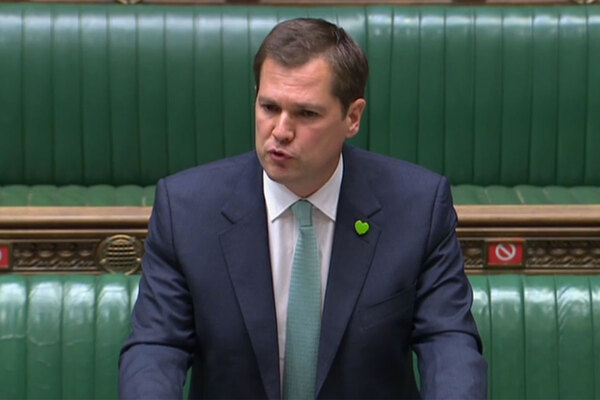
When housing secretary Robert Jenrick trailed the Building Safety Bill on several programmes over the weekend, the amendment that hit the headlines was the doubling of the time period in which leaseholders could sue developers for shoddy workmanship.
The Defective Premises Act was introduced in 1972 and currently stipulates that if dwelling is unfit for habitation, a leaseholder can make a legal claim, as long as it is within the six-year period after the building was constructed. However, this period has proved a stumbling block for some leaseholders considering making a claim against the original developer as many have found out through the building safety crisis that their building was developed well before this period.
Under the amendment, the time in which leaseholders can claim will be extended from six to 15 years. And, crucially, the change will also see the act cover refurbishment work, too. Previously the act covered only the construction of a dwelling. This is significant considering just how much refurbishment and remediation work will be required to fix the hundreds of buildings with fire safety issues at the moment.
The new time limit will come into force two months after the bill gets royal assent, which is not expected for at least another 12 months but in reality could be more like 5. This means that if the bill is made law in 2022, the cut-off point is 2007, and so on.
However, there has already been questions around how effective this will be. As a snap poll from the UK Cladding Action Group poll over the weekend showed there were still 236 buildings that would not benefit from the new legislation as their blocks were built well before the new 15-year period the time covered.
There is also the question of whether those whose buildings fit within the 15-year period will have the resources or ability to launch a timely and costly legal claim against a developer.
So far there have only been a handful of cases where leaseholders have launched claims against developers and many others are sceptical about their ability to challenge, due to costs and the argument from developers that these buildings were built to the building regulations and standards of the time.
The extension to the defective premises act was not the only big change of previous law that the Building Safety Bill addresses.
The new bill proposes the to repeal Section 38 of the Building Safety Act and bring it into force. The Section 38 provision makes it possible to make a claim against a developer for a breach of duty with regards to building regulations, but since being put into the act, it has not been brought into force. Under the new bill, this is set to change and will also last for a 15-year period.
In principle it could make it easier for leaseholders to make claims against breaches, but again there are limitations around costs, whether they did breach regulations at the time and a lack of evidence may provide stumbling blocks.
Introduction of a New Homes Ombudsman

Many of the buildings that have hit the headlines in the past few years have been new builds that contain a range of building safety defects. To combat this, the government has said it will create a New Homes Ombudsman.
This body will attempt to resolve disputes specifically relating to new build homes and provide “an effective means of redress should problems arise with them”, the government said.
Under terms of the Building Safety Bill, developers will be required to sign up to and remain members of the New Homes Ombudsman. The New Homes Quality Board, chaired by Dover MP Natalie Elphicke, has already been set up to help create the New Homes Ombudsman and will appoint its members in the coming months.
Developers that fail to sign up to the ombudsman will receive additional sanctions.
In line with recommendations from the Housing, Communities and Local Government Committee, the bill said that developers may also be required to have their own internal complaints procedures.
On top of this, the secretary of state will have the power to approve existing or create a new code of practice which defines the standards of building and service quality provided by developers and give homebuyers the information they need so they know what to expect.
It is expected that the New Homes Ombudsman will come into force within 12 to 18 months of the bill receiving royal assent.
Introduction of a construction products regulator
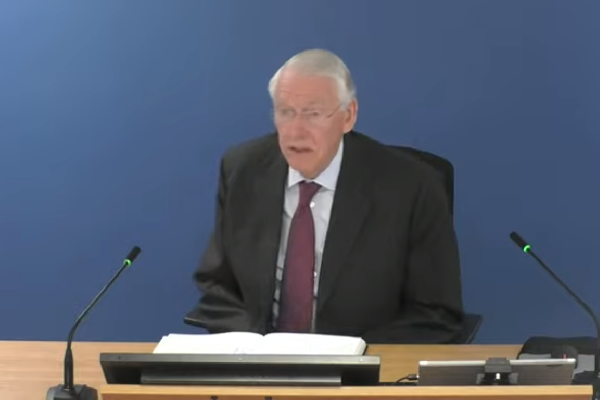
Among the tragic revelations from the Grenfell Tower Inquiry is the fact that unsuitable combustible materials were used on the building. The subsequent inquiry has shown how some product manufacturers managed to evade some of the proper testing processes to get their products onto the market. The same materials have been used on buildings up and down the country.
To address this, the government will establish a new regulator for construction products, which will sit within the existing Office for Product Safety and Standards (OPSS).
It will categorise certain products where their failure could cause death of serious injury as “safety critical”, meaning manufacturers will have to declare their performance.
Once the legislation is in place, 12 to 18 months after the bill is passed, the OPSS will lead and co-ordinate enforcement of improved construction product regulations, including removing products that post a safety risk form the market. The body will also carry out or commission its own product testing to investigate non-compliance within the sector.
The OPSS will also maintain a national complaints system and support local trading standards so that safety concerns can be spotted and dealt with quickly.
Sign up for our fire safety newsletter
Already have an account? Click here to manage your newsletters
Related stories