You are viewing 1 of your 1 free articles
BSR delays ‘unacceptable’ and could see government miss 1.5 million homes target, Lords committee says
Delays at the Building Safety Regulator (BSR) are “unacceptable” and put the government at risk of missing its target of building 1.5 million homes by the end of this parliament, the House of Lords’ Industry and Regulators Committee has said.


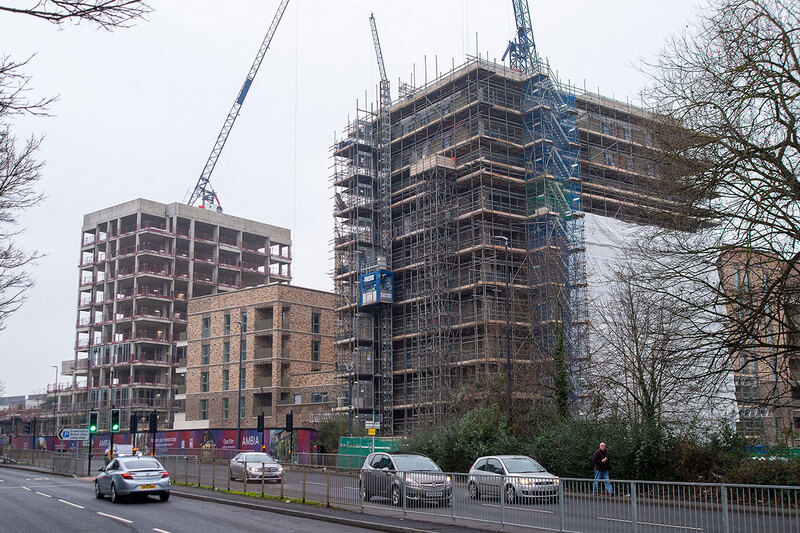 Delays at the Building Safety Regulator (BSR) are “unacceptable” and put the government at risk of missing its target of building 1.5 million homes by the end of this parliament, the House of Lords’ Industry and Regulators Committee has said #UKhousing
The cross-party group said urgent action is needed to improve how the regulator operates, despite the changes the government and BSR made earlier this year in response to the slow pace of decisions.
Peers have now made 16 recommendations to the government and the BSR, in an 80-page report following a six-month long inquiry into BSR delays.
Their requests include long-term public funding to solve skills shortages in building control staff, delaying the creation of a single construction regulator until the BSR is meeting its statutory timeframes and confirming that a generalised safety requirement for all construction products will be part of a white paper on this issue next spring.
The group also backs the government potentially removing minor remediation work such as bathroom renovations from the regulator’s remit, or at least making changes to speed up or sub-contract out the decisions.
This is a move that Andy Roe, the BSR’s chair, indicated would likely happen in an exclusive interview with Inside Housing last month.
Two of their suggestions relate to fees charged by the BSR to those it regulates, which help cover its costs.
While the group acknowledges increasing the regulator’s charges could help resolve some of its resource issues, they recommend it only hike fees if it can show this will improve its performance.
Read more
As well as this, after hearing from leaseholders about the significant costs they face in resolving safety issues they have little or no responsibility for, the committee said the government should look into whether the BSR could be allowed to bring in separate charging schemes for new buildings and those in occupation. This would mean the regulator could increase fees for developers without affecting leaseholders.
In addition, the report recommends the BSR give more guidance to multi-disciplinary teams on how to evidence and assess compliance which would improve its consistency, and also consider how it could make these teams more efficient by allocating them similar projects and buildings.
It should have at least one pre-application conversation with potential applications, report annually on its inspections and the greatest safety risks buildings are facing, including those outside its scope, and explore whether registered building inspectors should be required to perform some public sector work as part of their ongoing certificate of competence.
The group also had a joint recommendation for the government and the BSR’s new leadership, which is to scrutinise how the regulator performs against statutory timelines and be proactive in making more reforms if this does not get significantly better.
They stressed that they expect the regulator to meet its own targets in clearing older ‘legacy’ new build applications and set a “realistic deadline” for when it will meet its 13-week target.
But as Inside Housing reported last week, the BSR’s statistics for November revealed it had not cleared as many of these cases in autumn as forecast, though it had cut the backlog by around half in a bid to have all old cases resolved in January.
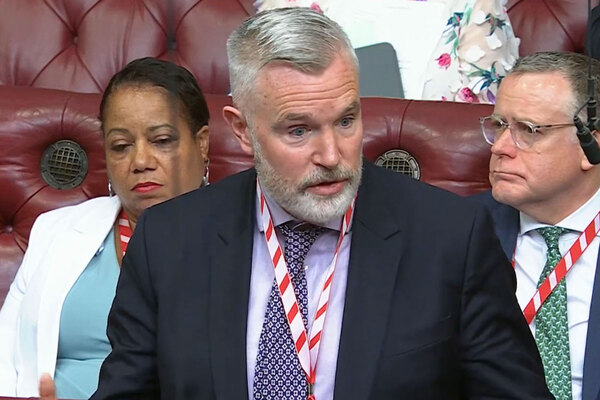
Baroness Taylor of Bolton, the chair of the committee, acknowledged that the Grenfell Tower tragedy had exposed the need for building safety reform and said setting up the BSR was a “necessary and welcome step”.
However, she added: “The scale of the delays caused by the BSR has stretched far beyond the regulator’s statutory timelines for building control decisions. This is unacceptable.”
She said that the group welcomes the government and the regulator’s efforts to improve, but also that this will “not address the anxiety and frustration that residents and companies have experienced”.
The BSR was set up in 2022 and determines whether building work can start on high-rise residential blocks. This includes both construction of new flats and remediation of existing buildings.
But applicants have faced long waits for the regulator to make decisions, with the inquiry hearing in September that the median time for a decision on bids to build 18-metre residential blocks is more than nine months, triple the BSR’s target 12-week deadline.
Delays have led to a “severe impact on the viability of high-rise housing projects”, which it stressed are critical for delivering new homes in large cities, while a lack of homes can cause other housing-related safety issues such as homelessness and overcrowding, the group said.
It added that in many cases refurbishments, safety upgrades and remediating dangerous cladding has been “delayed or disincentivised”, meaning residents are stranded in unsafe buildings for longer and leaseholders face higher costs.
The group acknowledged the changes that the government has already made to the BSR including bringing in a centralised unit to to deal with new build applications, which has reduced processing times for decisions by 20 weeks or more compared with the previous average.
The BSR has also brought in a fast-track ‘batching’ process to speed up decisions which is set to scale up capacity over time, and has cleared a record 578 cases since August. Peers said this is a “start” they said the job is “far from complete”.
Inside Housing understands that Steve Reed, the housing secretary, is urgently working on a “building acceleration package” that aims to bring in more reforms to boost construction, including overhauling the BSR’s performance.
A spokesperson for the Ministry of Housing, Communities and Local Government said: “It is unacceptable that people are having to live in unsafe buildings for any period of time.
“The Building Safety Regulator’s new leadership has immediately focused on speeding up decision-making and we will work closely with the regulator to go further to reduce unnecessary delays without compromising safety.
“This includes recruiting 100 new staff by the end of this year and launching a new building acceleration package to overhaul the regulator’s performance.”
“Since the committee began its hearings in the summer, we have made significant changes to speed up decision-making with a focus on new build and cladding remediation applications.
“Making sure buildings with dangerous cladding are remediated quickly is also a priority and will be the focus of our new Remediation Enforcement Unit which will begin working on cases in the new year.
“The committee’s recognition that BSR has successfully driven a ‘crucial cultural shift’ toward safer homes is a welcome endorsement of the new regime.
“We remain firmly committed to being a proportionate and enabling regulator that works alongside the construction sector to protect residents and deliver safe buildings in support of the government’s housing targets.”
Sign up to Inside Housing’s Building and Fire Safety newsletter
Sign up to Inside Housing’s fortnightly Building and Fire Safety newsletter, now including a monthly update on building safety from Inside Housing’s contributing editor Peter Apps.
Already have an account? Click here to manage your newsletters.
Related stories