Civil servant denies she was more concerned about building regulations than recovery after Grenfell
A civil servant in the team tasked with supporting the local response to the Grenfell Tower fire sent a series of emails about building regulations, noting that “there will be an investigation” and her colleagues needed to give the team responsible “a heads-up”.


 A civil servant tasked with supporting the local response to an emergency sent a series of emails on the morning of the Grenfell Tower fire about building regulations, noting that “there will be an investigation” #UKhousing
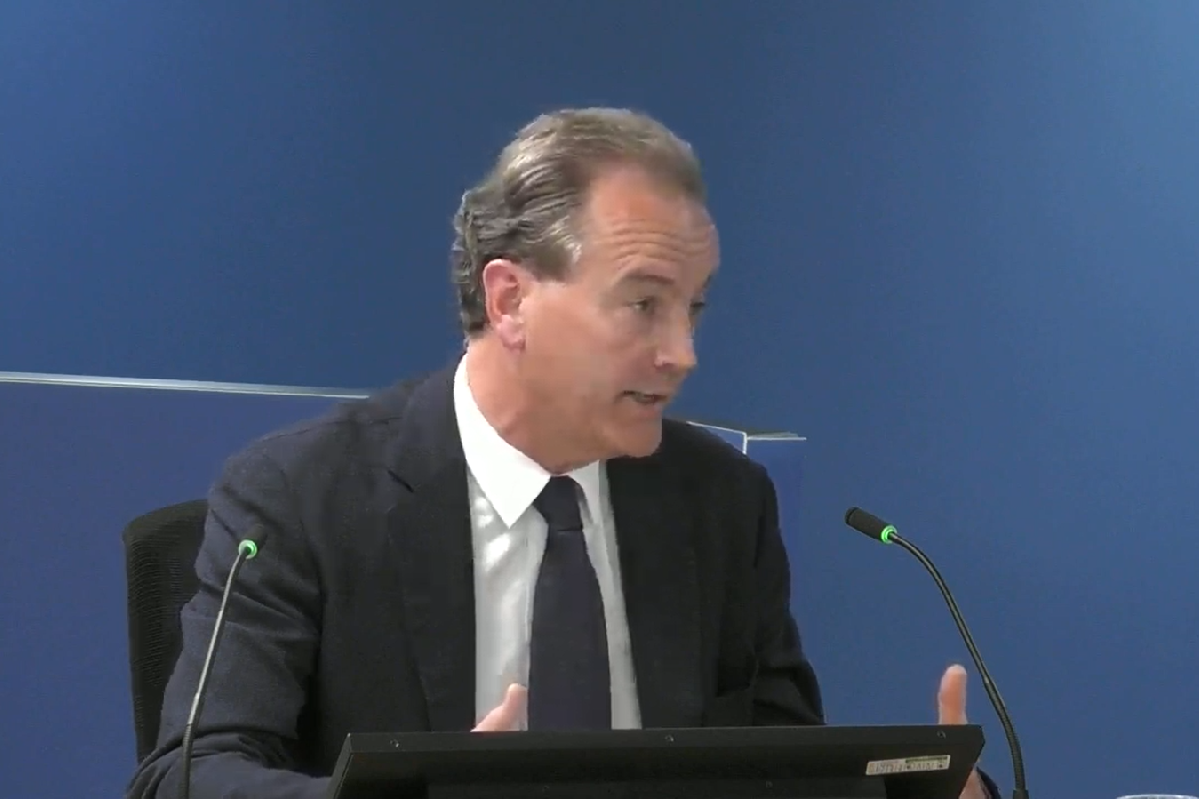
Giving evidence to the inquiry today, Gill McManus, who has served as a resilience advisor with the government’s Resilience and Emergencies Division (RED) since 2011, insisted that she was “very much focused on what was happening at the incident”.
The inquiry has previously heard that the local response to the fire “collapsed” as the Royal Borough of Kensington and Chelsea (RBKC) was unable to cope without external support.
The function of RED – which at the time of the fire sat within what was then called the Department for Communities and Local Government (DCLG) – is to engage with local responders before and during emergencies.
If an emergency is declared, resilience advisors will act as government liaison officers (GLOs), serving as a central government representative at meetings of the strategic co-ordination group (SCG), which controls the response to the incident.
But the department is also responsible for building regulations and statutory guidance, which were the focus of immediate scrutiny in the aftermath of the blaze.
At the time of the fire Ms McManus had been temporarily promoted to head of resilience, covering the South East of England.
During her evidence, Ms McManus was asked about a series of emails she sent on the morning of the Grenfell fire in which she mentioned needing to speak with building regulations staff several times.
In an email to Denise Welch, the RED duty officer, at 4.08am on the day of the fire, Ms McManus said: “We will need to put a note [together] at very least and will need to include building regs colleagues as I suspect there will be an investigation. CFRA [the chief fire and rescue advisor] should be letting HO [the Home Office] know. Can you start jotting down details so we can start pulling notes together.”
In another email to Ms Welch at 4.33am, Ms McManus wrote that she was “looking for building regs contacts so we can give them a heads-up”.
In an email providing details of the incident to Katherine Richardson, deputy director of RED at the time, and the department’s executive team and ministers’ officers at 5.55am, under the heading ‘issues for DCLG’, Ms McManus wrote: “Fire policy is now a Home Office responsibility, however, DCLG build regulations colleagues will have policy interest in this incident.
“Parallels are being drawn in the media to the fire at Lakanal House in Camberwell, London in 2009.”
Read more
Further up in the email, she wrote: “There are suggestions in the media that the cause of the fire could be neglect of health and safety legislation.
“Grenfell Action Group have suggested that a major fire was averted in 2013 when faulty wiring caused power surges.”
In an email to Ms Richardson at 7.12am, Ms McManus said: “I think our colleagues in building regs will need to be engaged.
“I have emailed Bob Ledsome their DD [deputy director] but do not have mobile nos so hoping he will be in early in case policy lines are required from them.”
In an email to Jo Gillespie, head of resilience for the North of England, and Ms Richardson at 8.26am, Ms McManus said: “I am looking for lines from Building Regs and housing colleagues.”
Counsel to the inquiry Priya Malhotra said: “Perhaps understandably there was a need to engage your housing colleagues and the building regulations and policy side of the department.
“But what would you say to the suggestion that your focus was more on building regulations at that time than questioning what the local authority was doing or having an eye to the recovery?”
Ms McManus replied: “No, I would say that I was very much focused on what was happening at the incident.
“Clearly there were considerations that would need to be taken into account by the department and there would be a briefing about what was needed and part of our role within RED and part of the operations centre role, which we were simulating, in a very light-touch way overnight, is to ensure that those policy areas that have any input to provide do provide that, and that any briefing that goes up to any of our ministers covers the whole range of issues that might be there.
“So this was me setting in train some questions for others to cover.”
She added that the “key thing” was what was happening on the ground.
The inquiry also heard that despite being “strongly encouraged” to undertake voluntary training by the Emergency Planning College (EPC), which delivers training on behalf of the Cabinet Office, only four RED staff members attended in 2014, 2015 and 2016.
The inquiry previously heard that no RBKC staff attended EPC training in the three-and-a-half years before the fire.
It also heard that only four delegates from what was then called the Department for Communities and Local Government (DCLG) attended the training over the course of three-and-a-half years, while the same number from the Home Office attended the training over the same period.
Ms Malhotra said: “Considering training was strongly encouraged, would you agree this was a rather poor uptake?”
Ms McManus said: “It is low numbers. There [was] other central training that was on offer as well, which more staff would have taken up.
“But, yes, it isn’t a particularly high number.”
Although she said she believed that staff had adequate training at the time, she said the approach to it has changed since the fire.
“We have taken a much more professionalised approach to our training, much more structured, and that’s something which we are in the process of developing further,” Ms McManus said.
It also emerged that there was no specific training for RED duty officers at the fire, which Ms McManus agreed was “deficient”. There is now a package available.
The inquiry heard that on 17 June Ms McManus began supporting John Barradell, who at the time was deputy chair of the London Resilience Forum and who took over control of RBKC’s response two days after the disaster.
This was a result of RBKC’s chief executive, Nicholas Holgate, triggering support from London Local Authority Gold (LLAG), a mechanism that mobilised support from all 33 London boroughs.
The inquiry was shown an email from Sebastian James, from the Department for Business, Energy and Industrial Strategy, whose colleagues had attended the Westway Centre, in which he raised several concerns in an email to RED about how the rest centre was being run.
He said that there did not seem to be “any controlling elements” in charge of the centre and that there seemed to be no route for information for “either government/agency staffs, nor for the victims”.
He wrote: “We are deeply concerned that victims are being passed from ‘pillar to post’.”
Mr James also said there was “very little co-ordination” between government teams, local agencies and voluntary groups.
It was put to Ms McManus that “notwithstanding the fact that Mr Barradell had taken over the running of the Westway Centre” and the LLAG response, there “were still issues with the response on the ground”.
Ms McManus said: “I think that is very fair to say. I would comment that given the size and extent of this and given that it, as we now know, didn’t get off to the best start, actually then making a good move forward would always have been a difficult thing to do.
“So yes, things were not perfect and certainly there are issues which I know that others have given evidence on about how things happened during the week weren’t as everyone wished they would be.
“But it was a lot of ground to cover and a lot to do.”
Asked how she felt DCLG’s RED responded in the first seven days after the fire, Ms McManus said: “RED did what it usually does in standing up quickly and engaged the department more widely and fairly quickly as well in the fact that others in the department were pulled in quite well,” she said.
However, referring to the speed at which some information was passed on by the RED team to colleagues outside of the division in the wake of the fire, she said that these were “areas we would want to have improved on”.
“But in general terms, our engagement and the activity that we undertook, I think was suitable and relevant to the situation,” she said.
The inquiry continues.
Sign up for our weekly Grenfell Inquiry newsletter
Each week we send out a newsletter rounding up the key news from the Grenfell Inquiry, along with the headlines from the week
Already have an account? Click here to manage your newsletters
Related stories