You are viewing 1 of your 1 free articles
Latest stats show small decrease in number of people living on streets of London
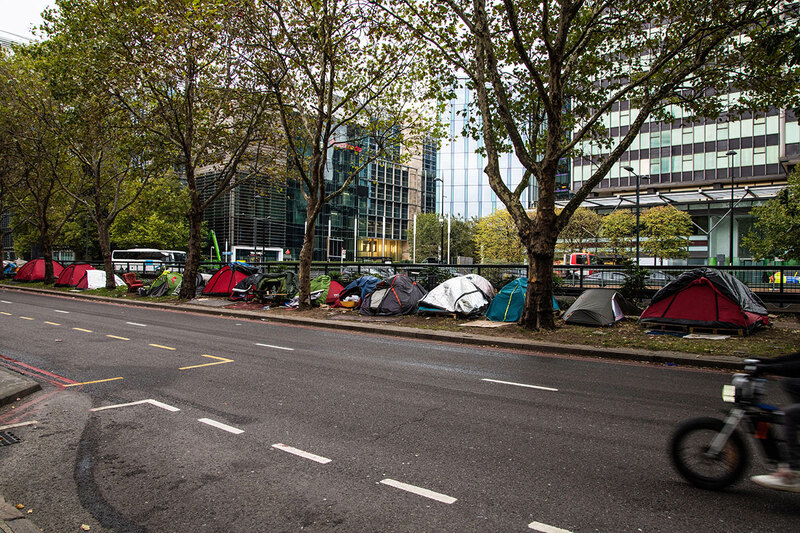
Levels of rough sleeping in London decreased slightly in the latest quarter, according to data published today.


 Latest stats show small decrease in number of people living on streets of London #UKhousing
Figures published by CHAIN (the Combined Homelessness and Information Network) revealed that 4,711 people were recorded as sleeping rough in the capital in July to September, a decrease of 1% on the same period last year.
A total of 2,116 people were recorded as sleeping rough for the first time in the same period, which is 10% lower than the same time last year.
The number of people classed as living on the streets was 759, 11% higher than the same time last year and 4% lower than April to June 2025.
A person is classed as living on the streets if they have had multiple contacts with outreach teams over three weeks or more.

Fiona Colley, director of social change at Homeless Link, the national membership body for frontline homelessness services, said: “No one should be exposed to the danger and trauma of rough sleeping. While it’s positive to see a slight decrease in the number of people sleeping rough for the first time, the overall number of people sleeping on our streets is still unacceptably high.
“The upcoming homelessness strategy is a vital opportunity to address this challenge at a national level.”
The government’s homelessness strategy is expected before the end of the year, and charities have said it must include plans for long-term funding of services.
Ms Colley added: “The best solution to rough sleeping is to stop it happening in the first place. That’s true for the people who sit behind today’s statistics, but prevention is also the most cost-effective solution for the government.
“Preventing homelessness is everyone’s job: that’s why we need true cross-departmental accountability and responsibility on prevention to be baked into the new homelessness strategy.”
Alongside the small quarterly decrease, Riverside pointed out that the statistics reveal the first annual drop in London since 2022.
John Glenton, chief care and support officer at Riverside, said: “It is heartening to see the first year-on-year fall in the number of people sleeping rough in London since 2022 and the first fall in the number of people sleeping rough in the summer months since 2017.
“While it is welcome, we are deeply concerned to see homelessness services being decommissioned by cash-strapped local authorities in London and nationally. Since the end of the Supporting People ringfence there has been a 47% decrease in local authority-commissioned contracts for homelessness services despite a large increase in rough sleeping and homelessness over the past decade.
“To further prevent rough sleeping, we desperately need to reintroduce ringfenced funding for supported housing and homelessness services again. This will help to further reduce rough sleeping and grow the supply of bed spaces for people affected by homelessness and prevent the closures of vital services.”
Additional data from today’s release show that, of those assessed for a support need, 54.5% had a mental health support need, the highest of those seen sleeping rough during this period.
Emma Haddad, chief executive of St Mungo’s, said: “Without enough affordable and social rented housing in the capital, thousands are being pushed into an overstretched homelessness system that simply cannot help everyone quickly enough.
“The results are devastating. People’s mental health deteriorates, their physical condition worsens, and their trauma deepens. Without stable housing and early access to specialist support services, people are left trying to rebuild their lives on quicksand.
“The passing of the Renters’ Rights Act marks an important step forward, but it is only one part of the solution. A homelessness strategy buttressed by long-term, flexible funding will be essential to catalysing the scale of change needed to prevent people from reaching the crisis point of rough sleeping in the first place.”
The mayor of London unveiled a new plan of action earlier this year to deliver his manifesto pledge of ending rough sleeping in the capital by 2030. It prioritises prevention, with a new network of Ending Homelessness Hubs and a focus on renovating empty properties to create more housing.
Sign up for our homelessness bulletin

Already have an account? Click here to manage your newsletters
Related stories