Leasehold concerns and service charges leave executors of extra-care shared ownership homes struggling to settle family members’ estates
A group of 10 executors of extra-care shared ownership properties are struggling to settle their family members’ estates due to rising service charge costs and leasehold concerns.


 Ten executors of extra-care shared ownership properties are struggling to settle their family members’ estates due to service charge costs and leasehold concerns #UKhousing
The group’s properties are part of a portfolio managed by large specialist housing and care provider Anchor.
A member of the group agreed to speak to Inside Housing on condition of anonymity due to their concern that highlighting issues around the sales process could make the properties even more difficult to sell.
The empty properties have been up for sale for between one and five years, accruing rising service charges alongside council tax and utility bills, leading many in the group to warn that their late family members’ estates are at risk of bankruptcy.
One member, whose mother passed away almost three years ago, now owes more than £24,000 in service charges to date.
Another member owes more than £43,000 after the charges increased 81% to £786 a month between 2009-10 and 2025-26.
Read more


The apartments were sold with a 125-year lease, but Anchor’s leasehold agreement does not permit the group to let or sublet the properties, and imposes restrictions on who can buy the property.
The Leasehold and Commonhold Reform Bill is expected to introduce a ban on leasehold on new developments. The group fear that unless the legislation applies to existing leaseholders, it will create a two-tier market that will favour new developments.
An Anchor spokesperson said: “All leasehold agreements vary. It is common practice for leasehold agreements to have restrictions on subletting, as well as applying age restrictions for purchasers of age-restricted housing.”
The development was built with £2.92m in grant funding. Under the Recycled Capital Grant Fund, the cash can be recycled to purchase a shared owner’s equity in a grant-funded shared ownership property.
However, the 54,000-home landlord said it does not have a buy-back policy, and that buying back the properties would not represent “responsible financial management”.
For extra care shared ownership homes, which are designed to support people over 55 who wish to live independently but with flexible care and support services available to meet changing needs, the maximum share that can be bought is 75%.
After becoming frustrated with the sales process and concerned about the lack of transparency around their rising service charges, the group asked their local MPs to intervene.
In a response provided to Inside Housing, Brian Mathew, MP for Melksham & Devizes, said: “It’s disappointing to see further distress being caused to grieving families through the inaction of companies such as Anchor.
“The damage in this case is twofold. One, families are still paying for services which are no longer being used, and two, the inability to sell the accommodation is potentially depriving future residents [of the benefits of] assisted living.
“My team have been pursuing this with Anchor to try to get the homes sold as quickly as possible.”
One group member said: “Anchor’s claim that they are ‘actively promoting properties through targeted marketing channels’ does not match... the reality of our experience as executors trying to sell these flats.
“For the last five years Anchor has only once organised an open day at the two developments, supported by a local mail-out and advertisement in the local newspaper.
“They have failed to engage with us and have been unable or unwilling since June 2025 to answer the simple question: ‘what is Anchor’s policy and procedure when the amount of service charge debt exceeds the value of the property and the deceased’s estate?’
“As Anchor has refused to waive or reduce service and catering charges on these empty properties, executors are facing the very real prospect of declaring their estates bankrupt.”
Anchor maintains that it has done everything it can to help sell the properties. Since 2019, the landlord said 15 flats have been resold across these two locations, with three sold in the last year.
An Anchor spokesperson said: “We are sorry for the challenges residents have experienced in selling their homes following the loss of a loved one.
“We continue to support leaseholders, sellers and their families, by ensuring transparency in the sales process, providing clear and timely information to prospective buyers and solicitors and actively promoting properties through targeted marketing channels, while maintaining our primary role as landlord rather than agent.
“A decision has been made not to pursue outstanding service charges on properties for sale at this location. This approach will remain in place until the properties are sold.”
This means that the executors of each estate are still liable for the full amount of accrued service charges.
Anchor’s spokesperson added: “As a not-for-profit organisation, we do not operate an overarching buy-back policy.
“However, we do all we can to support sellers and their families. Our resources are carefully allocated to deliver the greatest impact for current and future residents.
“Using these limited funds to repurchase privately owned homes would not represent responsible financial management, nor would it align with our obligations to ensure transparency, fairness and value in how public or charitable resources are deployed.”
Under the voluntary and industry-led Shared Ownership Code, published earlier this year, providers must have published policies on support for shared owners experiencing financial hardship on issues such as buy-back, subletting and downward staircasing.
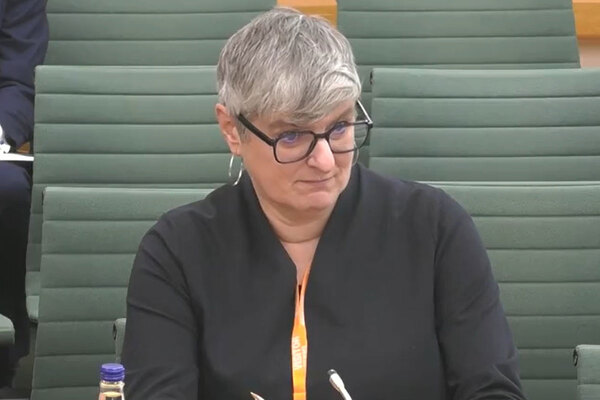
Sue Phillips, founder of campaign group Shared Ownership Resources, recently raised the issue of retirement properties being difficult to sell at a recent MP-led inquiry session, which also discussed the affordability of shared ownership and the impact of rising service charges.
She said: “If there’s anything that defines shared ownership policy it’s ‘short-termism’. And, increasingly, beneficiaries of shared ownership extra care homes are paying the price.
“Of course, challenges to selling retirement homes following a bereavement aren’t limited to shared ownership extra care schemes. However, problematic practices in the private sector shouldn’t set a low benchmark, or encourage a race to the bottom.
“How can it be right that a government-backed scheme – often delivered by housing providers laying claim to charitable purposes – burdens families with seemingly insurmountable financial problems during a period of intense grief, often with the increasingly remote possibility of sale, undermining any hope of emotional closure and depriving families of the inheritance passed to them by their loved ones?”
Anchor currently holds non-compliant C3 and G3 grades under the Regulator of Social Housing’s consumer and governance standards.
Sign up to Inside Housing’s Daily News bulletin
Sign up to Inside Housing’s Daily News bulletin, featuring the latest social housing news delivered to your inbox.
Click here to register and receive the Daily News bulletin straight to your inbox.
And subscribe to Inside Housing by clicking here.
Already have an account? Click here to manage your newsletters.
Related stories