You are viewing 1 of your 1 free articles
New operator revealed for Shared Ownership Code
The New Homes Quality Board (NHQB) has been selected to take over the Shared Ownership Code, with responsibility for its operations, governance and financial stability.


 New operator revealed for Shared Ownership Code #ukhousing
The non-profit organisation will take ownership of the code from the Shared Ownership Council (SOC) from today.
The code was created by the SOC, a cross-sector initiative set up 18 months ago, to create a standardised offer and improve customer service and satisfaction. It is also hoped that a more standardised model may help unlock additional investment in the tenure.
Read more
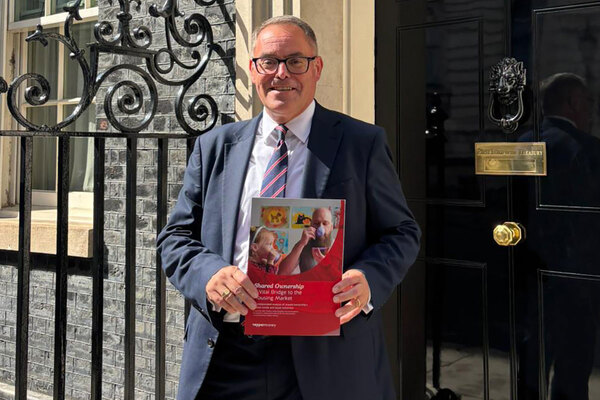
The council said the NHQB was selected due to “the strong alignment in values and aims, and confidence in NHQB’s ability to ensure the code delivers on its purpose of standardising best practice and consumer protection for shared owners”.
The non-profit will create a new subsidiary organisation to operate the code. This will have its own board with a range of experienced non-executive directors, which will be temporarily chaired by Ann Santry, chair of the SOC.
The NHQB will also create a range of advisory panels for future review of the code. The panels will gather input from different stakeholder groups, including public sector representatives, consumers, housing providers and the wider housing sector.
Ms Santry said: “We’re confident that the code will be in safe and capable hands with the NHQB. Our shared values, combined with their experience, infrastructure and governance, will ensure effective implementation and better outcomes for current and future shared owners.”
In July, Inside Housing interviewed Ms Santry on her role and the importance of the code. The final version of the code was released in June this year, setting out a number of key principles and how to deliver them.
These included service charge transparency, and the need for providers to submit staircasing data to the CORE data reporting system, even when grant funding does not require it.
Emma Toms, chief executive of the NHQB, said: “The NHQB brings a proven track record and deep expertise from running the New Homes Quality Code, which already covers over 56% of all new build homes in Britain.
“We look forward to applying this experience to the Shared Ownership Code, ensuring shared homeowners benefit from high standards of protection and quality. We are confident that through this support, the sector can responsibly expand access to homeownership in the UK while upholding high standards of quality, customer protection and satisfaction.”
Since its release, 54 organisations have registered interest in adopting the code, and formal applications will open on 3 November.
With the responsibility of the code transferred to NHQB, the SOC’s ownership will formally conclude on 16 October 2025.
Will Perry, director of strategy at the Regulator of Social Housing, said: “We welcome stakeholders taking the initiative to drive up standards for shared owners and increase understanding of shared ownership.”
Kate Henderson, chief executive of the National Housing Federation, said: “We know that some shared owners have faced challenges with aspects of the model.
“That is why we fully support the Shared Ownership Code, an initiative which codifies best practice, and we encourage all housing associations to sign up, ensuring consistency and transparency for residents.”
Gavin Smart, chief executive of the Chartered Institute of Housing, said: “The development of the code and its role in standardising best practice and consumer protection for shared owners was an important development both for shared owners and shared ownership providers.”
Sue Phillips, founder of the Shared Ownership Resources project, said: “The code can’t resolve problems and pitfalls in isolation, nor can housing providers. There is, undoubtedly, a need for housing providers to step up in various respects.
“Truly meaningful reform remains unlikely unless government, their agencies and their regulators place less emphasis on demand and ‘a foot on the property ladder’, and more emphasis on full life-cycle costs, long-term outcomes and impact.
“However, the code is an important step in the right direction. The NHQB has been handed a significant opportunity to narrow the gap between shared owners’ high expectations at the outset and low levels of satisfaction. Shared owners hope the NHQB will rise to the challenge.”
Sign up for our regulation and legal newsletter

Already have an account? Click here to manage your newsletters
Related stories