Riverside ends Cosmopolitan rescue talks
The future of Cosmopolitan Housing Group was this week dealt a further blow after Riverside pulled out of a proposed merger deal.



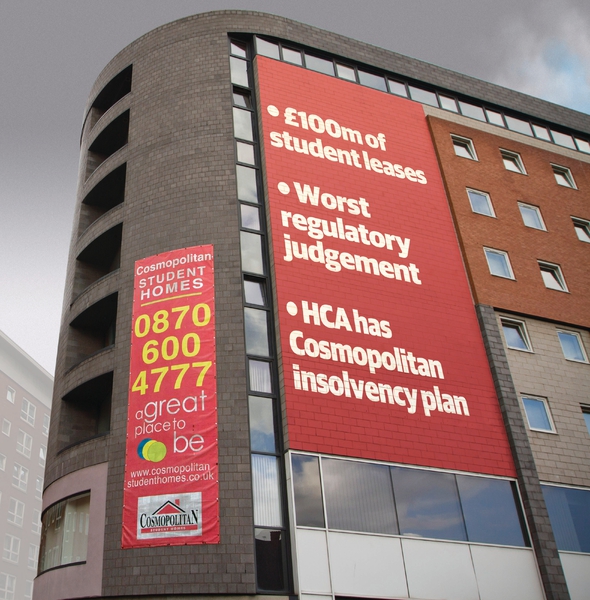
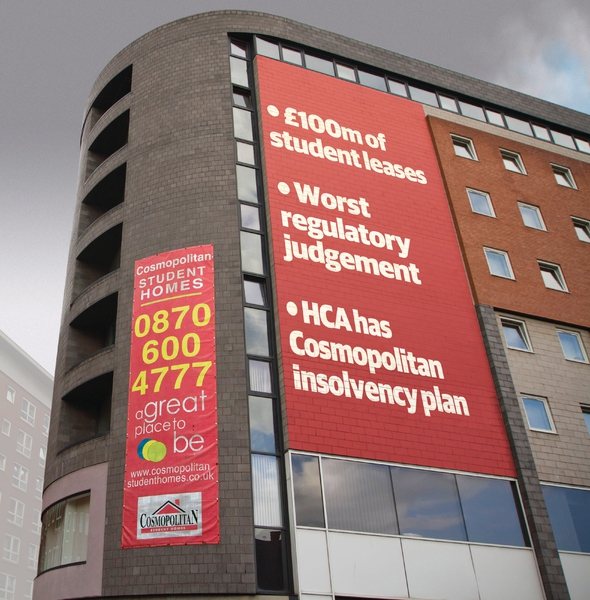
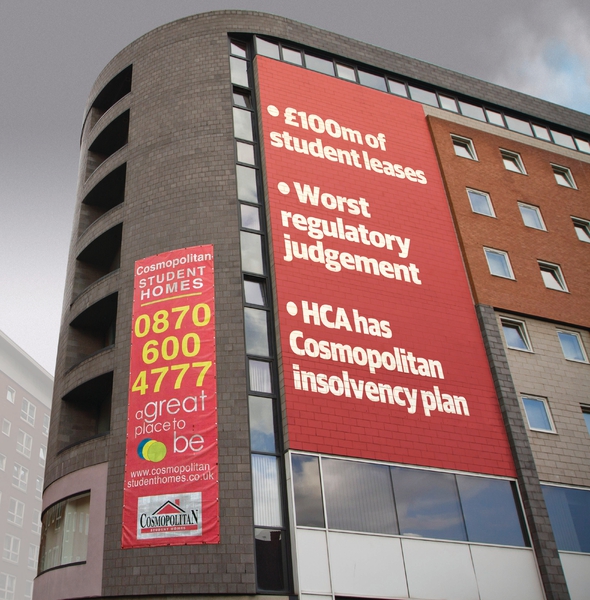
Cosmopolitan student housing in Birmingham
Britain’s largest landlord Sanctuary Group has now emerged as a possible saviour for the troubled Liverpool-based landlord and has immediately started negotiations over a new deal.
Riverside pulled out due to ongoing concerns over the funding of Cosmopolitan’s 5,000-bed student housing business.
Riverside’s board first rejected the proposed merger in early December but a final decision was delayed while Cosmopolitan continued to negotiate with the owners of its student housing leases.
It was initially thought Riverside could sell the student homes after a merger but the 54,000-home landlord decided to end talks after a due diligence process revealed the extent of the funding problem.
Carol Matthews, chief executive of Riverside, said: ‘The scale of the risk with the student housing, and the fact negotiations [with the owners] had not concluded, left us with ongoing uncertainty over the potential impact on our core business. We wanted to do the deal, but we had to make sure we protect the viability of Riverside.’
Leases on the student housing assets, taken out at the top of the market, have left Cosmopolitan with at least £100 million of liabilities.
An exclusivity agreement between Cosmopolitan and Riverside was cancelled at the end of last week. However, it is thought the Cosmopolitan board had been maintaining informal contact with Sanctuary.
The 80,000-home landlord already has a 7,500-strong student housing arm but chief executive David Bennett warned that ‘any deal… must support a viable business plan’.
Meanwhile, the HCA has progressed its plans for a moratorium should a deal fall through and Cosmopolitan becomes insolvent. A moratorium would give the regulator 28 working days to reach a deal with creditors that would allow it to safeguard Cosmopolitan’s social housing stock through, for example, the sale of land or other assets.
‘We are a long way down the road in planning for a moratorium,’ said Matthew Bailes, director of regulation at the HCA. ‘We need to understand in detail what assets might be subject to a moratorium, so that potential purchasers understand what is on offer and can consider an appropriate price.’


Related stories