You are viewing 1 of your 1 free articles
Victims of faulty insulation installed through government schemes could face unaffordable repair bills, MPs warn
People living in the more than 30,000 UK homes with faulty insulation installed through government schemes could be left with unaffordable bills to fix the problems, MPs have warned.


 Victims of faulty insulation installed through government schemes could face unaffordable repair bills, MPs warn #UKhousingPeople living in the more than 30,000 UK homes with faulty insulation installed through government schemes could be left with unaffordable bills to fix the problems, MPs have warned #UKhousing
Members of the Public Accounts Committee (PAC) have expressed doubt that installers and guarantee providers will be able to cope with the likely number of claims brought by people who had botched retrofits carried out under the Energy Company Obligation 4 (ECO4) and Great British Insulation (GBI) schemes.
They also highlighted that even if guarantees are paid out in full, the £20,000 cap may not cover the full cost of repairs, as they are aware of one household who needs more than 10 times this amount to put the defects right.
The comments came in a scathing committee report following its inquiry into faulty energy efficiency installations under the government-backed schemes, which was first revealed by a National Audit Office (NAO) report in October.
Read more

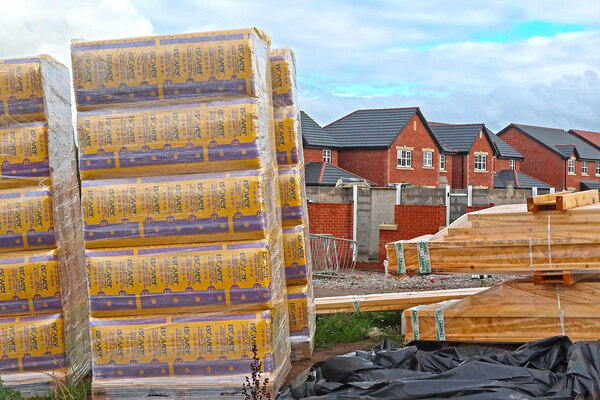
The NAO revealed that 98% of external wall insulation and 27% of internal wall insulation have major problems that need fixing, including issues that will cause damp and mould, while a small percentage pose health and safety risks to residents.
MPs found systemic failings in how these schemes were set up, including poor design and oversight by the Department for Energy Security and Net Zero (DESNZ), and questioned why the retrofit programmes were redesigned in the first place.
A DESNZ spokesperson said: “It is categorically untrue there are widespread health and safety risks – for the vast majority, this means a home may not be as energy efficient as it should be.”
However, PAC said DESNZ and TrustMark should have acted sooner, given the installations started in 2022. The committee also urged the government to improve the scale and pace of finding and fixing the botched installations, warning that current timescale estimates are likely to be over optimistic.
TrustMark is the not-for-profit organisation that oversees the quality of energy efficiency work for ECO4 and GBI.
In response to the PAC report, the firm said: “TrustMark remains totally committed to ensuring strong consumer protection for all types of home improvements.
“We are working with DESNZ to deliver the ‘Find and Fix’ programme of audits, offered to those households where external wall insulation was installed under ECO4 or GBIS.
“We are continuing to work with government, our scheme providers, registered businesses and, where appropriate, guarantee providers to get these problems found and fixed.
“These examples of poor-quality workmanship are completely unacceptable and underline the need for change and reform to the current system, enabling stronger oversight by TrustMark on businesses and strengthening of consumer protection.”
MPs have also urged for the matter to be referred to the Serious Fraud Office, as the level of non-compliance indicates a higher level of fraud than the 1.5% established by Ofgem. They called for future government retrofit schemes to be paused until proper oversight is in place.
They highlighted that people on low incomes – the target consumers of the schemes – are the primary victims of the scandal. They wrote: “Schemes that were designed to reduce fuel poverty and improve energy efficiency have instead left some of the most disadvantaged households living in cold, damp or unsafe conditions and experiencing stress, poor mental health and financial costs as they seek repair.”
Sir Geoffrey Clifton-Brown, chair of PAC, said: “I have served on the Public Accounts Committee for 12 years. In all that time, a 98% failure rate in a public sector initiative amounts to the most catastrophic fiasco that I have seen on this committee. Indeed, our report finds the project was doomed to failure from the start.
“Government behaved inexplicably in redesigning a similar scheme which was working reasonably well into a highly-complex number of organisations with siloed responsibilities, which did not respond to failures anything like quickly enough to prevent damage being done to people’s homes.
“Potentially thousands of people are now living with health and safety risks in their homes, and despite government’s protestations we have nowhere near enough assurance that they are not financially exposed to unaffordable bills to repair the defective works.
“All involved in the system must now move at far greater pace to make good.
“The public’s confidence will have rightly been shaken in retrofit schemes given what has happened, and government now has a self-inflicted job of work on its hands to restore faith in the action required to bring down bills and reduce emissions.”
Martin McCluskey, minister for energy consumers, said: “We inherited a broken system from the previous government. It was not fit for purpose and had multiple points of failure. We are cleaning up this mess.
“Every household with external wall insulation installed under these two schemes are being audited, at no cost to the consumer. And we have been clear that no household should be asked to pay any money to put things right. Of all non-compliant properties found to date, over 50% have been remediated.
“We have also taken the decision to end the ECO scheme and instead put more investment through local authorities, which have a significantly better record of delivery. We are reforming the system of consumer protection to better protect people.
“We will establish a new Warm Homes Agency, bringing in a single system for retrofit work to provide stronger, formal government oversight and driving up quality.”
Sign up to Inside Housing’s Daily News bulletin
Sign up to Inside Housing’s Daily News bulletin, featuring the latest social housing news delivered to your inbox.
Click here to register and receive the Daily News bulletin straight to your inbox.
And subscribe to Inside Housing by clicking here.
Already have an account? Click here to manage your newsletters.
Related stories