You are viewing 1 of your 1 free articles
Retrofit: how to navigate EPC reforms and the MEES transition
Rebecca Hart, head of sustain service at contractor and decarbonisation specialist Novus Property Solutions, shares advice for social landlords managing the shift from Energy Performance Certificate assessments to Minimum Energy Efficiency Standards


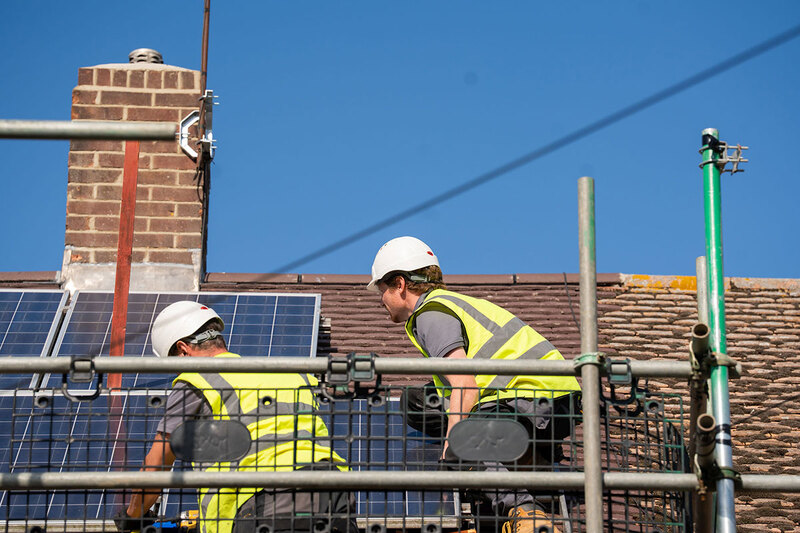 Rebecca Hart, head of sustain service at contractor and decarbonisation specialist Novus Property Solutions, shares advice for social landlords managing the shift from EPC assessments to minimum energy efficiency standards #UKhousing
Our recent webinar session, hosted towards the end of last year, brought together sector experts and delivery partners to discuss the impact of upcoming reform of Energy Performance Certificates (EPCs) on housing strategies and retrofit projects.
Together, they shared advice for managing the shift from current EPC assessments to proposed new mandatory Minimum Energy Efficiency Standards (MEES) – changes that will likely impact how retrofit programmes are delivered and how asset managers align strategies.
Here, the panellists outline the main challenges these reforms present from a variety of perspectives, helping housing providers and contractors to navigate upcoming changes while balancing the demands of homebuilding and retrofit programmes, all within the context of new industry standards and the rising costs of compliance.
What does EPC reform mean for housing associations in the context of other proposed regulatory changes?
The webinar panel included Arnout Andrews, partner of the Midlands Net Zero Hub, and Alan Pither, an advisor to the Retrofit Academy and member of the BS 40104 Committee, which is the code of practice for retrofit assessments.
It is a complicated picture, as Mr Andrews and Mr Pither explained. The upcoming EPC reforms will be implemented from next year and currently only apply to England and Wales. While it is likely that these changes will also be adopted in Northern Ireland, Scotland has different proposals for new metrics on EPCs in the works, due to come into force in 2026.
Read more


Awaab’s Law, which came into force on 27 October 2025 and applies to social housing providers across England (with plans to introduce similar legislation in Scotland), is rooted in a need to improve social tenant rights by defining fixed timeframes for action to address emergency hazards (and all damp and mould hazards that present significant risk of harm to residents). The Future Homes Standard (FHS), which will reduce reliance on fossil fuels, is also specifically for England, although there are similar proposals in Wales, and Scotland is again taking a different approach.
New MEES for social rented homes in England must be met by 2030 – a little over four years from now. The MEES will address three additional core performance metrics on all social housing properties: fabric performance, heating system efficiency and smart readiness, which will supplement the current energy running cost metric. Mr Pither noted that the government will likely favour an approach that focuses on the fabric performance of each home, but until the MEES standard is published, this remains unclear.
However, as Mr Andrews observed, it is important to bear in mind that homes currently achieving compliance could become non-compliant under the new MEES standard. He fears that some housing providers may need to sell off those of their properties that are most challenging to treat, and use the funds generated to build new homes.
What are the current obstacles or challenges housing associations are facing as we transition to the proposed EPC reforms, and will the reports help landlords reach their net zero goals?
Also joining the webinar panel was Lucja Paulinska, head of environmental sustainability at The Guinness Partnership, one of the largest housing associations in England with a portfolio of almost 70,000 homes. She offered insight into the challenges being faced on the ground by housing associations.
The main challenge is perennial: financial pressures of completing works required to get housing stock updated to comply with the new regulations ahead of the 2030 deadline. Insufficient resource has meant many major retrofit projects have stalled, while some of the worst-performing properties might be overlooked or sold off by landlords.
The other issue is timing. By the time the Guinness Partnership has evaluated the impact of RdSAP10 on its portfolio in the next year, the metrics will have changed, meaning the process may have to start again. This will incur additional resource and therefore financial pressures.
Data, or specifically the poor quality of available data, is also a challenge. Poor-quality data makes it difficult to manage, organise and sequence competing priorities. A large number of EPCs due to expire soon will need to be assessed, and ensuring assessor competency to the new standard is key to maintaining accurate property data so that medium-term plans can be delivered in a way that meets 2050 net zero goals.
In addition, there is the issue of balancing the need to deliver at scale for efficiency with providing the more specific works required for the worst-performing properties under Awaab’s Law. As far as possible, it is about treating properties in a way that means they don’t fall short of the MEES standard.
Ms Paulinska encouraged housing providers to push through these challenges by using improved data that informs asset life-cycle strategies, integrating energy programmes with repairs and maintenance and prioritising vulnerable residents.
The main benefit of the EPC reform and introduction of MEES is that they will provide more meaningful, qualitative metrics against which the actual energy performance of buildings can be measured. This will allow providers to address poor-quality data relating to housing stock and more accurately measure the energy performance of each home in terms of its current and future capabilities. In this way, the reforms can be used to inform the metrics that need improving to reach net zero targets.
What role do main contractors play in this process?
In my role as head of Novus Property Solutions’ sustain service, I explained how the contractor’s collaborative approach helps deliver retrofit programmes that meet the timescales required, maximise available budget and ultimately benefit residents by improving housing stock efficiently.
Novus has implemented four key strategies to smooth the process: using technology effectively, undertaking stock validation, carrying out robust condition surveys and, most importantly, taking time to listen to residents.

I outlined how Novus takes time to assess housing stock to get a complete picture of works required on a macro and micro level, and in so doing aligns asset management plans to make sure the data feeding into project planning is accurate.
Similarly, undertaking stock validation provides accurate baseline performance data, and robust condition surveys will pick up damp, mould and condensation issues as well as non-energy-related defects. Defects can be the downfall of retrofit if not rectified, so accurate condition surveys are essential, with any recommendation for further investigation by specialists being factored into the programme.
Novus also advocates listening to residents. A comprehensive occupancy survey offers the opportunity to pick up on defects and in-use behaviour that may impact on post works, so ideally resident engagement needs to be considered as part of the measure selection, current performance targets and future-proofing.
What is Novus’ approach to working with housing associations to achieve compliance with new EPC reform and reach net zero?
Novus takes a sensible approach rooted in real-world data to support housing providers in making informed decisions.
‘Data-led’ decisions are ideal, but depend on the availability of accurate data. Collecting data digitally speeds up the process and ensures accurate outputs and, when combined with client and resident data, means we can work with housing providers to align retrofit schemes with asset life cycles, which streamlines delivery, drives efficiency and reduces disruption for residents.
Comprehensive energy options modelling also allows clients to make informed decisions around energy measure selection, taking into account which measures are likely to have the best improvement for the resident, and how the property can achieve net zero in the longer term.
Equally, as I pointed out, residents rarely refuse works after you’ve installed new windows and doors, but rather when you have to start doing door undercuts and removing wall units to core holes. By sequencing ventilation first, building improvement is immediate and provides reassurance that compliance can be achieved.
Bear in mind that what is perceived to be a ‘quick win’ now may incur additional costs and disturbance in 10 years’ time if homes don’t meet the MEES, so Novus always tries to look ahead and schedule sensibly so our work suits the future needs of all parties.
I also highlighted the importance of contractors having robust quality processes in place to lower in-use performance gaps. Novus builds quality assurance in at the procurement stage to ensure it only works with suppliers that can deliver at the required scale, and to the highest quality standards. And, as I went on to explain, the contractor also embeds quality assurance in day-to-day processes to minimise defects – this results in higher-quality, reliably compliant installation.
And Novus is also taking steps now to reduce the impact of the green skills shortage through procurement and recruitment processes. We’re doing this by supporting the supply chain through local recruitment opportunities, upskilling our in-house installer teams and taking on more apprentices. This is vital as energy reforms, alongside the government’s housebuilding programme, will put pressure on the green skills sector and add further pressure to the skilled trades shortage.
Collaboration is key
By providing better-quality data, MEES offer the sector a fresh start and an opportunity to make vital improvements to homes in line with net zero targets while also making them healthy homes for residents to thrive in.
It is clear that upcoming EPC reforms are going to change the way we look at retrofit solutions and asset management strategies. We know that early and frank discussions with industry and clients will help to make better decisions for Warm Homes: Social Housing Fund schemes, so that measures installed now meet the energy standards of tomorrow. It is crucial that partners collaborate across the industry to share knowledge and understanding, as the impact will be felt by all.
Sign up to Inside Housing’s Sustainability newsletter
Sign up to Inside Housing’s weekly Sustainability newsletter, featuring our in-depth coverage of the sector’s journey to delivering net zero.
Click here to register and receive the Sustainability newsletter straight to your inbox.
And subscribe to Inside Housing by clicking here.
Already have an account? Click here to manage your newsletters.
Related stories