You are viewing 1 of your 1 free articles
 Jules Birch
Dominic Raab’s comments about immigration speak volumes about his priorities
Jules Birch suggests housing minister Dominic Raab missed a chance to talk about a number of housing’s most important issues in his interview with The Sunday Times


 Jules Birch unpicks Dominic Raab’s Sunday Times interview #ukhousingHousing minister’s interview reveals his real priorities, says blogger Jules Birch #ukhousing
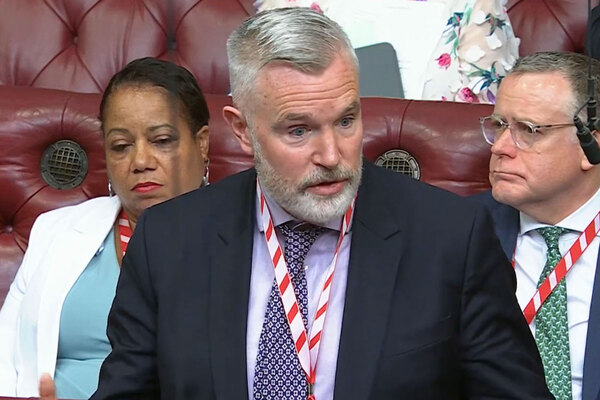
The latest Mr Buggins to take his turn at the housing minister job gave a revealing first print interview on Sunday that speaks volumes about his priorities.
The new(ish) minister – I forget his name, they come and go so quickly – makes the seemingly incendiary claim that immigration has pushed up house prices by 20 per cent over the past 25 years.
He tells The Sunday Times that he is writing to the Migration Advisory Committee (MAC) to urge it to consider the negative effects of immigration on housing demand as well as its positive economic benefits.
Mr Buggins is playing a key role in the drive to boost housebuilding, but he says: “You’ve got to deal with demand as well as supply. You can’t have housing taken out of the debate around immigration. If we delivered on the government’s target of reducing immigration to the tens of thousands every year, that would have a material impact on the number of homes we need to build every year.”
He says he’s been told by civil servants that immigration has had a sizeable impact on prices, based on the Office for National Statistics’ House Price Index from 1991 to 2016.
“Based on the ONS data, the advice to me from the department is that in the past 25 years we have seen immigration put house prices up by something like 20 per cent.”
While he concedes that immigration also supplies skilled workers from the European Union to build new homes, he argues that: “At the same time you can’t just airbrush the costs and the impact it has on housing.”
The only other things he has to say about his brief are a familiar call to “revive the dream of homeownership” (“the key is to yank every lever we’ve got 40 per cent harder”) and a token reference to the crackdown on rogue estate agents announced on Sunday.
Now, I get that for Mr Buggins and most of his predecessors the housing job is merely the second rung on what they hope will be the ladder to bigger and better things. The Sunday Times describes him as a “rising minister” who is “tipped as a future leader”.
I get that a Sunday newspaper interview is a chance to send a signal to your party’s MPs and activists that your politics aligns with theirs.
And I get that he got the job not because he knows anything about housing, or has expressed much of an interest in it, but because he is a leading Brexiter.
But here was a chance for Mr Buggins to reach out and show that he can think beyond that narrow constituency and come across as a politician of substance who has something to say about one of the big issues of our time.
He could – and should – have said something about Grenfell Tower and how determined he is to bring people together and ensure that it never happens again.
He could have talked about listening to the concerns of social housing tenants in those conversations had before the previous Mr Buggins was reshuffled away.
But he mentions neither, despite the fact that he is the minister responsible for a green paper on social housing due for publication this spring that is meant to show that the government really has listened.
Now, it’s entirely possible that The Sunday Times was more interested in the Tory leadership succession and Brexit than housing and tenants, but a politician still gets to choose what message he wants to get across in an interview.
And what he chose is not so much a dog whistle as a foghorn to right-wing Tories and Brexiters.
It’s not at all clear where the 20 per cent figure comes from, since the ONS has not published anything.
One previous study for the MAC of the impact of skilled and well-paid migration from outside the EU over a five-year period found that the house price impact was “likely to be well below 5%”.
Another for the Royal Economic Society found that a 1% increase in the number of immigrants in a local community leads to a 1.7 per cent fall in house prices, as the wealthiest residents move out and demand for houses falls.
But the results from any study will depend on many different factors, including its geographical scope, the impact on different tenures, the time frames chosen and its points of comparison – and that’s before you get to the thorny issue of how you measure changes in house prices.
You won’t find any of these nuances in Sunday’s interview, but let’s take Mr Buggins at face value.
According to the ONS’s UK House Price Index, the average UK house price at the start of 1991 was £57,086.
If he’s right, immigration has driven that up by 20 per cent, by £11,417 to £68,503.
By the end of 2016 the average UK house price had almost quadrupled to £215,500.
So, according to Mr Buggins, immigration explains just 7% of the increase in house prices over the past 25 years.
As for what was responsible for the remaining 93 per cent, we’ll have to wait for his next interview – or the next Mr or Ms Buggins – to enlighten us.
Jules Birch, award-winning blogger
Related stories