You are viewing 1 of your 1 free articles
You’ve identified LPS buildings on your estate. What now?
The decision of whether to demolish or remediate a building is a difficult one, so it is important that owners have all the information, writes Steve Cross, a partner at built environment consultancy Ridge



Steve Cross is a partner at Ridge
 You’ve identified LPS buildings on your estate. What now? #UKhousingThe decision of whether to demolish or remediate a building is a difficult one, so it is important that owners have all the information, writes Steve Cross at Ridge #UKhousing
Brighton & Hove City Council recently became the latest landlord to confirm plans to demolish residential tower blocks because of safety concerns over their large panel system (LPS) construction.
As we know from our work with numerous landlords, the decision to demolish is not an easy one. But that’s why it’s essential building owners have all the information at their fingertips – not only on the condition of the buildings but on the costs of remediation compared with other options.
The Building Safety Act has brought LPS construction to the fore once again. But even after being proactive in identifying LPS buildings in their portfolios, working out what to do next can be challenging for social landlords.
LPS construction, born out of a post-war necessity for rapid housing solutions, utilised precast concrete panels stacked to form high-rise structures. While efficient in its time, the method was susceptible to “disproportionate collapse”, as seen in the infamous partial collapse of Ronan Point in 1968 following a gas explosion.
Despite subsequent amendments to building regulations, many LPS blocks, some with historical, insufficient remedial work, remain standing and occupied.
Read more
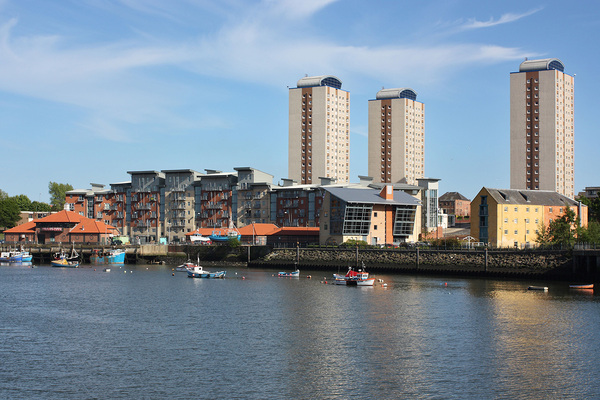


With the introduction of the Building Safety Act last year, the ‘principal accountable person’ is now required to register all higher-risk buildings in their portfolio and provide evidence that fire and structural risks are being managed or mitigated.
On identifying an LPS building, the first step is to undertake thorough and intrusive structural investigations. A visual survey simply won’t suffice. The structural integrity of these buildings depends on nuanced details, such as the amount and proper installation of reinforcement, the quality of the concrete and the adequacy of structural ties. This detailed assessment will form the bedrock of all subsequent decisions.
Once the structural health of the building is understood, landlords must address the question of risk management and short, medium and longer-term mitigation. This includes creating a comprehensive building safety case.
“On identifying an LPS building, the first step is to undertake thorough and intrusive structural investigations. A visual survey simply won’t suffice”
A key issue here is that many safety case reports for LPS buildings are not meeting the Building Safety Regulator’s requirements, with landlords being told they have submitted incomplete reports, or receiving requests for further information. As landlords await feedback before committing further funds for investigation and remediation, dangerous buildings are not being dealt with.
However, creating a report doesn’t necessitate entirely new documentation. Existing fire and building surveys can be leveraged, but they must be current, at the correct level of detail, and reviewed by an appropriate, competent professional. A gap analysis can be invaluable here, which would help to ascertain what information is already in place versus what is required.
Often the first question that follows a negative structural assessment is: “Do we have to knock it down?” Fortunately, this doesn’t automatically mean immediate evacuation and demolition. Instead, it triggers a comprehensive costed options appraisal.
To bring the block up to current safety standards, this appraisal should consider a range of interventions – from interim safety measures such as removing gas cooking and heating, through management measures to reduce risk, to structural strengthening and the implementation of upgrades to fire alarms, sprinklers, ventilation and insulation. Only after a thorough evaluation of these options can a landlord determine the economic feasibility and best course of action.
An options appraisal should not look at structural integrity in isolation, but take a long-term, holistic view which balances a wide range of considerations. Ridge took this approach at Broadwater Farm in north London, where the structural integrity of the LPS blocks was only one of an array of considerations that led to Haringey Council deciding to deconstruct some blocks while strengthening and regenerating others.
This approach can be both cost-effective and environmentally sustainable. However, if the structural issues are too severe, or if the building is demonstrably beyond economic repair, demolition and replacement may be the only viable solution.
It is important to note that this is not a typical demolition; LPS structures require ‘deconstruction’. This would be a precise process that demands specialist and experienced consultants and contractors due to the heavy concrete slabs and inherent challenges of dismantling such buildings safely in built-up areas. The risk of collapse is at its greatest during demolition, hence the need for the right team, methodology and processes.
“An options appraisal should not look at structural integrity in isolation, but take a long-term, holistic view which balances a wide range of considerations”
Beyond compliance and risk mitigation, landlords should view this challenge as a potential opportunity. Some forward-thinking building owners have leveraged the need for intervention as a catalyst for wider regeneration.
A building that requires structural work may also be poorly performing in other ways – it may have poor energy efficiency, outdated layouts and subdivisions, or leaks. It might require fire alarm upgrades, new fire doors, the installation of sprinklers, or wider mechanical and electrical upgrades. It may no longer meet the needs of the community. This all presents a chance to ‘build back better’, to rethink the space and to create modern, sustainable and integrated communities.
At Somerstown in Portsmouth, Ridge managed the deconstruction of the 18-storey Horatia and Leamington houses, two 1950s council blocks built with LPS and deemed unsuitable for refurbishment. We are now part of the team regenerating the site in consultation with the council and local community. The new scheme will rehouse 272 displaced former households and provide more than 450 high-quality new homes.
Projects such as this show that the identification of LPS buildings is a call to action – not a cause for despair. Landlords must act quickly to bring in experts, understand the extent of the risks and develop robust, evidence-based safety strategies. Whether through strengthening, refurbishment or deconstruction and regeneration, compliance with the Building Safety Act will obviate landlord liability, protect residents and, hopefully, finally draw a line under the tragic legacy of LPS failures.
Steve Cross, partner, Ridge
Sign up to our building and fire safety newsletter
Sign up to our new revamped building and fire safety newsletter, now including a monthly update on building safety from Inside Housing contributing editor Peter Apps.
Already have an account? Click here to manage your newsletters.
Related stories