How to restart regeneration
What is stopping regeneration projects from getting off the ground? Hannah Fearn finds out. This story is part of Inside Housing’s new series called Spotlight on Regeneration. Photography by Asadour Guzelian


 What is stopping regeneration projects from getting off the ground? Hannah Fearn finds out. This story is part of Inside Housing’s new series called Spotlight on Regeneration #UKhousing
When housing leaders in the North of England want to show Westminster policy wonks that regeneration matters, they take them to Buxton House. The 11-storey tower block in the centre of Huddersfield comprises small flats and bedsits with low-rent retail at street level. It is a “horrific construction” that is “really unfit for modern living”, says Tracy Harrison, chief executive of the Northern Housing Consortium. “It’s one of those buildings where you open the front door and the concrete wall of the corridor is two feet away from your face. No wonder we’ve got mental health issues in this country when people have spent lockdown in this building.”
Kirklees Council had hoped a £16m redevelopment of the building would start this November. The plan was to create modern, sustainable homes and draw new retailers into the town. The council moved tenants out, bought out owners and leases within the block, and planning permission was granted last year for 41 flats and five studios within the building.
However, the council has so far failed to find a contractor. The bidding process failed to attract a single compliant tender and the scheme is now on hold.
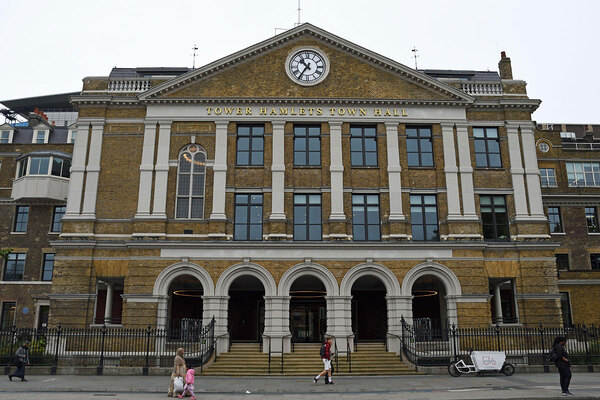
During a tense Kirklees Council meeting, the opposition described the Labour-run authority’s regeneration model as “broken”. But the problems with making regeneration work run far beyond the walls of one town hall. The council said the lack of funding available for social housing makes the project hard to stack up financially, with entertainment-based schemes now a better bet. But that might be about to change.
Read more




Inside Housing’s new Spotlight on Regeneration series will explore the current state of play for housing-led regeneration across the UK, examining the role it has to play in building stronger places and communities, improving housing conditions and delivering the UK government’s objective of national renewal. We will be partnering with the Northern Housing Consortium (supported by Homes for the North and Muse) to cover its inquiry on housing-led regeneration and PlaceShapers – a national network of local-based, place-focused associations – on its work to highlight the placemaking role of landlords as part of the series.
The fall of regeneration
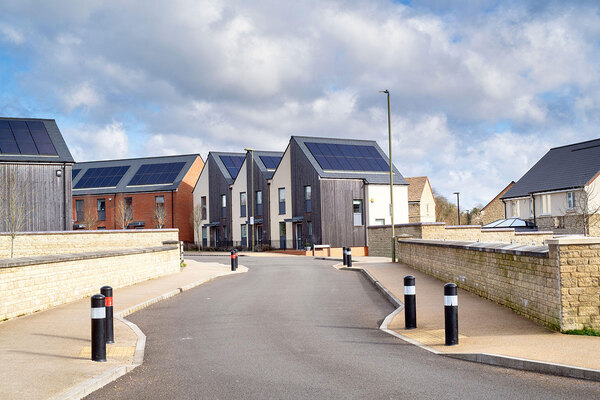
The late 1990s and early 2000s saw huge investment in large-scale regeneration, but those days have passed. Cities, including London and Manchester, have managed to make the numbers work with a series of successful urban projects. Elsewhere, though, regeneration has fallen down the list of priorities, leaving many schemes in desperate need of modernisation.
With a Labour government, will we see a new era of regeneration? Or will its focus on new supply leave areas of the country by the wayside?
In 2011, the Conservative-Liberal Democrat coalition withdrew its support for large-scale demolish-and-rebuild schemes. The disruption when long-term projects were abruptly ended had a chilling effect over regeneration schemes that’s still felt today. Many councils and housing associations chose to reduce exposure to sudden shocks in government policy, preferring to work on smaller projects that could be more easily funded.
In more recent years, the sector’s focus has been on campaigning for new housing supply rather than regeneration. The emphasis in the boardroom has been on financial assets rather than placemaking, claims Rob Main, head of regeneration at Platform Housing Group, which manages 49,000 homes across the Midlands.
The nature of the housing crisis has meant that the lack of properties available has also been the primary concern for housing leaders, practically and politically.
Funding for regeneration is possible under the new £39bn Social and Affordable Homes Programme (SAHP), but there is a major stumbling block. If plans do not add up to the number of new homes on a site – which is much easier to achieve in areas with high density and high land values – schemes may struggle to get funding.
Current projects under way are mainly based in major urban areas, where there is huge demand and private investment is easy to draw in. Not so much elsewhere.
Catherine Ryder, chief executive at PlaceShapers, says the requirements for additionality could trip up projects. “Knocking down old sheltered schemes, for example, you’re not going to get any more additionality. The land values are not necessarily there to make it work. That’s why I think the government needs to think about what its [regeneration] strategy is.”
Chris Weston, director of development and commercial services at Coastline Housing, says regeneration projects are struggling in Cornwall. “Build costs are high; they’re similar to the South East, if not higher in some cases because of the availability of contractors and subcontractors,” he explains. “Everyone has suffered with build inflation outstripping sales inflation. There are quite a few places where the development cost is more than the value of the properties being built.”
Mr Weston is hopeful that new funding will become available as the SAHP is set out and says there is now a lot of appetite among housing associations to start pitching for wider regeneration projects again.
Homes England is expected by most players in the sector to confirm soon that the SAHP funding will be able to be folded into wider regeneration schemes, including demolish-and-rebuild projects. Homes England declined Inside Housing’s request to discuss this in more detail, stating that it is an “emerging policy”.
However, speaking at the Housing Community Summit in Liverpool in September, Ruth Ryan, assistant director for affordable housing delivery at Homes England, said that net additionality would likely be a criteria of future funding allocations for regeneration.
The government is drafting a full 10-year housing strategy, although the political outlook means it may not be able to see through the whole decade. There are also other forthcoming government funding pots that will be focused specifically on regenerating other places, such as parks, town centres and community centres, rather than housing. These include the £1.5bn Plan for Neighbourhoods, which will provide support for 75 areas over the next decade. Plans are being submitted by local authorities for the government’s consideration.
Although funding is forthcoming, there is no roadmap for how to turn it into a workable prospect for stretched landlords, with a client base with deeper needs than ever before. “Homes are coming to the end of their life, [so we need a] significant conversation around regeneration rather than a bit of funding over here [and] some private investment over there,” Ms Ryder says.

“Stuff is happening, but it’s not a particular national plan. It’s really good that there’s flexibility in the new homes programme, that there will be some flexibility for regeneration in there, but that doesn’t address the real strategic challenge around regeneration.”
According to Ms Harrison, the housing crisis this country faces has become understood in a very Southern way, though the challenges that London faces are not the same as those in many areas of the North.
“One of the things that has besmirched regeneration a bit is that through a London lens, it’s about gentrification, whereas I think it means something different in the North. Generally, in terms of tenant relationships with landlords, it is much less fractious in the North. It is a much more trusted relationship. We can look at positive examples of regeneration in the North that have been done with people, rather than to them.” She highlights Livin’s work on the Jubilee Fields Estate in Shildon, County Durham, as an example.
A regional approach
The Northern Housing Consortium is launching an inquiry on regeneration to understand how projects are progressing (or not) in the North and what needs to be done to make schemes more viable.
One of the reasons there is so little detail from the government about an overarching vision for regeneration is because it is committed to a project of significant devolution of powers and funding through regional elected mayors, and these leaders will be expected to oversee their local areas’ specific needs.
In August, West Midlands mayor Richard Parker announced investment to unlock old industrial land in Acocks Green, Birmingham. Together with housing association Citizen, the project will bring a disused site back into use and regenerate the area with new social rent and market sale homes. The first site will deliver 50 homes, but this is part of an aim to add more than 120,000 homes under the mayor’s broader growth plan. There are many more small projects like this.
This leaves Homes England in a strange situation, as the broker in the middle. A recent report authored by a number of high-profile local authority leaders called for the abolition of the agency and the default funding mechanism for housing and regeneration schemes to be managed through devolution of financial powers to local leaders. One expert, who did not want to be named, notes to Inside Housing that there was no housing association contribution to that report. Their relationships with local councils may become more crucial than ever. “It’s a power play, and local government is now playing a crucial role. Homes England is in a state of flux,” they say.
Local politics is likely to be crucial in the success or otherwise of the government’s still awaited plan for big schemes. Nimbyism is more aggressive and Reform councillors are in town halls, while the focus that might unlock central government cash – to meet net zero targets, for example – is likely to inflame it further.
Mr Main at Platform says: “Customer engagement is critical to any type of scheme and there is a journey to be had with customers with angst, anger and keeping them onboard.” He warns that with any form of major project, including regeneration, there is a likelihood that landlords will be tackling conspiracy theory rumours alongside genuine concerns or objections. Delays and missed promises can contribute to this.
Mr Main has been a part of a major scheme that involves demolishing and rebuilding a large area of public space and retail in Newark and Sherwood. It had a £1m support package to get it through outline planning, a process which has taken more than half a decade. The scheme is now awaiting full approval. Residents want to know when work will start, to see the benefits of such large investments of public funds.
But, paradoxically, regeneration might also be the answer to some of these growing social questions. Ms Harrison says that communities which feel left behind want to see that there is an effort to invest in their lives. Therefore, politically, it is a good time to make the argument for large-scale regeneration projects.
“We [the Northern Housing Consortium] did a piece of work last year on what contributes towards people’s pride in where they live. Things like having access to green space were really important, but a lot of it was about access to public services. People are struggling to navigate services; people are falling between cracks,” Ms Harrison says. “You saw this with Brexit – you’ve got communities that are disenfranchised and they feel the country doesn’t work for them and they’re frustrated. You see that frustration come out in different ways.”
With the government’s housing strategy and funding in place, we could be standing on the cusp of a second era of regeneration and placemaking.
“I’m very interested in focusing on the things we can do something about and, for social housing providers, these are areas that they can be really active in,” Ms Harrison says. “I am excited about where we are at.”
Longform reads from our regeneration and placemaking special week of content
The regeneration scheme that changed more than the housing
As a child, Barratt London’s Syreeta Robinson-Gayle lived on an estate that was redeveloped. Peabody’s Ian McDermott worked on the plans. Martin Hilditch reunites them to find out how the experience still affects their thinking, kicking off our week-long focus on regeneration
How to restart regeneration
What is stopping regeneration projects from getting off the ground? Hannah Fearn finds out. This story is part of Inside Housing’s new series called Spotlight on Regeneration
It was a coal mine, then the site of a clash between miners and police. We visit Orgreave to see how it has been transformed
Waverley, a new town in South Yorkshire, is built on the site of Orgreave Colliery, where miners and police clashed in the 1980s. Jenny Messenger visits the scheme to find out more
Board Member Briefing: the board’s role in a successful regeneration
Regeneration projects can take decades and the scope of work may shift over time. How can board members of housing associations keep a handle on these projects that will probably outlast their tenure and many of the executive team? Hannah Fearn reports
CPD module: how to carry out a meaningful tenant consultation for estate regeneration
Successful estate regeneration requires open dialogue with residents who are affected. Emma Gilpin, head of consultancy at tenant advisory service Tpas, and David Smethurst, associate at Tpas, explain how to go about it
No more dark corners: the regeneration team focusing on outdoor space
An estate regeneration project in west London highlights a new approach to resident engagement in placemaking. Kate Callaghan visits to find out more
Sign up to our Best of In-Depth newsletter

We have recently relaunched our weekly Long Read newsletter as Best of In-Depth. The idea is to bring you a shorter selection of the very best analysis and comment we are publishing each week.
Already have an account? Click here to manage your newsletters.
Related stories