The regeneration scheme that changed more than the housing
As a child, Barratt London’s Syreeta Robinson-Gayle lived on an estate that was redeveloped. Peabody’s Ian McDermott worked on the plans. Martin Hilditch reunites them to find out how the experience still affects their thinking, kicking off our week-long focus on regeneration. Photography by Tim Foster


 Syreeta Robinson-Gayle and Ian McDermott’s lives and careers were shaped by a regen scheme. Martin Hilditch finds out how it still affects their thinking today #UKhousing
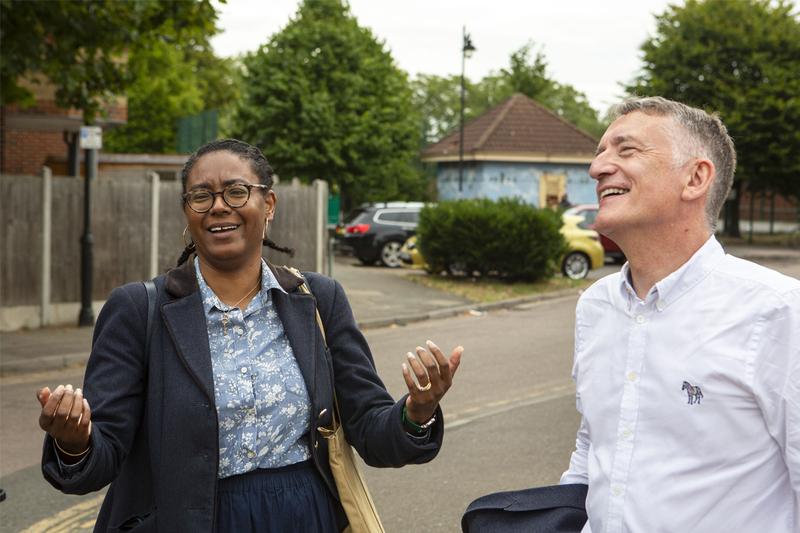
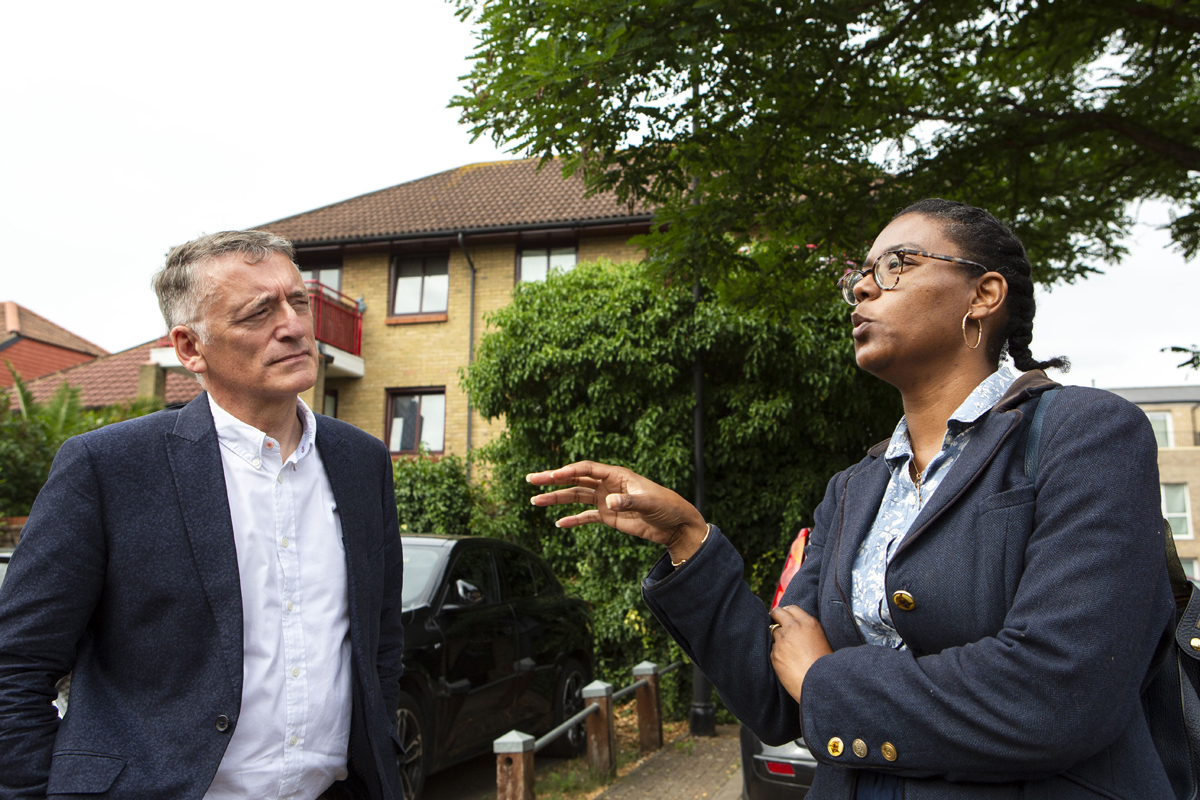
Syreeta Robinson-Gayle and Ian McDermott stand in a quiet cul-de-sac on a Walthamstow housing estate looking at their past.
Today, the view that greets them is of attractive brick houses and low-rise blocks of flats. But once upon a time, all of this was high-rise housing.
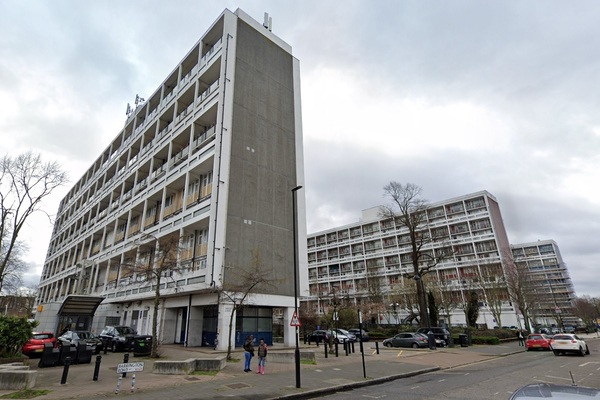
Three 22-storey blocks were built here on Boundary Road in the late 1960s: James Dixon, Walter Savill and Ernest Richards Towers (that last one was named after the grandfather of The Rolling Stones’ Keith Richards).
Ms Robinson-Gayle, who is now head of affordable housing at Barratt London, lived in Ernest Richards Tower as a child.
For her, the blocks are full of happy memories, but frankly, they weren’t safe. The three large panel structure (LPS) blocks were doomed as soon as they were built. Shortly after they were finished, Ronan Point in Newham partially collapsed following a gas explosion, killing four people. It too was an LPS block – a design described by the late fire safety expert Sam Webb as a house of cards made of concrete.
By the mid-1980s – just 20 years into their life – Waltham Forest Council surveyed the blocks and found they had structural problems. Ms Robinson-Gayle has childhood memories of newspapers stuffed into the “joints between the blocks in the walls”. The council began to draw up plans for redeveloping the estate.
Read more
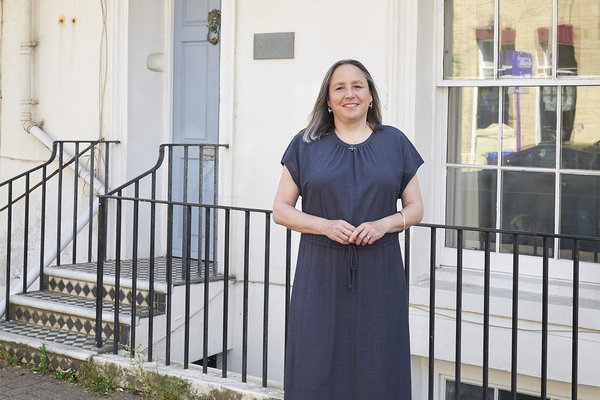

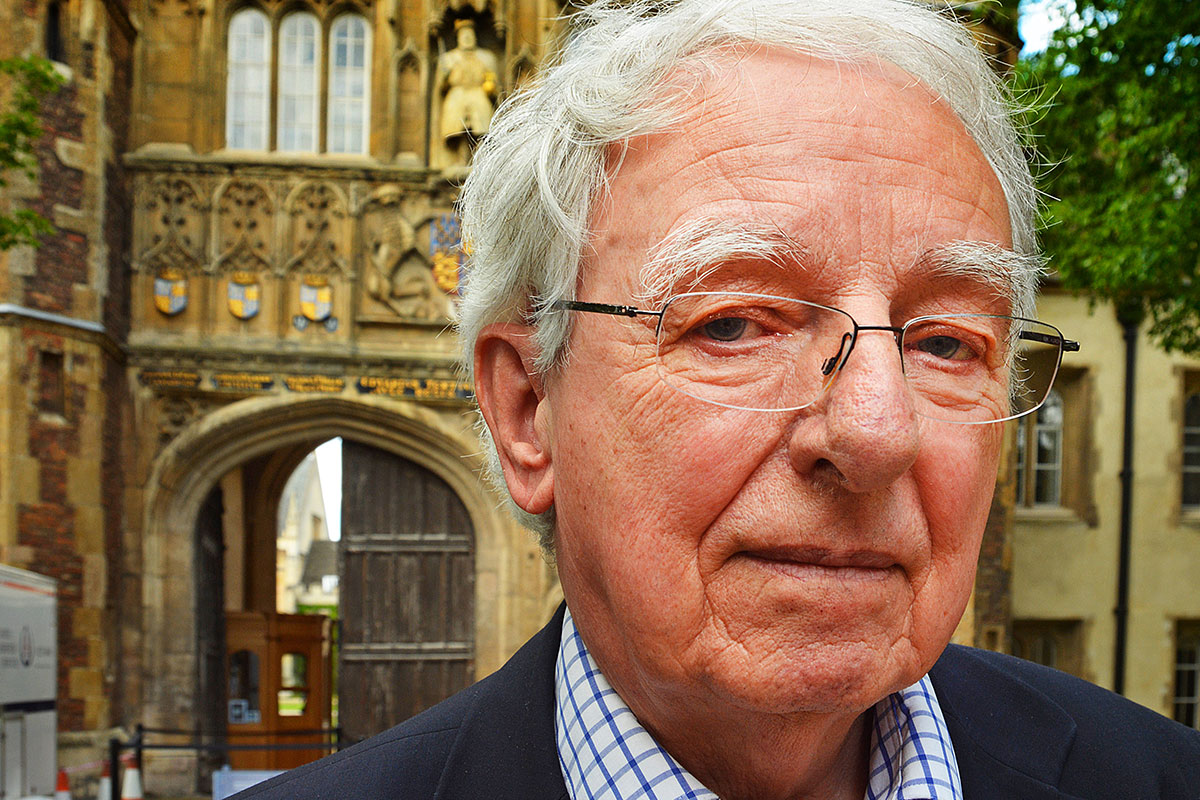
This is the story of a historic regeneration scheme and the lessons it has for housing professionals today. It is also a unique chance to bring together two senior figures shaping regeneration policy, whose thinking is still influenced by their experiences on the Boundary Road Estate.
Growing up
Structural concerns aside, the estate had been a happy place to live – at least for the kids, according to Ms Robinson-Gayle.
“I’m not sure that our parents agreed,” she says with a smile. “For the children it was pretty convenient. The primary school was there, there was a park, there were loads of play areas. People had stayed here for a long time. It was a community without a lot of churn. People stayed here and people knew each other. It was that thing where everybody knows who you are – everyone knows your name.”
As Ms Robinson-Gayle was starting out in life, Mr McDermott, who is now chief executive of Peabody and chair of the G15, was building his career. After a stint as a housing officer, he was part of the large panel construction team at Waltham Forest Council.
Initially the plan for the estate had been to “move people out in order to strengthen the blocks”, he says. “We were going to use the surrounding land to create temporary housing so that we could move people out and do it. Then somebody just said, ‘Why don’t you make it the first phase of a redevelopment?’”
After several false starts – a 1997 National Audit Office report states that the borough “pursued a number of options for financing the works, without success” – Waltham Forest set up the second-ever Housing Action Trust (HAT), following a successful tenant ballot.
HATs were non-departmental public bodies introduced in the Housing Act 1988 to get resources for housing estates that councils were unable to sort within their existing resources. Four estates in Waltham Forest, including Boundary Road, were transferred to the trust in 1992.
Then began what the team claimed was “the first phased redevelopment” project in the UK, with new homes built on patches of land like car parks, play areas and unused space which existing residents were then moved into so the homes could be redeveloped. Mr McDermott’s job, as a project manager, predated the formation of the HAT. His job was to work with the community on the plans and front many of the public meetings about the project.
“I was clueless really, but I loved it,” he reflects today, as we walk around the estate. “It was such an exhilarating experience working with the communities.”
The whole process was resident-led, he says. “They were very much in the driving seat.” While the redevelopment of the site took about a decade, that was predated by lots of work with the community to draw up the plans, he says. “We put two outreach workers on each estate, and they just got to understand the community and made the links with community groups.” That leg work “built the trust and built up a sense of common purpose”.
“The time it took was a huge benefit,” he adds. “Actually, in the end, it became a battle that the residents led to get the funding for the redevelopment. That sense of ownership transferred from what started off as a local authority wanting to solve a problem into something that captured the imagination of a community. That changed the whole dynamic. It wasn’t middle-class people coming in to tell people how they needed to live and how they wanted their estates to look, it was actually local communities getting together and sort of demanding change.”
For Ms Robinson-Gayle, it was a process that would dominate the rest of her childhood, her teenage years and her early 20s.
“Until I had a conversation with Ian, I hadn’t thought about how much of my childhood this whole process took up,” she says.
“For most of my childhood, this was in the background in some way.”
Quite often it was in the foreground, too. With parents often out working, older children from the estate would head off to consultation meetings on their parents’ behalf. “There was lots of reporting back to adults,” she says.
“When I was 16 or 17, I distinctly remember reviewing the plans. I was sent off by the various adults to go and have a look at them because I drew and people knew that I could draw. They sent me off and I went to review the plans.”
It was a role that many children on the estate filled, she says. “It was a very mixed community. So there were lots of adults who didn’t have English as their first language and were relying on a whole hoard of children, basically, to interface between them and the whole process in a way.”
And if the opportunity came up to make a decision, Ms Robinson-Gayle was happy to jump at the chance. Residents were consulted about who they wanted to live close to when they were moved out of their homes.
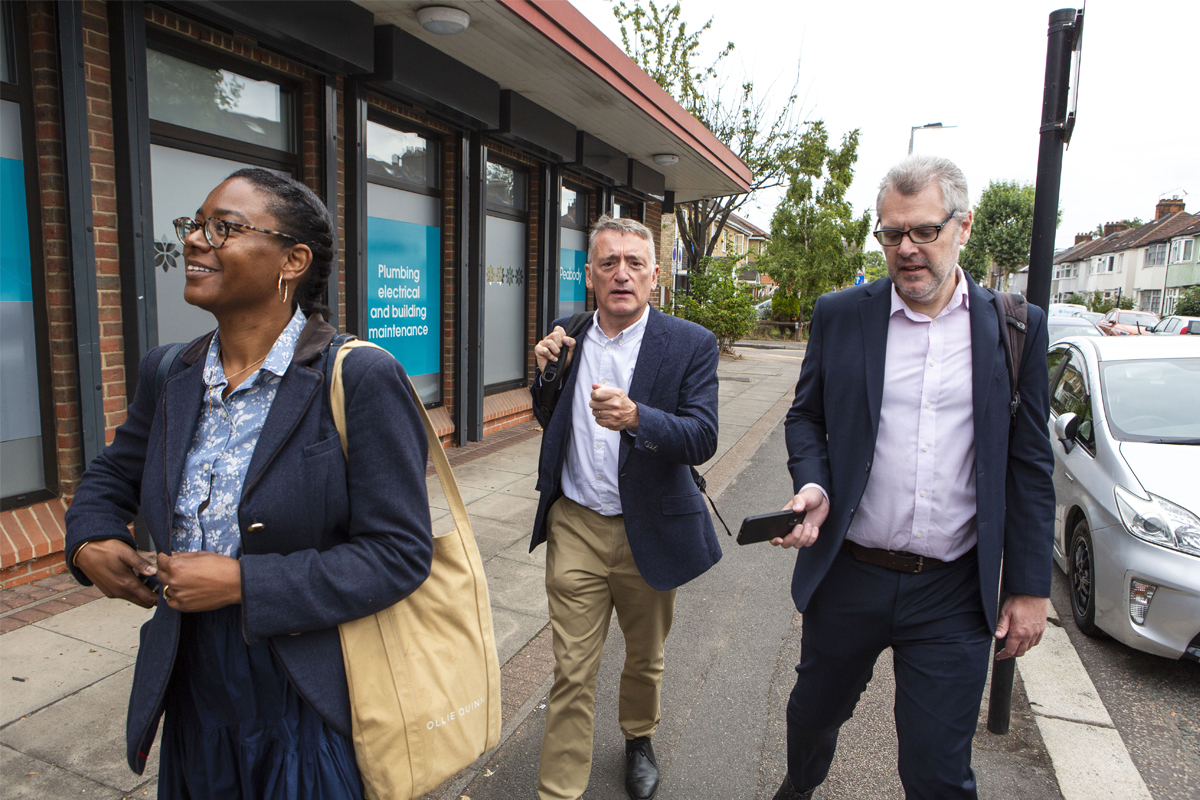
“I ended up living next door to one of my school friends because someone just randomly knocked on the door. My mum wasn’t home, so I just said I wanted to live next to my mate. When we moved out they were my neighbours and my mum hadn’t been consulted at all.”
“I can’t imagine that would happen today,” Mr McDermott adds.
There were other decisions Ms Robinson-Gayle remembers being involved in that still affect life on the estate today.
“I picked these trees,” she says, pointing to two mature trees on the road that became her home. “We had a massive amount of involvement in how this estate [would look], down to when they were doing the landscaping. I was asked which trees we should have, and I picked these.”
Residents in one street can also thank or blame Ms Robinson-Gayle, depending on their taste, for the colour and spacing of the bricks on their homes too, “probably because I was the only person from this close that turned up to the meeting”.
Community development strategy
Given the career Ms Robinson-Gayle has since pursued, Mr McDermott has a question for her as we stroll through the estate. “Did this define your future career?”
1960s
Decade the 22-storey blocks were built in Boundary Road, Walthamstow
1980s
Decade that structural problems were found in the blocks when surveyed by Waltham Forest Council
“I think it may be possible, but my dad is also an engineer,” Ms Robinson-Gayle says. “I did want to be an architect, but I realised quite quickly that I was not cut out for that. I worked in commercial construction for the first part of my career and then I pivoted to work in affordable housing – I think that is definitely linked to being involved in this process.”
Whether it influenced Ms Robinson-Gayle’s choice of work or not, the regeneration certainly had an impact on opportunities for many local people. A detailed community development strategy gave contractors targets for employing tenants. By March 1996, 307 tenants had taken up job opportunities provided by the Housing Action Trust and its contractors or partner agencies, and 12 tenant-run businesses were established with financial assistance from the trust, according the National Audit Office’s evaluation.
A careers advice and planning project maintained a skills database of tenants and provided them with guidance on education, training and employment.
“I was doing some digging out back and the number of people that actually gained employment directly and went through training are huge,” Mr McDermott says. “It was 1,200 in employment and 2,000 people got training. It’s just extraordinary across the four estates.”
“It had such a massive impact on a lot of people,” Ms Robinson-Gayle adds. “That’s about investment in them as people as well as investment in place. We have got better at doing one, but less good at doing the other.”
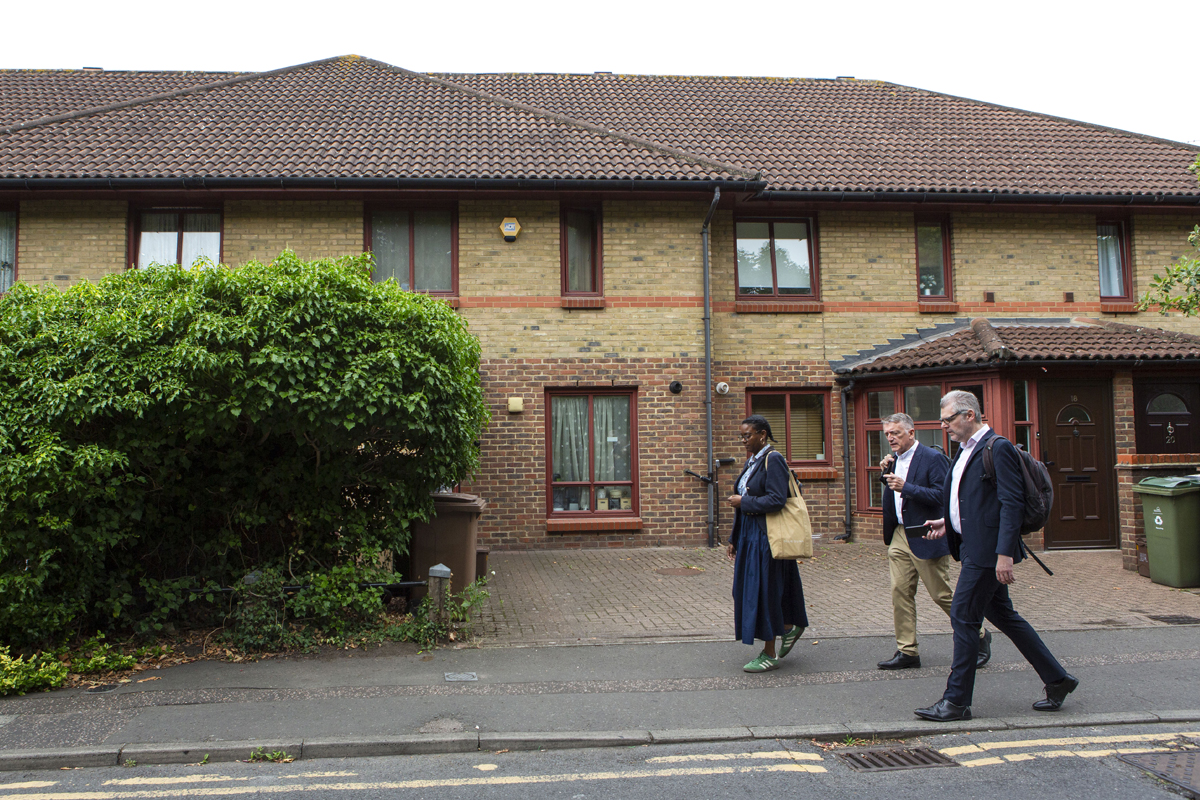
“This was a people project, not [just] a building project,” Mr McDermott agrees. “If you start from that premise, you end up with a very different result.”
Fast-forward to today, what are the lessons that Mr McDermott and Ms Robinson-Gayle think the regeneration has for today’s housing professionals?
For Mr McDermott, given how the tower blocks were doomed almost from the start, one lesson is: “We should continue to question what we’re building and what will make long-term sustainable homes.”
The Boundary Road Estate is notably much more low-rise compared to what it replaced. While that might be difficult to replicate because of the economics today, Mr McDermott says Peabody is “actively and enthusiastically” looking at how to “get a more human scale into what you build and what that means in terms of where and what you build”.
“We all want to be good ancestors,” he adds. As it turns out, Mr McDermott is his own ancestor – given that Peabody manages the lion’s share of homes on the estate, he is responsible once again for its success.
For Ms Robinson-Gayle, one of the big takeaways is the importance of communities having power and agency. “It is massively important. People don’t like to feel that they are being set upon and having things done to them that they have no influence over,” she says.
Given how the scheme transformed the area, there is one final takeaway for Mr McDermott.
“Regeneration has to be an integral part of building the future,” he says.
Longform reads from our regeneration and placemaking special week of content
The regeneration scheme that changed more than the housing
As a child, Barratt London’s Syreeta Robinson-Gayle lived on an estate that was redeveloped. Peabody’s Ian McDermott worked on the plans. Martin Hilditch reunites them to find out how the experience still affects their thinking, kicking off our week-long focus on regeneration
How to restart regeneration
What is stopping regeneration projects from getting off the ground? Hannah Fearn finds out. This story is part of Inside Housing’s new series called Spotlight on Regeneration
It was a coal mine, then the site of a clash between miners and police. We visit Orgreave to see how it has been transformed
Waverley, a new town in South Yorkshire, is built on the site of Orgreave Colliery, where miners and police clashed in the 1980s. Jenny Messenger visits the scheme to find out more
Board Member Briefing: the board’s role in a successful regeneration
Regeneration projects can take decades and the scope of work may shift over time. How can board members of housing associations keep a handle on these projects that will probably outlast their tenure and many of the executive team? Hannah Fearn reports
CPD module: how to carry out a meaningful tenant consultation for estate regeneration
Successful estate regeneration requires open dialogue with residents who are affected. Emma Gilpin, head of consultancy at tenant advisory service Tpas, and David Smethurst, associate at Tpas, explain how to go about it
No more dark corners: the regeneration team focusing on outdoor space
An estate regeneration project in west London highlights a new approach to resident engagement in placemaking. Kate Callaghan visits to find out more
Sign up to our Best of In-Depth newsletter

We have recently relaunched our weekly Long Read newsletter as Best of In-Depth. The idea is to bring you a shorter selection of the very best analysis and comment we are publishing each week.
Already have an account? Click here to manage your newsletters.
Related stories