You are viewing 1 of your 1 free articles
How two chief executives in Wales orchestrated their own merger
The chief executives of housing associations Melin Homes and Newport City Homes successfully planned and carried out their own merger to create one of the largest landlords in Wales – without bringing in consultants. Jenny Messenger finds out how they did it


 How two chief executives in Wales orchestrated their own merger #UKhousing
It is summer 2023, and the chief executives of two housing associations started meeting one other in cafes a little more frequently than they usually would.
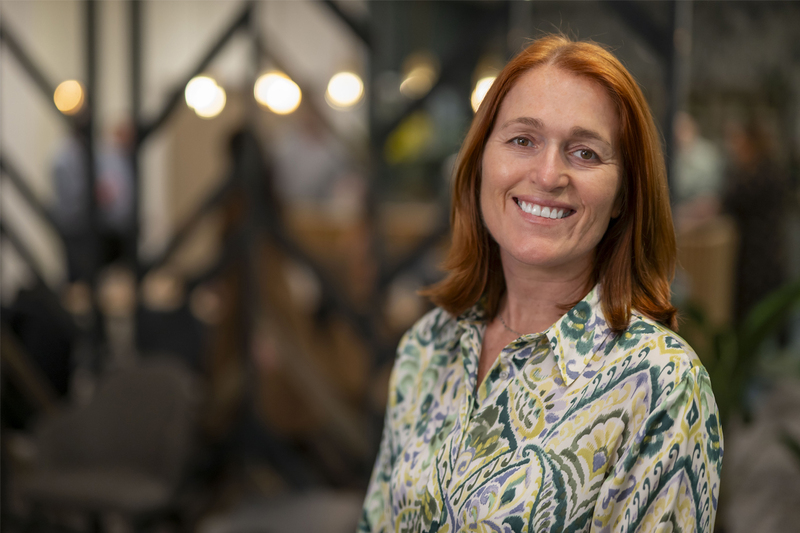
At that point in time, Ceri Doyle, the chief executive of Newport City Homes (NCH), and Paula Kennedy, who headed up Melin Homes in Pontypool, were in the very first stages of a discussion that would see the organisations merge to form a new 15,000-home landlord called Heydn in April 2025.
“It was you and I for the first two or three months, sneaking around in coffee shops,” Ms Doyle remembers.
“We kept bumping into people who work in housing,” Ms Kennedy adds.
Inside Housing first met Ms Doyle and Ms Kennedy to talk about the merger in September 2024, several months before the process concluded, at NCH’s head office in Newport. We have been following the process since then.
The conversation didn’t begin with the idea of a merger, Ms Kennedy says, but with the two organisations’ “shared priorities”.
“What became apparent was that both of our boards were having similar conversations.”
Over the next few months, the two chief executives developed a strategy to merge NCH and Melin, fuelled by a desire to put open communication and transparency at the heart of the process.
What is remarkable is that they achieved it without enlisting the services of a consultant – something few landlords choose to do. But why did they opt for this route and how did they pull it off?


In 2023, the landlords were doing well financially. NCH, which was formed in 2009 following a stock transfer from Newport City Council, posted a surplus after tax of £8.9m in its 2023-24 annual report, while Melin generated a surplus of £10.4m.
NCH, the larger landlord, owned 9,951 homes, with a 10-year development pipeline of just over 1,400 homes, while Melin had 4,756 homes.
But both boards had concluded that exploring a partnership or merger of some kind might be the way to weave resilience into the organisations through extra scale and capacity, Ms Kennedy from Melin says.
“It was a recognition that you can achieve more collectively than you can do by yourselves,” she says. “Melin works in five local authorities, one of which is Newport. There’s an overlap in terms of geography, but there’s also quite a lot of overlap in terms of where we draw from to recruit.”
Together, the two landlords’ geographic scope ranged from the Bannau Brycheiniog (Brecon Beacons) National Park to the city centre of Newport.
As Ms Doyle and Ms Kennedy were beginning their conversations, there were four other mergers happening at the same time, driven at least in part by the need for resilience in an uncertain economy. This gave them a good sense of what they thought was good practice – and what they would like to avoid.
They wanted staff, customers and stakeholders to have input early on.
“Our understanding of what’s happened with other [mergers] is that people have kept the fact that they’re intending to merge under wraps for quite a long time,” Ms Kennedy says. “You don’t want people to find out because they see something with a bit of NCH-headed notepaper in our offices, put two and two together and then make assumptions.”
Unconventional decision
After a few months of covert conversations, they brought in the finance executives and then discussed their plans with the boards.
Then, by November 2023, they were ready to publicly announce that they were embarking on a programme of work to figure out how the merger could function, in which senior staff from both landlords would look at how the other operated via several workstreams.
The chief executives did recruit some outside help: they’ve taken on treasury, pensions and legal advisors, as well as an independent tenant advisor with experience of mergers in England, and they sought advice from other organisations that had either successfully merged or failed to take one forward.
But they chose not to engage consultants to guide them through the merger process itself. Consultants typically help with strategic planning, communicating with staff and carrying out due diligence – so this was perhaps an unconventional decision.
“We know that past merger discussions have failed because new relationships failed to gel sufficiently. As an independent voice, we can counsel and guide clients through difficult conversations and situations,” says Glenn Allum, a director at Campbell Tickell, a consultancy that has been involved with many recent mergers in Wales.
“Maintaining momentum on merger projects is a key factor in success. Without it, inertia can creep in and can lead to projects failing to progress. We think we play a key role in driving projects forward. In our view, this is more effective than if project management is left to the individual parties to progress,” he adds.
Given the potential pitfalls, why didn’t they take the consultancy route?
“We were saying, we don’t want an off-the-shelf solution of how to do this,” Ms Kennedy says. With a consultant, the merger would be “done to us, as opposed to us determining how to merge ourselves”.
Ms Doyle adds: “We were convinced that between us, we had the skill set needed.”
But things were about to get tricky. By November 2023, the two chief executives had already come up with “back pocket” answers to some of the main questions they were likely to face as they developed the business case for the merger.
There were some unforeseen challenges, not least when it came to getting existing staff involved in the merger process.
“That was difficult. We learned some lessons,” Ms Kennedy says. “We had sort of forgotten that we’d spent the last six, seven months talking, spending a lot of time with each other, building a relationship, learning how to trust each other. We made this assumption that everybody else was just going to be like that.”
At that point, the two had been working together every day for months, speaking multiple times a day. “There was very little we didn’t know about each other, if I’m honest, because of the intensity of the way we’d been working,” Ms Doyle says.
The initial response from colleagues was “enlightening”, Ms Doyle adds. “I think it made us realise that we maybe had blind spots.” One example: staff were worried the merger might add to volatility.
“While challenges are inevitable in any merger, the spirit of collaboration and shared purpose has been a defining strength”
Ms Kennedy says: “We acknowledged that, and we said sorry to people. We realised that this was probably tougher for [them] all than we anticipated.”
Yet eventually, staff did build those relationships. Being so close to one another meant there has been little room for surprises, too. “There aren’t any skeletons coming out of the cupboard,” Ms Doyle says.
Another consequence of this was acknowledging that a different way of doing something is not necessarily a worse way.
“One of our mantras from the get-go was, ‘This is a merger of equals,’” Ms Doyle says.
“We used to talk about taking the best of NCH and the best of Melin and then that’s what will form NewCo,” Ms Kennedy says, referring to the original name of what would become Heydn. “At Christmastime [in 2023] we stopped and said, ‘Actually, it’s not that. It’s about what is going to be best for NewCo and that might not be what NCH is doing now, or what Melin is doing now. There might be something better out there.’”
Key to what they wanted the merger to offer was embedding customer priorities throughout the organisation. They developed a joint customer panel – a group now called Buzz – and put together a customer promise via rounds of consultation with residents. The promise includes making sure homes are warm, safe and affordable, helping local communities thrive, putting residents’ voices at the heart of everything and providing homes that meet people’s needs.
“The idea now is that they hold us to account,” Ms Kennedy says.
But convincing residents of the merger’s advantages also came with challenges. Shels McGuire, an NCH tenant and chair of the Buzz group, said there was some opposition from residents.
“Our initial thoughts at the time were very mixed,” she told delegates at the Chartered Institute of Housing’s Tai 2025 conference, during the week of the merger. “There were a number of people who were quite negative – thinking that it was for financial purposes, that it was because both organisations were failing.”
Yet “from day one, nothing was really off the table”, she recalled, as the joint customer panel worked with the executive team and other staff.
Another tough question has been over compulsory redundancies. From the beginning, the landlords refused to rule this out. “It would be really naive to assume that in a coming-together of two organisations at this scale, there won’t be people who might be at risk of redundancy as a consequence,” Ms Kennedy says.
That said, she adds: “One of the things we said from the outset was this isn’t a cost-cutting exercise. We’re both financially strong organisations. We don’t need to save £3m off our salary bills.”
Ms Doyle adds: “It was striking that balance with, ‘We need you to be grown-ups in the debate going forward, we need to be honest with you, and therefore we won’t say no redundancies.’”
One of those stepping aside has been Ms Doyle herself, who chose not to apply for a role in the new organisation. In April 2024, Ms Kennedy was officially named group chief executive designate.
Ms Doyle has been keeping busy too, and was recently appointed to the board of the Velindre University NHS Trust as its new independent member.
While Hedyn is still shaping some of its new teams, Ms Kennedy says compulsory redundancy numbers have been in the single figures and are not expected to increase. Similar numbers of people have been offered “alternative roles that may not have been their first choice”, she adds.
New beginnings
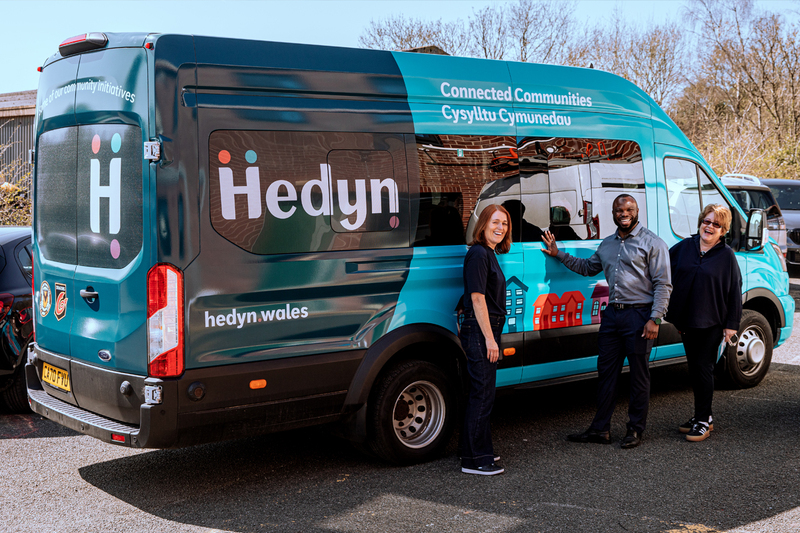
In January 2025, the two landlords emerged as Hedyn – the Welsh word for seed, symbolising “growth, new beginnings and the potential for positive change”.
An update from Ms Kennedy in late October reveals a post-merger picture that is “both challenging and exciting”.
“We’ve made early progress in some operational areas, integrating leadership, and engaging colleagues and customers in shaping our future. While challenges are inevitable in any merger, the spirit of collaboration and shared purpose has been a defining strength,” she says.
Members of the Buzz customer group have attended the board’s audit and assurance committee to discuss the customer assurance report, “where they concluded that the board could take a reasonable level of assurance”, Ms Kennedy adds.
Was avoiding consultants the right decision? Ms Kennedy thinks it was. “I think the integration of both organisations, as a consequence of the work that we’ve been involved with on a day-to-day basis, has been easier,” she says. “If I was going to do it again, I would definitely do it that way.”
What do the residents think? Ms McGuire says one of the biggest changes has been seeing the new brand on vans and uniforms, with more staff present over a larger geographical area. Residents have found it easier to get repairs done, while the customer promise has been embedded in every department, she says.
And, crucially, being a larger landlord has not added up to more bureaucracy. “In fact, I have witnessed more calls to action to do the right thing and to make sure the customer is at the heart of decisions made.”
Update: at 9.37am, 7.11.25
An earlier version of this story stated that both Newport City Homes and Melin Homes were based in Newport. This was an error, and the story has been updated to reflect that before the merger Melin Homes was based in the nearby town of Pontypool.
Sign up for our Wales newsletter

New to Inside Housing? Click here to register and receive our Wales round-up straight to your inbox
Already have an account? Click here to manage your newsletters
Related stories