Risen from the ashes
A supported housing project destroyed by fire has been rebuilt and now offers residents independent living in an idyllic setting, says Rhiannon Bury


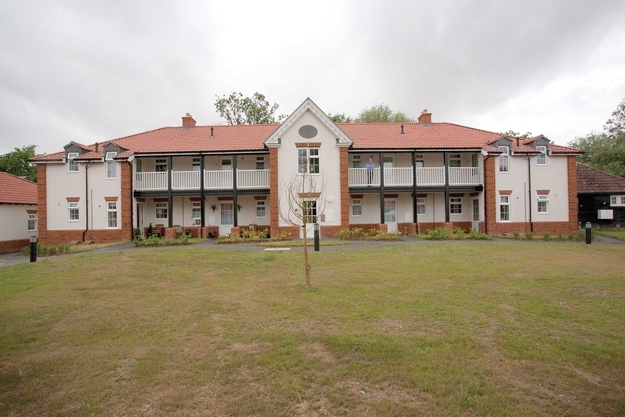
Five years after a fire destroyed much of St Giles, a supported housing project for adults with learning disabilities and mental health problems run by Springboard Housing Association, many of the residents are back and living in 40 reconstructed homes.
The blaze in the building located deep in the Essex countryside, south east of Chelmsford, started when equipment left behind by a team contractors working in the loft caught fire. It left nine properties uninhabitable.
Residents at St Giles suffer a variety of moderate disabilities which mean that living alone is not practical - so when Springboard, part of Genesis Housing Group, took the decision to rebuild the entire scheme in order to modernise facilities, all of the residents needed to be re-housed.
The residents didn’t want to go far - so they moved into another building located on the same 22 acre as St Giles called St Maries, and for those who wanted to remain even closer to home, Springboard purchased four six-berth caravans which were pitched on the St Giles site.
Rebuilding the fire-ravaged home has been a long process - it was completed in two phases, the first beginning in May 2005. Finally, earlier this month, the new and improved St Giles was launched.
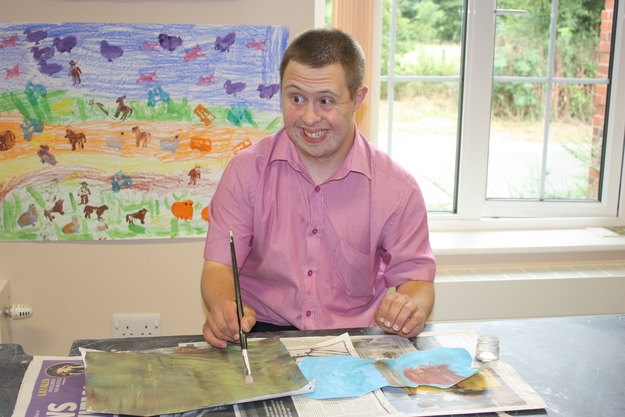
From cooking classes…
Financed by £3.1 million from the Homes and Communities Agency and £5.2 million from its predecessor, the Housing Corporation, the scheme offers round the clock care and supported living for 42 people, including two couples.
Speaking at the launch of the housing facility earlier this month, returning resident Roy Chittock says: ‘I came back to live here in mid-June, having moved away. It was lonely living by myself, but here I am registered to do sports and day trips, and I’ve done a computer course and cooking classes. On Fridays we have leisure time, and we go out for meals, or to the cinema.
‘Our meals are prepared for us in the evenings and there are lots of other people around, which is nice,’ he adds.
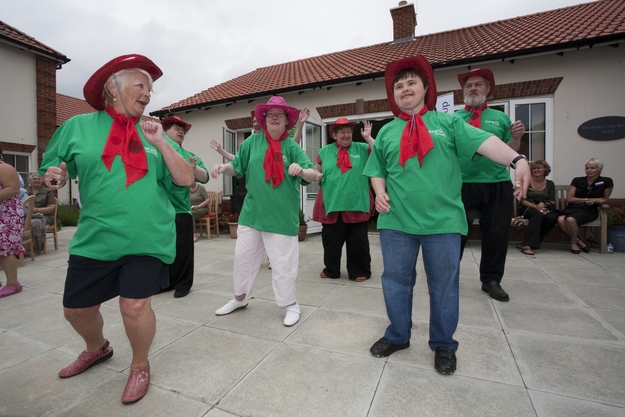
… to line dancing
Another resident, Robert Elford, says he loves living at the development. ‘I have lots of friends and enjoy all the activities - especially the line dancing,’ he says. ‘It’s lovely and quiet, and I have my own space. My mum loves coming to visit.’
‘This place is about giving people a choice,’ says Anna Clayton, head of supported housing at Springboard. ‘They can live independently but still have other people around. Often our residents have been living with families, so it’s difficult to adjust to being alone. The neighbourhood context of the scheme is good, and they can develop skills to live independently.
‘We used to provide a lunch time meal, but now the residents can make their own lunch using cookers with supervision,’ says Cathy Cable, a housing assistant. ‘Residents are given much more independence over what they want to eat, and they enjoy doing it. They’re living independently, but with us providing a watchful eye.’
Some of the seemingly endless acres of land on which St Giles is located are owned by conservation charity, the Woodland Trust. Inside Housing attended the launch on a hot summer’s day and can only describe the site as idyllic - it even includes its own rare breed of orchid.
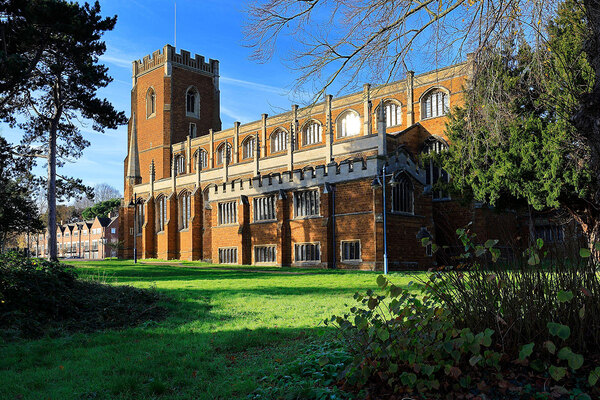
The site also has an interesting history dating back to 1913, when a Franciscan Order of monks bought it for £1,500 and opened the Hospital and Home of St Giles. At that time, and until Springboard took over in 1985, the facility offered care for people with leprosy. With the decline in this disease and the development of effective treatment, it began to provide homes for people with learning disabilities and mental health problems.
Independence day
The 40 flats and bungalows within the scheme all have one bedroom and their own bathroom and kitchen.
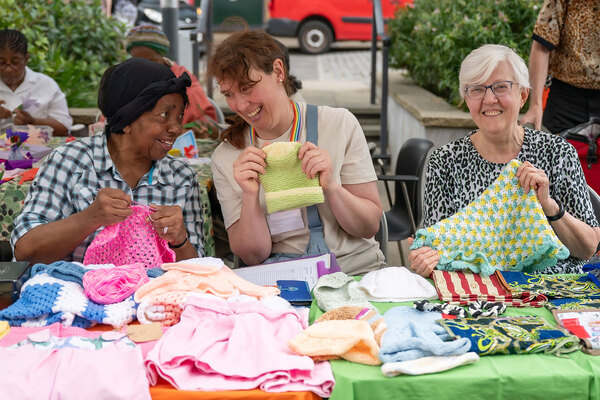
Residents, who are sometimes at risk of becoming socially isolated, contribute to life at St Giles in whatever way they are able. They are encouraged to leave their own homes and meet in the communal lounge and dining room.
Lady Kina Avebury, vice-president and past chair of Springboard, who chaired of a Department of Health working party which drafted the national minimum standards for long-term residential care ten years ago, speaks highly of the scheme. ‘[Springboard] really recognises people’s abilities, not their disabilities,’ she says. ‘I came to St Giles in the eighties and it was lovely then, but it has been transformed by the new work,’ she adds. People think that being in the countryside is isolating, but community spirit here is very active.’
St Giles’s story
By the time Springboard took over the management of The Hospital and Homes of St Giles, the number of people suffering from leprosy and living on the site had fallen to nine.
A chronic and infectious disease caused by a bacteria called Mycobacterium leprae, leprosy is now rarely seen in the UK.
It can be now treated with a six to 12-month course of multidrug therapy - but while the disease is a thing of the past in Essex, its still common elsewhere in the world including India, Brazil, Bangladesh, Nepal, Columbia, Guatemala, Mozambique, Malawi and Madagascar.
Related stories