You are viewing 1 of your 1 free articles
‘The moral imperative is too great to give up’: Andy Roe on the future of the Building Safety Regulator
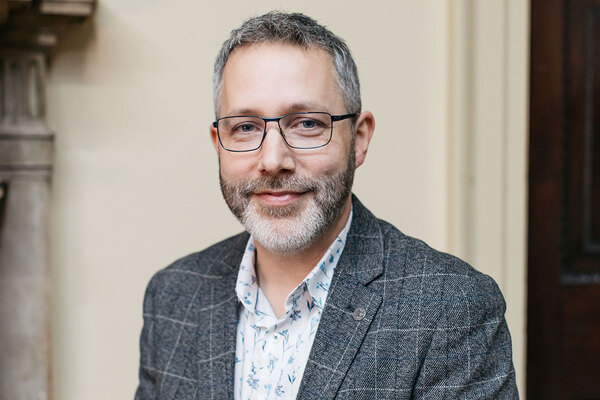
The Building Safety Regulator raised eyebrows over the summer when it appointed two former leaders of the London Fire Brigade to spearhead its transformation. Four months on, Peter Apps meets chair Andy Roe and interim chief executive Charlie Pugsley to ask why they took the roles and what comes next


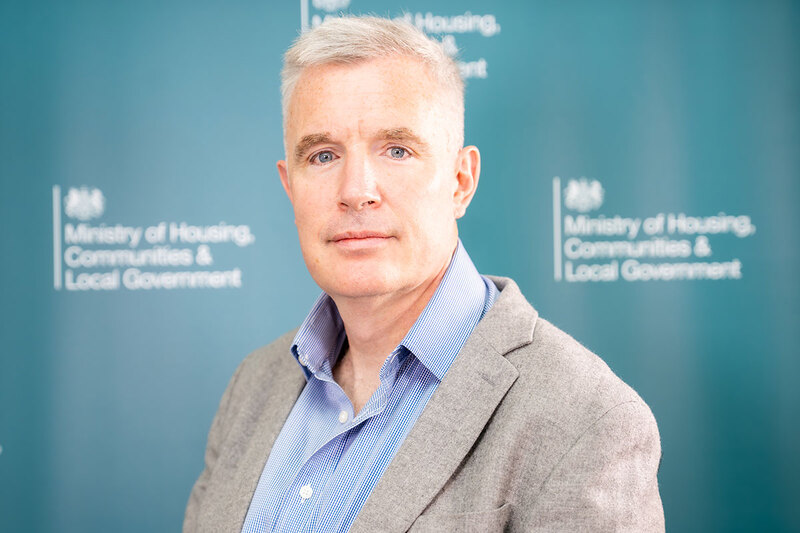 The Building Safety Regulator raised eyebrows over the summer when it appointed two former leaders of the London Fire Brigade to senior positions. Peter Apps meets them to ask what comes next #UKhousing
If there is one thing Andy Roe must be getting used to, it is taking charge at a moment of crisis.
The former commissioner of the London Fire Brigade (LFB) took over that institution in January 2020 when it was “one of the most heavily scrutinised public bodies in the country”, still reeling in the aftermath of the failures exposed by the Grenfell Tower Inquiry.
And that, of course, followed his 2.30am appointment to incident commander of the Grenfell Tower fire when the operation had, by any measure, gone desperately wrong.
In both instances, Mr Roe led an abrupt turnaround. On the ground outside Grenfell, he took the decision to abandon advice to stay put, and then spoke to his fellow firefighters inside the tower, finding the words to rouse them into a continuing effort to save as many lives as they could.
At the LFB, he led the organisation out of special measures it had been placed in by the sector’s watchdog, and began the painful, necessary process of implementing changes and admitting fault in order to meet the recommendations of the inquiry.
Now, he faces a new challenge. In July, he was appointed chair of the Building Safety Regulator (BSR), and tasked with leading the improvement of an organisation that has – by his own admission – been failing. Delays on approving applications stretch out to more than a year in some cases, with serious consequences for new building and the maintenance of high rises.
A tide of voices want it scrapped outright, and Mr Roe’s first few months have come with incessant media scrutiny and appearances before various parliamentary committees. It must feel, to a certain extent, like déjà vu.
“I think the experience of being in charge of an organisation that had lost its way, that felt humiliated, where we had to be honest because we had nowhere else to go, taught [me] some very hard lessons,” Mr Roe says.
Mr Roe has made ambitious pledges, promising to clear the regulator’s backlog of stalled applications by the new year, and start achieving the statutory timescale of 12 weeks for new applications.
So what changes can the housing sector expect? Inside Housing sat down with Mr Roe and his former LFB colleague Charlie Pugsley, now the BSR’s interim chief executive, to find out.
Read more
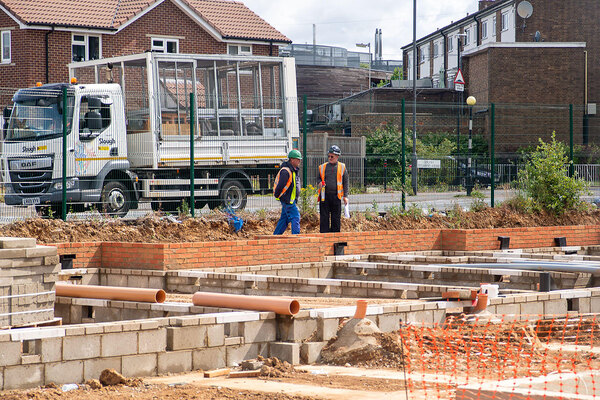
The first thing Mr Roe does is praise the team he has inherited and reiterate the importance of the BSR.
“I think the moral imperative of [the Building Safety Act] is unassailable, which is basically making sure we are building safe homes for the hundreds of thousands of people in this country who need them,” he says.
“I think the people I’ve met inside the regulator absolutely understand that and they’ve got a real passion for it. I’ve met a lot of really fantastic public servants who just want to do the right thing, who are really motivated, who work really hard under colossal pressure.”
But he also accepts, bluntly and honestly, that things have gone wrong.
“We can see that bits of that system don’t work. I think there has been rightful criticism, and we have to just face into that,” he says.
“The BSR is still a very new regulator. It’s only really a couple of years into business. But it’s critically important that we get our systems right, otherwise we risk undermining the very principles of [the BSR].”
This approach – a staunch defence of the people and purpose of the institution, combined with a willingness to transparently accept the failure of its systems – will be familiar to those who followed Mr Roe’s time at the LFB. So what changes is he seeking?
It is ‘Gateway 2’ where the big challenges have arrived for the regulator. This is the stage when the BSR is required to approve the designs for a building or refurbishment project as compliant. Work cannot start on site until this approval is granted.
To do this, a regulatory lead is assigned, and the regulator then sets up a ‘multi-disciplinary team’ (MDT) from the private sector, including a registered building inspector, which assesses the plans, requests further information and finally approves them.
But this is taking too long. The statutory target is 12 weeks, but the current average wait time is 43 weeks (48 in London), and some projects have waited 18 months or more to be signed off.
“It’s critically important that we get our systems right, otherwise we risk undermining the very principles of [the BSR]”
This has caused havoc in the construction industry, with reports of contractors going bust due to a lack of cash flow and the cost of works spiralling due to delays.
The first change Mr Roe has made is to the MDTs. Now, rather than assembling a team from scratch, the regulator is bundling up applications and signing agreements with large engineering firms to take them on.
“It takes at least six weeks to get the MDT together, and then you have to do a three-week consultation, and that just isn’t going to work with the 12-week target,” says Mr Pugsley, who stepped down in September this year as deputy commissioner of the LFB to take up the interim chief executive role.
Is the new approach working? “We’re only a few weeks in, but we are beginning to see really good progress,” says Mr Roe, adding that the jobs going through under this new system are currently achieving milestones that suggest they will come a lot closer to statutory targets.
“I’m hoping we’re going to see an average of around 12 and 15 weeks,” he says. “I think that feels sensible for new build applications, because we don’t want to be so rigid in that 12 weeks that we don’t allow consideration of what can be quite complex engineering decisions.”
What won’t change, though, is a reversion to the pre-regulator status quo, where designs and compliance were not fully worked out before a job started on site. “We absolutely have to avoid going back to the design-as-you-build situation,” Mr Pugsley says
Another big change looks likely to be the type of jobs the BSR assesses. Its founding legislation required it to oversee everything that met the classic building regulations definition of ‘building work’: not just new build projects and major cladding remediation, but a huge range of regular maintenance jobs carried out on high rises, from fitting communal fire alarms to replacing fire doors or pipe work for new boiler systems.
This has added an enormous amount of work to its backlog, as well as delaying important safety and repair work in the real world. So should this sort of routine maintenance work simply come out of the regulator’s scope?
“The answer to that is yes, basically,” Mr Roe says. “Charlie’s whole ethos when he was running the regulatory business inside LFB was, you’ve got to put your resources where the risk is the greatest. The Building Safety Regulator is no different.”
This does not mean removing all work to existing buildings from its remit, but instead focusing attention on genuinely major work.
“You would want to keep hold of some refurbishment,” says Mr Roe. “If you’re doing massive-scale refurbishment across whole estates, you do need to know that the people doing that are competent, and understand the terrible impact they might have on safety from getting it wrong.
“There’s a place, though, where you could take a lot of Category B jobs [more minor changes to a building] back out of this form of control into a more proportionate regime, potentially back with local authorities.
“Obviously that’ll be done carefully so we don’t get into a situation where we create new unintended consequences, but the answer, put simply, is yes. Because what that would then do is free up skilled resources inside the regulator [for] areas of much higher risk.”
Mr Pugsley is also going to be working on improving something else that has been a regular complaint: consistency.
This is a tricky area, because building regulations in this country are not prescriptive, so compliance is always a matter of some interpretation and will vary depending on the professional making the assessment. But stories abound of the regulator taking different and contradictory approaches, sometimes within the same job.
“Charlie’s leading a massive effort around consistent decision-making at the moment, setting up internal routes of arbitration with experts [and] convention committees to work with industry to understand how much detail we need to request, for example,” Mr Roe says.
Mr Roe has also promised technological improvements. He told a select committee in September that while the regulator was “well-resourced”, its IT system was “not viable”, leaving regulatory leads manually moving data from one spreadsheet to another. Two months on, is a new system in place?
“No, because I think we’ve got to be careful about this. The whole public sector is littered with IT systems that cost a lot of money and don’t work. We know what we’ve got at the moment isn’t good enough. But actually, to be fair, what it isn’t is expensive. It’s very basic.”
“If there’s challenges within the regulator or an industry, we should just say them out loud. As the regulator we must set the standard in terms of moral behaviour”
Mr Pugsley is exploring potential replacements, including the use of AI to give an early indication to applicants on whether their application is likely to succeed. However, he says this must be approached slowly and with care, especially in light of the pair’s experience with a botched IT upgrade at the LFB, which soaked up weeks of senior officer time in the years before Grenfell.
“The system we’ve got is a minimum viable product. It’s functional, but it’s not what you’d want long term,” Mr Pugsley says. “I don’t think it supports the productivity, or the potential opportunities that a new system could give us. One of the things that’s very important in a new system is a good audit trail. Because, coming back to the lessons learned from Grenfell, what we can’t do is have big spaces where things are said or decisions are made and there is not an adequate audit trail.”
As the new leadership team attempts to get the regulator back on track, there is a broader question: how to avoid capture by industry?
Being a regulator in this space is a tough business. Mr Roe and his team need to work closely with the construction sector, but they also need distance from it. There is a danger – well known to those who followed the Grenfell Inquiry – of too much industry influence over a regulatory system.
“This [challenge] is really what sits at the heart of building control,” says Mr Roe. “If you are running a building control process, which is what the BSR is, you can’t afford to have a distant relationship with industry, because you cannot hope to get to every single place where there’s a risk because of the scale of the built environment in the UK.
“So you must use your position as a regulator to positively influence culture, leadership and standards. And the best way to do that is to work with industry. Now, there is a risk, as we saw in the old system, that you become a bit too close in terms of relationships at a senior and operational level, [so] you lose objectivity. That’s where the danger is. And it’s obvious to anyone who works in a regulatory system that that’s a possibility.
“There’s no simple answer to it [but] I think the safeguards you build in are very important. So first of all, no one should be having secret meetings with anyone. If you meet people, it’s got to be in an open environment. And then there has to be honesty. If there’s challenges within the regulator or an industry, we should just say them out loud. As the regulator we must set the standard in terms of moral behaviour.”
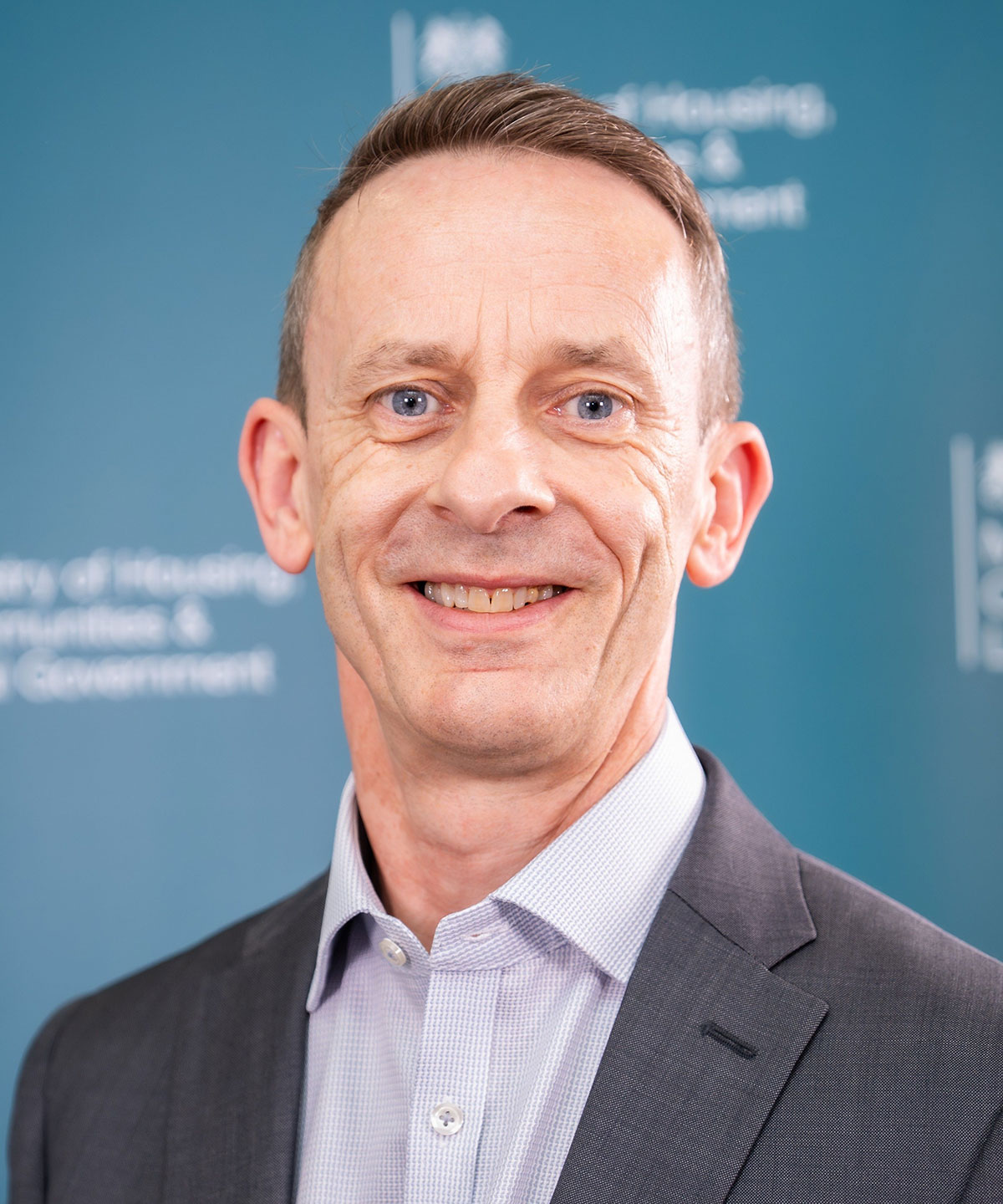
When Mr Roe was appointed, not everyone was happy. Some suggested that a construction professional needed to be in charge, not a firefighter. Others said that a figure so deeply entwined in the LFB was the wrong choice, given that organisation’s shortcomings in the years before the fire. How does Mr Roe respond to those statements?
“I can understand why, because we were part of the institutional failure that led to Grenfell,” he says. “I suppose what I do is stand on our record, really. [When] I took over the LFB in 2020, we were probably one of the most heavily scrutinised public bodies in the country. We were in two forms of special measures at one point, and we had to evidence change.
“So we’ve got a lot of experience of leading a very, very large organisation – 10 times the size of the regulator – in a process of absolutely fundamental change and turnaround. Charlie and I probably did join the job to kick doors in and put fires out. But by the time we got to where we finished, we were running a very large, very complicated organisation.
“I do understand why people would have questioned [his appointment], because we’ve both got the same background. I think there’s a bit of a view about fire services generally. I’m not really going to push back on it. You’ll have to judge us on the results, won’t you?
“We’ve got an aspiration to clear this backlog by Christmas. I’ll be the first to admit it’s really difficult, and I will have to articulate, if we don’t get there, why we didn’t. Well, that’s fine, that’s the business, isn’t it?”
James Walsh, cabinet member for inclusive regeneration and planning at Lewisham Council, tells Inside Housing: “The soundings that I’ve heard from across the sector when I’ve been with developers is, ‘Oh, thank God. [Andy] knows what he’s doing.’ He’s given a lot of confidence back into the sector, and that is openly spoken about by big developers.”
‘Unfinished business’
What about Mr Roe’s personal motivation? Now aged 51, he has not had a straightforward career. There has been the long, painful turnaround at the LFB, Grenfell itself, the harsh reality of years as a firefighter and before that, the British Army and two tours of Northern Ireland, including one where he was injured in a pipe bomb attack.
After all this, no one would begrudge him a rest, but instead he finds himself with one of the hardest roles in British politics. But he finds his motivation in what he witnessed on 14 June 2017.
“Grenfell is unfinished business for me,” he says. “I need to see the Building Safety Act succeed. I need to see the regulator succeed. I’ve spent too many hours, weeks, months in the company of the immediate family of those who lost their lives, of survivors, of people who lived in the environment around the tower.
“Every single system that should have kept those people safe failed. The Building Safety Regulator is the most important step, in my mind, to changing that.
“I took this role because I felt that it’s too important to fail. Otherwise I don’t think I could sit in a room with those people. It is that personal to me. I don’t know, I can’t even think about it without…”
At this point Mr Roe breaks off. What would he say, I ask after a pause, to those who call for the BSR to be scrapped?
“It is really straightforward,” he says. “I would make those people stand in front of the tower. I would make them stand and look at it, because it is the most profound manifestation of system failure. We can’t repeat that, and that is something people are too quick to forget.
“I think one of the great advantages of our background is that it’s not hypothetical for us. I have stood next to Charlie in too many awful spaces over the years, on too many streets in London thinking, ‘How do we get to this?’ ‘How did people end up living like this?’
“And while the Building Safety Regulator wasn’t working as it should, that should not be a reason in the short term to just step away and abandon it. The moral imperative is too great.”
This afternoon, he says, he is going to a boxing club with his son. Mr Roe has boxed and coached boxing his whole life. When he attended Grenfell, he knew where he was immediately because of the Dale Youth Boxing Club at the base of the tower – a gem in Britain’s feted amateur boxing circuit that has produced multiple world champions from the streets of west London.
“When I go into that space this afternoon, I’m going to be with people in an environment I’ve known since I was a kid,” says Mr Roe. “The warmth, the humour, the banter, the energy. And I know there’s estates and blocks all over this country that are exactly the same. And when I think about what motivates me, it’s that, it’s those spaces. It’s protecting them, and making sure they are safe.”
Few would fault this clarity of purpose. The sector will now wait to see how well his reforms deliver it.
Sign up for our fire safety newsletter
Already have an account? Click here to manage your newsletters
Related stories