You are viewing 1 of your 1 free articles
Why are hundreds of existing buildings stuck waiting for approval to make them safe?
The Building Safety Regulator’s ‘Gateway 2’ process is causing severe delays to essential safety works. Peter Apps investigates why


 The BSR’s ‘Gateway 2’ process is causing severe delays to essential safety works. Peter Apps investigates why #UKHousing
This month marked the second anniversary of Josh Morris being made homeless.
In October 2023, he returned from a work trip to find his building in disarray: his neighbours were packing their belongings into cardboard boxes, children were crying, and firefighters and building management were trying to deal with questions from the assembled crowd outside his home.
“It was chaos,” he says. “There’s a very small lobby, with maybe 50 people. They were very animated, very loud. People were crying, people were walking past with kids and bin bags for their clothes and possessions.”
An assessment of the building had found serious fire safety defects. The building had been served a prohibition notice, and no one could live there until it was fixed.
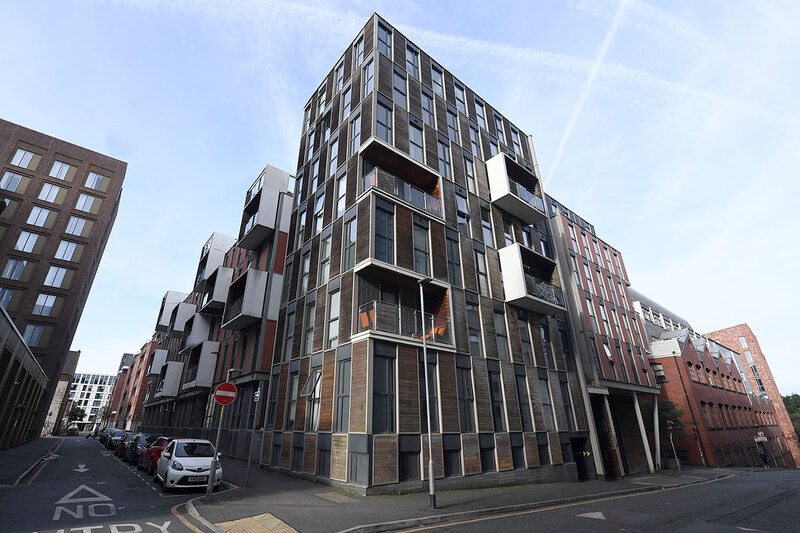
That was two years ago, and in the interim no work has been carried out on Josh’s building, Skyline Chambers. While Josh has been living in temporary accommodation, still paying a mortgage and management fee on a flat he is no longer legally allowed to enter, the building owner has been waiting for permission from the Building Safety Regulator (BSR) to start work. It was only finally granted in September this year, after difficulties finding professionals to assess the application (see responses below).
This is one example of a problem that is causing an enormous headache for the owners and managers of high-rise buildings around the country, including social landlords.
While much has been written about delays to new build under the BSR’s ‘Gateway’ regime, work to repair and maintain existing flats is actually a larger part of its backlog.
As of early October, the regulator had 869 existing buildings awaiting a Gateway 2 decision (the design approval required before work can start), compared to 159 new builds stuck at the same stage.
Of the 869 buildings, 271 need external cladding remediation works. The rest cover a range of much more minor and routine maintenance work to high rises that meets the regulator’s definition of “building work”.
Read more


“Remediation work should be seen as more of a concern than new build, because in a lot of these properties we’ve got people living in homes which are not safe,” says Amy Farr, head of building safety and construction compliance at consultancy Workman.
She is advising on one building which has cladding panels that are vulnerable to falling off, and have previously fallen. The building owner has installed crash decks, but these are not foolproof, especially in high winds. The Gateway 2 application has been with the regulator for 11 months; nothing can be done to make the system safe until it is approved. In the meantime, the risk of an accident from a falling panel remains.
“This is the biggest problem with the BSR system, but it is the one getting least attention,” adds Jamie Ratcliff, co-founder of consultancy Place Base.
“If the process is slowing down remediation or actions from fire risk assessments being addressed, the BSR is actually making people less safe in their homes.”
So how did we get into this position? And how might we get out of it again?
‘One massive gloop of information’
The problems began with the original idea for the BSR, which emerged from a review of building regulations by Dame Judith Hackitt held right after the Grenfell fire.
This review concluded in 2018 that the problems with unsafe buildings were solely a result of widespread non-compliance in the construction sector, where a “race to the bottom” and an absence of clearly defined responsibilities were leading to ignorance of the rules and disregard for them.
While this analysis has some basis in truth, it missed the more nuanced picture painted by the full Grenfell Tower Inquiry of occasional compliance with guidance that was inadequate, and use of products believed to be safe because of misleading rhetoric from manufacturers.
The result was that Dame Judith set out to create a system that was laser-focused on pinpointing responsibility and ensuring compliance within the construction industry, to the exclusion of any other reform. And so we got legislation that set up the BSR and imposed the system of duty-holders and gateways.
The Health and Safety Executive (HSE) was tasked with setting up this system. But it was given a short timeframe and limited resources – the Building Safety Act received royal assent in April 2022.
And the Gateway system – which effectively took control of all building control processes for Engand’s entire existing high-rise stock and its entire new build pipeline – went live in October 2023, pushed by a government that wanted to be seen to be doing something.
This was a big ask for any organisation, but the HSE had no experience of regulating construction projects. Its staff were learning on the job, and had to work out the systems themselves before they told the industry what to expect.
In the set-up phase, industry figures expressed fear that the system was undercooked.
“Now we have people who want to change a boiler system and drill a few holes in a compartment or external wall having to apply for Gateway 2 approval. That just seems silly”
“I know the regulator’s had a challenge around getting all of this ready, but why put a 1 October deadline if you’re not resourced up?” one source told Inside Housing at the time, while others talked of guidance being absent for months and then suddenly landing in “one massive gloop of information”.
While the HSE and the government insisted they were on track, behind the scenes they had made a critical mistake. The regulator based its required level of staffing on an estimate about its workload. But they had underestimated the amount of work that would be generated by existing buildings.
“Before we launched, we modelled the volume of work we expected to come our way. That modelling didn’t survive contact with the real world,” Tim Galloway, director of the BSR, said earlier this year. “The Category B work [more minor works to existing blocks] was significantly higher than we’d anticipated.”
Critically, the legislation had introduced a wide definition of works to existing buildings, using the regular building regulations definition of “building work”, which meant the regulator was having to sign off huge volumes of planned and routine maintenance.
“It was clear the use of standard definition would cause a blockage in the BSR approvals system eventually – because so much work fell into scope. Much of the work now subject to BSR approval could easily be carried out without that approval. There should have been a specific definition for building work to high-rise buildings that only included genuinely material or significant work,” says Mark London, a partner in the construction team at law firm Devonshires.
“But they didn’t do that. So now we have people who want to change a boiler system and drill a few holes in a compartment or external wall having to apply for Gateway 2 approval. That just seems silly.”
This meant that a flood of work was coming the regulator’s way. It wasn’t just dealing with the country’s vast number of cladding remediation jobs, but also pipe repairs, fire door replacements and dozens of other tasks that make up the basic job of maintaining a high rise.
Over the summer of 2024, the amount of remediation applications stepped up, as applicants who had been working on their designs began to submit them.
But guidance to applicants at this stage was vague, and the required process of producing full designs before starting work was an unfamiliar way of working to an industry used to figuring out smaller details as the job progressed. The result was a lot of sub-standard applications.
“In summer 2024, we had lots of applications coming in where the applicants were not really understanding what the requirements were,” says Jane Carroll, head of service (external remediation) at the BSR.
At this point, the BSR decided to let the applications through and work to fix them rather than reject them outright.
“We took a decision on validation, which was to allow them through as long as they met the minimum legal standard in terms of constituent parts and work them out as they progressed, as opposed to carefully checking the quality at the outset,” says Ms Carroll.
“To put it bluntly, we let a lot of rubbish down the pipework, and it caused blockages. These were applications where we then found out that, once assessed in more depth, they were not clear as to what they were doing, no evidence of compliance was displayed, there was a lot of information and details missing and so forth.
“We still see examples where they have got the name of a building wrong in the documents, documents have the building at three different heights, we have both ‘stay put’ and ‘simultaneous evacuation’ quoted for the same building or we were just sent a brochure for the new cladding instead of explaining its compliance.”
Some industry figures have questioned whether the BSR has exaggerated the low quality of applications in order to justify its delays, but several industry sources Inside Housing has spoken to agreed that there had been a large number of poor submissions, particularly in the early days of the regime.
“I have been asked to review applications on behalf of clients, and some applications are extremely poor,” says Andrew Mellor, a partner at architecture practice PRP. “There are consistency errors, or passages copied from elsewhere that have left in references to other organisations.”
This was a perfect storm for the BSR: it was still building up its own capacity, and its new staff were learning the process. Then it was swamped with far more work than it had estimated. The system started to break down.
Real-world problems
When the BSR receives an application and validates it, it must then appoint an external ‘registered building inspector’ and a multi-disciplinary team of engineers and other professionals to review it. But there was too much work: it struggled to find building inspectors, and faced delays building its multi-disciplinary teams.
In the case of Skyline, the building mentioned in the opening to this piece, the inspector who was assigned simply had too much work and did not even turn up to the meetings to discuss the project. They were dropped, and it took months to find and appoint a replacement.
Similar problems have been replicated across the sector, with delays of six months to a year very common, especially for applications submitted in the second half of 2024, when the combination of a high volume of poor applications and limited staff was at its height.
This has caused serious problems in the real world.
Contracts have to take account of the potential 12-month delay between full design drawings and the start of work. This makes pricing a job almost impossible. In the current market, contractors will refuse to hold prices for more than three months.
“I think that’s fair, to be honest,” says Luke Driscoll, director of asset management and sustainability at The Hyde Group. “The worst-case scenario is that they can’t do the work after we’ve appointed the team and put all the time into design and sign-off. To ask them to hold their prices for potentially a year is unrealistic.”
However, it makes budgeting and contracting a far more difficult process.
“We don’t live in a world where all I need to do is pick up the phone to find a contractor who’ll come along tomorrow and fix my building”
“We now have to negotiate into contracts terms that deal with the likelihood of BSR delay, including for inflationary uplifts to prices and commencement dates, to name just two. That is purely because we have no idea when we’re going to ultimately get BSR approval for work,” says Mr London from Devonshires.
The lack of cash coming in also poses major challenges for contractors, which can – and do – find themselves in trouble. “The number of contractors I’m working with, they’ve got so much wrapped up in Gateway 2 now, their cash flow is non-existent. They can’t get any money out of these projects,” says Craig Fisher, a building safety act consultant at consultancy BS4.
A further problem is that there is no guarantee that once the BSR sign-off does come, the contractor will still be available.
“The government does not always appreciate that the resources available to building owners to design, approve and undertake building work are not always easy to secure due to the vast amount of remedial work being undertaken across England and Wales.
“We don’t live in a world where all I need to do is pick up the phone to find a contractor who’ll come along tomorrow and fix my building. The truth is that there is a relatively small pool of contractors both available and competent enough to do this work – and securing them can be even more difficult when you factor in the delays caused by the current BSR approvals system,” says Mr London.
Even if the contractor is available, there are remobilisation costs and additional time while the contractor re-engages their own supply chain and sub-contractors.
“You can’t get there on the next day [after sign-off from the BSR], because of the time it takes to mobilise,” says Petronila Osodo, head of remediation at Notting Hill Genesis. “It’s almost taking you back to scratch in terms of going back to reconfirm cost, and for the supply chain to reconfirm capacity.”
The delays can also have a knock-on effect on other processes. Planning permission might lapse. Government funding deadlines might be missed. All of this adds further delay.
There is also an odd catch-22 situation that can emerge with cladding jobs: contractors need to remove panels to produce full designs, but cannot until they have sign-off from the regulator – which requires full designs.
“We wanted to remove part of the facade so we could analyse and design the solution. We had quite a lengthy argument about it, but they said we had to wait for Gateway 2 approval before we remove anything, which just blows my mind, to be honest,” says Josh Waterman, managing director at Building Safety Act Consult.
“You never know what you are going to find until you remove the panels and look. We once found a cavity where there were no barriers at all, and it was just stuffed with crisp packets, where workers had thrown the rubbish from their lunch.
“Once we did get approval and opened it up, we found window detailing which was completely different to what we’d anticipated, so then we had to go through the change process, which added weeks to the [overall] process.”
Another major bugbear for the industry figures Inside Housing spoke to is the ‘requests for information’ made by the regulator while it is reviewing the submission.
These are requirements to submit additional design details to allow the regulator to assess the project’s compliance.
Often the deadline to provide this information will be a mere 48 hours. The regulator justifies this, because it says this is information the applicant should already hold. “We are not asking people for new information,” says Ms Carroll.
“This is detail you should have already worked out by the time you reach this stage.
“We typically give five to 10 working days to keep the application moving. This is time for them to locate the information that they already have or for someone to provide clarification. They should not need longer to do work that should have been done prior to submission.”
However, many of those in the industry see it differently.
“We’d welcome clearer guidance, or a review of them being in scope, to best manage regular planned works”
“You submit an application, it gets validated and then it goes into a black hole. You don’t really hear much, and then after six months they come back with three pages of comments, and they will say you have 48 hours to respond,” says Mr Fisher.
“But to do so you need to re-engage the design team, hold a meeting and work out how to find and provide this information. It isn’t as easy as simply emailing it over.”
“We always seem to always get our information requests at 11 o’clock at night on the final day of our latest extension of time,” Mr Waterman adds.
“In one instance, out of 20 items requested, 18 of them had been answered sufficiently in our original application. So that sort of thing can be extremely frustrating.”
It must be remembered that this is not just major cladding repair jobs, but all kinds of routine work to high-rise buildings. This definition is loose, and there is confusion. Senior industry figures are understood to have told conferences that building owners shouldn’t bother the regulator with fire door replacements, for example, because this is not what it is set up for.
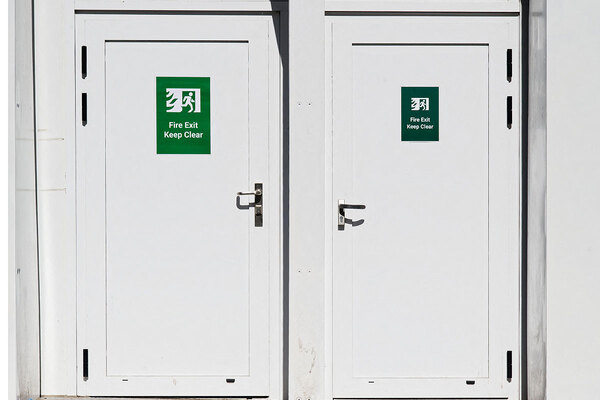
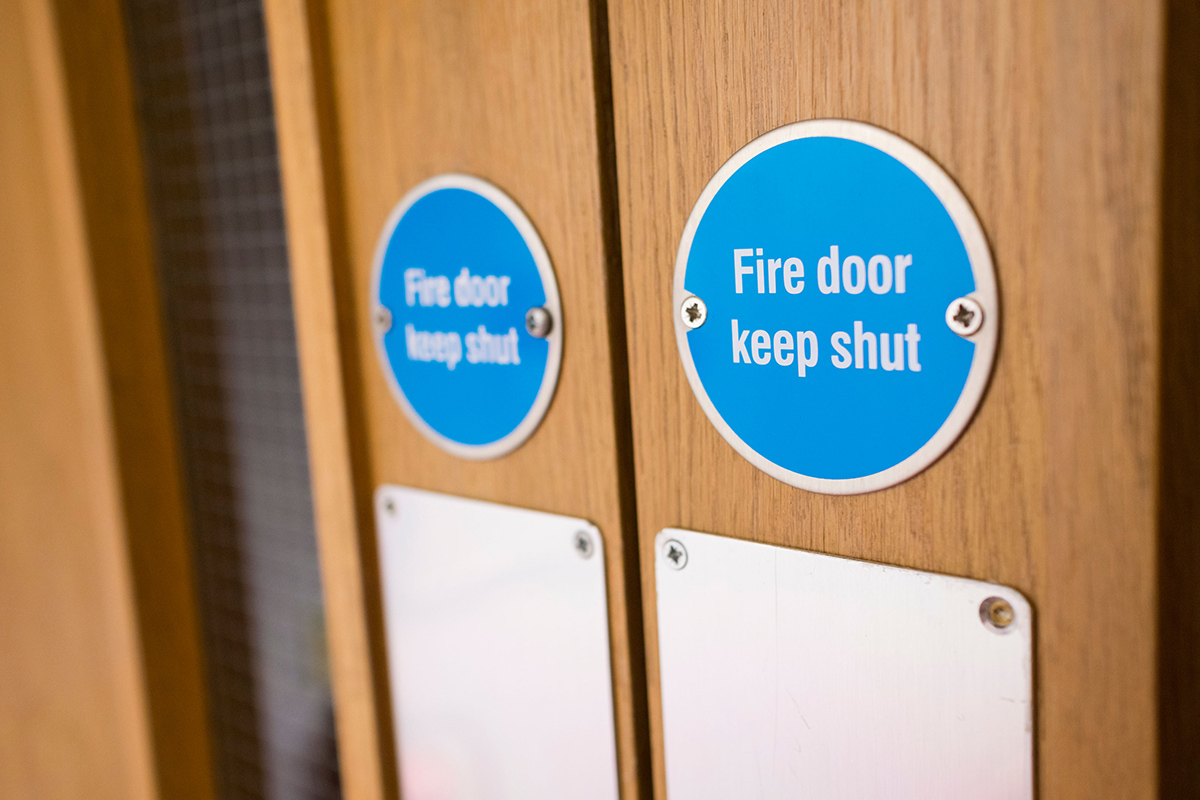
But asked directly, the regulator confirmed that fire door replacement is building work, and is covered by the act. It needs to be signed off by the regulator for it to be legal. This is a lot of rolling work that will come under the eye of the regulator – and it causes delay.
Inside Housing understands that one housing association is still waiting to replace 60 internal fire doors on a building in London, which was a high-risk action after a fire risk assessment.
The organisation put in an application to the BSR in November 2023, which rejected it, requesting required scaled drawings of all 60 doors.
The deadline to assess a revised application has been extended by the regulator twice and approval is promised “soon”. But today, the doors are still stuck in shipping containers outside the building.
“We’d welcome clearer guidance, or a review of them being in scope, to best manage regular planned works,” says Mr Driscoll from Hyde. “We all understand that this work needs to be done safely and properly, but there are other ways of ensuring this.”
There is an exemption for “emergency work”, where there is a life safety risk that cannot be addressed through temporary measures. But the breadth of this extension is difficult to define, and usually requires legal advice.
“The repairs teams in most housing associations are really struggling to understand what is building work. There’s got to be a better way of doing it… because it’s causing our clients massive problems,” adds Mr Mellor of PRP.
“How would the client defend themselves if they didn’t carry out this work and someone was hurt or killed?” asks Workman’s Ms Farr. “If we’ve known about it for eight months but haven’t acted because we’re waiting for the regulator to give us the green light?”
Glimmers of hope
Despite all of this gloom, there are signs of improvement. First of all, as the sector learns from previous applications and better industry guidance emerges, the standard of applications is rising.
“We have recently done a full remediation approval within nine weeks from submission and eight weeks from validation,” Ms Carroll says. “It was a good application, well-presented and applied all the lessons from previous rejections. That’s where we’re trying to get everybody to, and it does show that if everything lines up, it can be done.
“Probably 60% of the applications are done by maybe 15 to 20 consultancies. The experience that they have gained – as well as us – over the last two years means that the quality of applications is really rising. Over 55% of external remediations are also linked to one or more other buildings, co-located and with the same project teams, so we are able to assess these in sets.”
Some of this has been underway in the housing sector for some time. “After we went through our first process, I reflected internally on the questions the regulator was asking and how we could have tackled this the first time around to make it better,” says Ms Osodo.
“So now we’re being even more prescriptive with our contractors in terms of the level of design that we would like for the Gateway 2 application. For all our projects we assembled our own multi-disciplinary teams to support the remediation process and they are part of the review of our applications, to help increase our chances of putting in a successful application at first try.”
Behind the scenes, the BSR is under new leadership and is majorly scaling up its in-house workforce to reduce its reliance on external contractors. As of October, it had 400 employees and will add 100 more by the end of the year (although some of this is because it is moving out of the HSE to become a standalone body reporting to government).
“I personally see this as growing pains of a change that probably was much needed in our industry”
One thing applicants would welcome as the system continues to develop is a pre-application process, where the proposal could be discussed and the applicants could get an idea of what the BSR wanted to see for their specific project.
“I just want there to be some sort of conversation where you can actually speak to a regulator and explain the project,” says Ms Farr.
“If you have a pre-application meeting with the regulator, they get a good idea of what you’re doing before you submit. They could charge for it. People will pay if the result is a quicker process.”
“I think the absence of a formal pre-application meeting is one of the big deficiencies in the process,” agrees Mr Mellor. “I understand resource levels and that’s probably why it’s not there. But it would be extremely helpful. Clients are willing to pay, because it saves them time.”
It is understood that the regulator has offered such meetings in some instances, if the job is particularly complex or urgent. It has held them with organisations including Barratt Redrow, Telford Homes and Camden Council. But due to the sheer volume of applications it receives, it currently cannot hold pre-application meetings for everyone.
Overall, there is no doubt that the introduction of the Gateway process has caused problems. But there are also ways to fix it, without simply throwing out a process which – for all its flaws – is currently our only meaningful attempt to lift the disastrous standards in high-rise buildings which gave us Grenfell and the cladding crisis.
“Given that this is the biggest change to the way the industry works in decades, it isn’t that surprising that there have been problems,” says Mr Fisher from BS4. “We’re only two years in, and I am hopeful that there is a more positive landscape to come.”
“I personally see this as growing pains of a change that probably was much needed in our industry,” Ms Osodo adds. “So, as much as it is frustrating – and I do feel that frustration sometimes – I do just go back to the fact that we are here because of Grenfell.
“It will take time. But that collective adaptation and change and cultural shift within the industry is certainly needed.”
The government’s response to the BSR delays
An MHCLG spokesperson said: “We have appointed new leadership to the Building Safety Regulator, who have immediately focused on speeding up decision-making on building control approval so we can remediate homes quicker.
“We will go further to reduce unnecessary delays without compromising safety so we can make people’s homes safe quickly – including a building acceleration package to overhaul the Building Safety Regulator’s performance.
“This is alongside our Remediation Action Plan, which will ensure landlords protect residents and fix buildings without delay.”
Responses to the delayed remediation at Skyline Chambers
A spokesperson for Wallace Estates said: “Everyone deserves to feel safe in their own home, which is why Wallace Estates has worked consistently since 2021 to remediate fire safety defects at Skyline Chambers in line with the advice provided by external wall and fire safety professionals.
“The full extent of fire safety defects within the atrium of the building only became apparent in October 2023, when we took immediate action to relocate all residents, the ongoing costs of which have been borne by Wallace and total over £4m to date. Since the building was decanted, service charge has been reduced to bare minimum services such as insurance, and ground rent has not been demanded.
“We have worked tirelessly with Homes England to progress remediation. After submitting a building control application in November 2024 with the BSR to approve remedial works, we were left waiting for nearly a year without a determination. This is unacceptable – and we share the extreme frustration of those affected by the delay, which has cost Wallace Estates £100,000 in monthly alternative accommodation and loss of rent costs.
“Following sustained pressure from Wallace and its professional advisors, the BSR has now provided a determination (with conditions) so cladding remediation works can begin on Skyline. While we welcome this decision, it is deeply regrettable that it has taken so long to reach this point. During the delay, Wallace has continued to support displaced residents who have been left in limbo awaiting this outcome.
“Neither Wallace Estates nor the leaseholders are responsible for the fire safety defects at Skyline Chambers. The defects result from the poor workmanship of the original developer/contractor and the negligence of the building control professionals overseeing development.”
A BSR spokesperson said: “We acknowledge the frustrations delays in approving building control applications for high-rise buildings are causing for the sector.
“We’ve made several changes to our operations and expect significant reductions in processing times in the coming months.
“Applications to put right severe fire safety defects in existing buildings can be particularly challenging and complex. Developers can help us process applications more quickly by submitting high-quality plans which clearly meet building control standards.”
Other recent building safety articles from Peter Apps
Revealed: more than 200 Ronan Point-style blocks still have gas and may not have had strengthening work
More than 200 tower blocks built in a method prone to collapse still have a gas supply and may not have had recommended strengthening works carried out, figures obtained by Inside Housing reveal
Exclusive: government officials warned about fire risk assessor two years before his removal from approved contractors list
Government officials were warned of “troubling” reports about the quality of work being carried out by a prolific fire risk assessor two years before he was removed from a list of approved contractors, emails obtained by Inside Housing have revealed
Government response to Grenfell Tower Inquiry recommendations: steps forward, but not systemic change
The government’s response to the Grenfell Tower Inquiry will give us a single construction regulator, but leaves much unchanged – including the privatised system of testing and certification, writes Peter Apps, contributing editor at Inside Housing
A long-term plan for fixing the building safety crisis
State oversight of building safety may be our only route out of this ever-expanding crisis, writes Peter Apps
Sign up to our building and fire safety newsletter
Sign up to our new revamped building and fire safety newsletter, now including a monthly update on building safety from Inside Housing contributing editor Peter Apps.
Already have an account? Click here to manage your newsletters.
Related stories