You are viewing 1 of your 1 free articles
Under fire
Gallions Housing Association has found itself in the spotlight for all the wrong reasons recently. Keith Cooper looks behind the headlines and finds residents who are angry at the cost of maintaining their homes and the service they have received


‘Greedy Gallions’. ‘Gallions out’: these angry messages were brought to the doors of an until-recently inconspicuous south London landlord by 25 protestors last month. The ultimate beef of these residents of Thamesmead Town was made loud and clear in thick black ink: ‘Service Charge: all charge and no service.’
The residents allege that Gallions Housing Association is charging them far too much for repairing and maintaining their homes and keeping the surrounding townscape in good nick.
The protest could hardly have come at a worse time for the association. Its repairs performance has been under intense scrutiny in recent months after it became in October the first housing association to vault over the new high bar for ‘consumer regulation’ for putting the lives of some of its residents at risk.
By failing to safety check a gas boiler in just one property, the 7,000-home association risked exposing residents to carbon monoxide poisoning and gas explosions, said regulator the Homes and Communities Agency (see box, overleaf: A regulator calls). It is the first - and to date only - landlord to fail the HCA’s ‘serious detriment’ test.
So what has been going wrong and why have some households decided public protest is the only answer?
Inside Housing set out to find out by visiting one of Gallions’ estates to find out first-hand what residents think.
It turns out it isn’t only long-standing residents from Thamesmead, the 1960s new town Gallions was established in 2000 to serve, that have concerns. It has also earned itself a negative reputation with some of those purchasing homes marketed as ‘affordable’ in its recently constructed developments.
Unhappy residents
While obviously only a snap-shot, many of the residents we spoke to took issue with escalating, unpredictable bills which they claim Gallions refuses to justify. And it’s not just the residents who have been showing signs of unrest. Along with the HCA’s recent criticisms, Gallions has clashed with a council chief executive and angered local politicians.
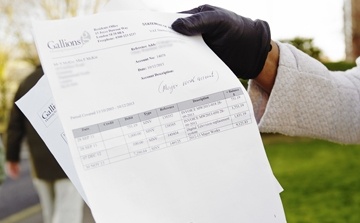
A protestor with a major works statement sent to her from Gallions
Teresa Pearce, Labour MP for Thamesmead, says she is ‘very angry’ at the scale of the £397,000 redundancy package given to Gallions’ former chief executive Tony Cotter last year - which has also been criticised by the HCA - given the way she thinks Gallions is treating some of her constituents. The landlord has frustrated the area’s leaseholders and freeholders by refusing to provide ‘accurate costs’ of repairs, and pursued pensioners through the courts for ‘relatively small amounts of money’, Ms Pearce alleges.
According to the Thamesmead Homeowners’ Association, Gallions is threatening or has taken legal action against 16 residents of Thamesmead since 2012 for alleged unpaid service and estate charges that THA knows about.
Charge disputes
The protest group that gathered outside Gallions’ head office last month claims bills issued to its members are unclear about what residents are actually paying for. Residents also dispute new ‘estate charges’, which Gallions only began issuing to some residents in 2009 for the upkeep of parkland, lakes and bridges which it inherited along with their homes following their transfer from ‘Thamesmead Town’. This was a resident-led private firm, which owned and managed the area from 1986 - following the abolition of the Greater London Council - until the transfer to Gallions in 2000.
The dispute over estate charges has even brought the association into conflict with Bexley Council, one of two authorities across which Thamesmead spreads. Its chief executive Will Tuckley claimed in a letter to Mr Cotter in November 2012 that Gallions had been given ‘the resources to maintain’ all its assets at the time of the transfer and that its charges appeared to ‘disadvantage’ long-standing residents. Gallions had also enjoyed a share in the profits of Tilfen Land, a firm established at the same time as Gallions to inherit and develop the town’s ‘considerable’ prime real estate, his letter pointed out.
Mr Cotter hit back a week later to ‘address’ Mr Tuckley’s view. Gallions faced an annual £3 million bill to ‘maintain the public realm’ which was not covered by its ‘Tilfen share’. He was determined to ‘recover the costs of maintaining the public realm’ from freeholders, leaseholders and tenants, the letter indicated.
Caught in the crossfire of this conflict are, of course, the residents. And some have just about run dry of trust in Gallions’ method and means of recovering costs.
A resident audit of Gallions’ ‘environmental services’, carried out with the support of consultancy the Housing Quality Network in 2012, found ‘managers were unable to tell us about budgets or expenditure in their sections’ and uncovered ‘no evidence’ of proper checks on maintenance work.
No more trust
Trust was further drained in 2012 after a resident won what the protest group sees as a key case at a leasehold valuation tribunal, where disputes about charges for such services are held. During this tribunal, the leaseholder challenged annual cleaning charges between 2006/07 and 2010/11 plus a major works bill.
The tribunal ruling described a ‘history of difficulty’ of ‘costs capture and accounting’ at Gallions. Both staff and documents lacked ‘specific figures or invoices showing how charges were made up’, the tribunal concluded. It almost halved the leaseholder’s cleaning bills from more than £500 in 2008/09 to £271 for 2009/10 and slashed the major works bill for an entryphone system from £948 to just £100.
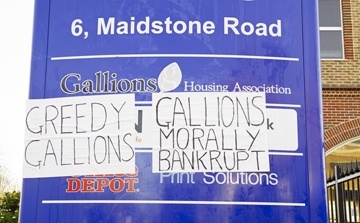
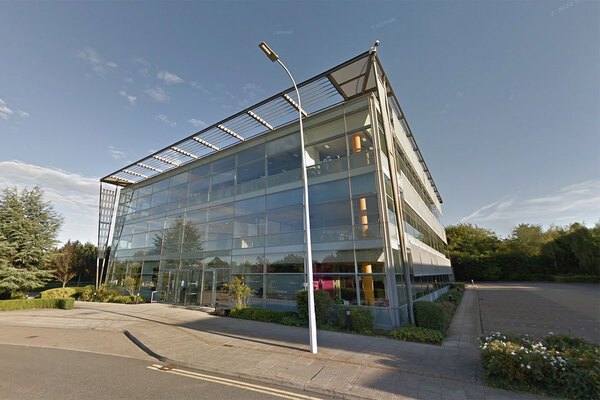
Protestors vent their anger at Gallions’ headquarters in Sidcup, Kent
John Wroe, a resident of Thamesmead for almost 40 years, sums up residents’ exasperation. ‘The trust has gone. We don’t trust their investing and accounting. Nothing they have done is transparent. Nine times out of 10 you are just ignored.’
And it’s not just long-term residents who have suffered at Gallions’ hands. Teachers, doctors and charity workers buying into Gallions’ ‘affordable’ 100-home Schoolhouse Yard development - now six years old - are equally scathing about its conduct.
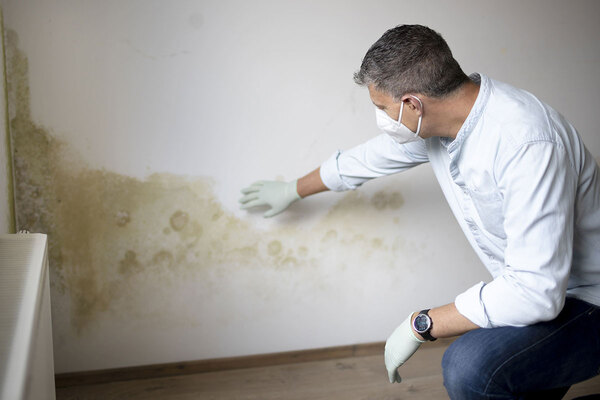
From the day some moved in, water has poured through their roofs, ceilings, windows and walls, rotting their carpets and creating a haven for mould in their homes. From a straw poll of 26 homeowners carried out this year by Schoolhouse Yard Residents’ Association, 11 had what they call ‘horizontal rain’ come through the walls; 17 had leaky, rattling windows that kept them awake at night; eight had water pouring through ceilings; and a further eight had problems with their electrics.
Rocketing service charges
In addition to big one-off bills running into hundreds of pounds, residents say remedial work has been charged to the development’s building insurance, increasing premiums and therefore residents’ service charges.
Residents were last year hit with one-off repair bills for roof repairs ranging from £400 to up to £800, depending on the size of their property. One resident, Nicola South, who was charged £560, says: ‘All [major repair costs] have gone on the insurance or have been paid for by service charges. None have gone to the developer.
‘Now they say we need a new roof and windows. That should have been done at the time of development. How on earth was it signed off?’
A spokesperson for Tilfen Land says it is ‘aware that a number of minor defects were identified post completion’ of the development. These ‘were dealt with under the terms of the development agreements as they arose’, he adds.
Gallions has also upset residents with unpredictable hikes to service charge bills, caused by significant mismatches between estimated and actual bills. In one case a homeowner received a shock bill of £1,400 in 2011/12, almost 50 per cent more than his £950 estimate. That same year, another was charged £1,130 after a £770 estimate.
So much was admitted in a letter to the Schoolhouse Yard Residents’ Association last year from Gallions’ head of neighbourhood services Andrew Green, which claims its ‘budgeting calculation system’ is now under control.
The letter, dated November 2012, admits that the housing association’s budget for 2011/12 had been ‘underestimated for a number of years’ and that this had ‘led to residents facing additional charges at reconciliation’.

A primary school teacher, who asked not to be named, fears opening letters from Gallions: ‘You are pushed out of kilter. Many of us are key workers who have codes of practice that we have to adhere to. What code does Gallions follow?’
Steve, a former shared owner who does not want to give his surname, was forced to move out by escalating bills. ‘I couldn’t afford to stay anymore,’ he says. ‘It said on the advert that it was affordable housing, but they [Gallions] are always billing you for something.’
Safety concerns
Residents have also voiced concern that several flats were installed with gas boiler systems six years ago which fail to meet gas safety regulations that came into force in January 2013, which require that concealed flues can be checked for leaks. The systems met all the required standards at the time they were installed.
As widely reported in Inside Housing, such rules were introduced following the tragic death of 26-year-old dance teacher Elouise Littlewood, who died from carbon monoxide poisoning in 2008 in a flat she part-owned with Notting Hill Housing.
Schoolhouse Yard residents say that some of the flues in the development cannot be viewed because they do not have inspection hatches along their entire length.
Gallions has suggested residents fit inspection hatches to help engineers inspect flues; and has since offered to arrange for hatches to be fitted and to fund the costs of doing so. In a letter to some residents it admits that ‘even when the hatches have been fitted Gallions will not be able to give certainty that a third-party gas engineer, who is unable to gain access to the full length of the flue, will issue a gas safety certificate’.
A spokesperson for Tilfen says ‘gas safety certificates and building control certificates of completion were obtained prior to handing over the buildings to Gallions Housing Association’.
Keeping watch
Residents have reported these concerns to the HCA and it is taking the issue seriously. A spokesperson for the HCA says Gallions had ‘offered assurances’ that it had altered its approach to gas safety after the serious detriment finding.
‘We will continue to monitor the position to assess the effectiveness of the changes, and, in light of the new allegations, will consider what further action is necessary,’ the HCA spokesperson says. Inside Housing reported the concerns in full to Gallions.
A spokesperson - speaking before last week’s merger with Peabody -says it is ‘looking at what we have to do to restore confidence in the way we operate as a housing association and charity’. The association is ‘committed to delivering the best possible service for our residents’, he adds.
As the HCA considers its next move, the residents and their political representatives are now pinning their hopes on Peabody, the 27,000-home association which last week completed its merger with Gallions. It has pledged to invest £200 million in the regeneration of Thamesmead. A resident consultation on the merger, carried out by Gallions, showed that 61 per cent of 286 respondents support the merger.
In a press release issued following the merger, David Avery, the new chair of Gallions, states it marks a ‘new start for Gallions’. ‘There is no doubt this has been a challenging time for the organisation,’ he says. ‘The immediate focus of the new board will be to look at all of the issues facing homeowners and tenants and to ensure that residents are happy with the quality of services we provide.’
Thamesmead MP Ms Pearce hopes 21,000-home Peabody’s ‘deep understanding for community engagement’ will help to heal wounds opened during Gallions’ tenure. From what its residents say, there will be much repair work to do.
A regulator calls
The Homes and Communities Agency’s regulatory judgement said: ‘In connection with a consumer standards case referred to the regulator, we have found that Gallions breached the home standard by failing to comply with the Gas Safety Regulations 1998 and that this breach had the potential to cause serious detriment to tenants.
‘Gallions’ handling of this case has, however, also raised regulatory concerns relating to the governance standard.
‘We have found that the requirements in the standard on board accountability and compliance with relevant legislation have been breached.
‘The association has now rectified the specific problem and changed arrangements to enable effective oversight by the board of specific gas servicing cases.
‘We will continue to monitor the position to assess the effectiveness of the changes.’

Related stories