You are viewing 1 of your 1 free articles
Demonstrating the value of nature to developers is the industry’s biggest challenge
Demonstrating the value of nature to developers is the industry’s biggest challenge, according to a panel at the Housing 2025 conference.


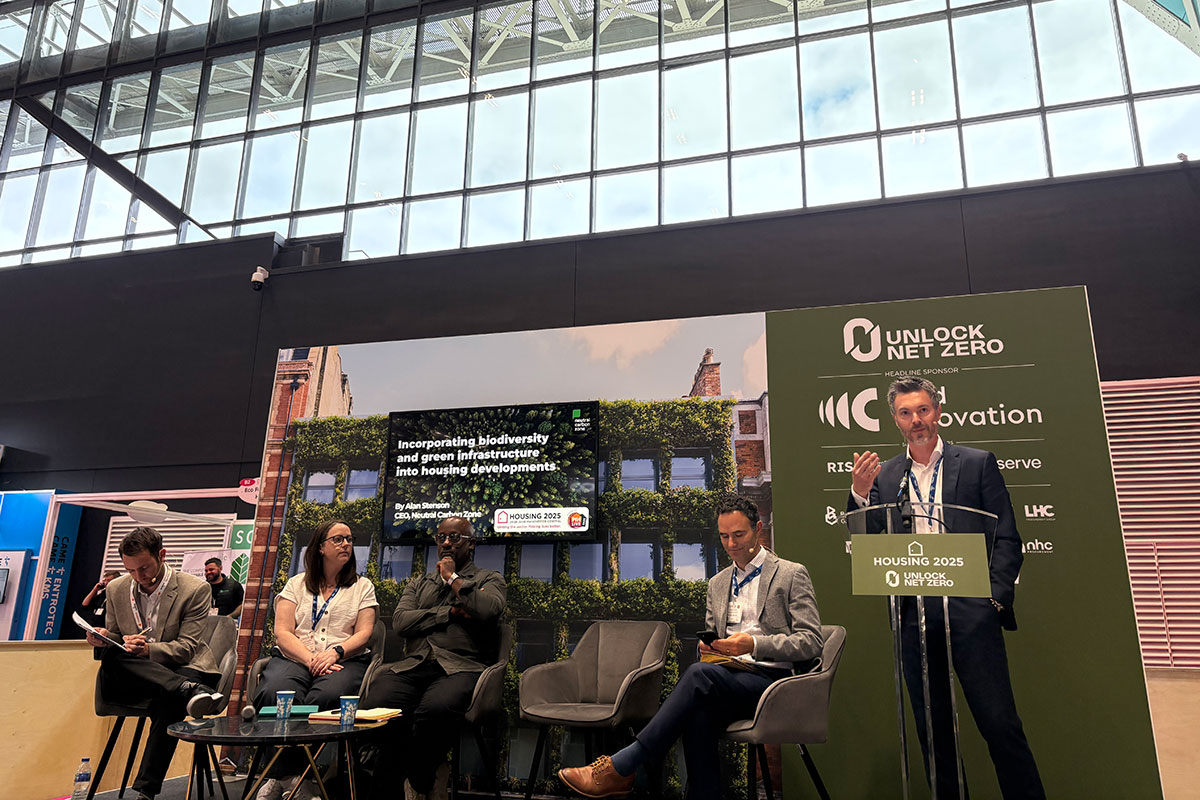 Demonstrating the value of nature to developers is the industry’s biggest challenge, according to a panel at the Housing 2025 conference #UKhousing
Kunle Barker, co-founder of Natural Places, made the comments when asked about how to demonstrate the economic benefits of biodiversity to developers at the annual event in Manchester.
He said that integrating nature into the built environment brings economic value to development because it makes it easier to gain investment.
"What we’re trying to do is make sure that they understand the benefits and power of nature," Mr Barker said.
"The task is difficult because it’s relatively easy to speed up building, to build in new places, to figure out new technologies to build our homes - but what’s more difficult is to change our mind, change the way we think about nature, and that is the challenge at hand and that’s why it’s going to be very tough."
Read more


The Planning and Infrastructure Bill would grant new powers for Natural England to produce environmental development plans (EDPs), which would allow the advisory body to plan how to minimise or compensate for a specified environmental impact for a development.
Developers would pay for compensation measures by paying into a Nature Restoration Fund.
Also on the panel, Oliver Harmar, chief officer of strategy at Natural England said that finding ways to give greater case certainty to developers and getting wins for nature at the same time is not easy to form, but he “firmly believes” it’s possible.
He said a challenge is being able to “collectively describe the multiple benefits” of nature, including the wellbeing, the social and health benefits.
The nature crisis, climate crisis, health crisis and crisis around the number of homes and infrastructure needed should be tackled together, Mr Harmar added.
They were joined by Dr Delia Garratt, chief executive at Birmingham and Black Country Wildlife Trust, Alan Stenson, chief executive at Neutral Carbon Zone and James Glass, director at NHG Places, who chaired the panel.
Mr Stenson said that incorporating biodiversity and green infrastructure into housing developments “cannot be an afterthought” and must be a “strategic advantage”.
Nature is an infrastructure, which affects how buildings perform, how people live and how areas evolve, he added.
In Birmingham and Black Country, Dr Garratt said that it was “dealing with a heavily fragmented, urbanised, industrialised region”.
This was causing a “huge disconnection” between people and nature, with the highest levels of disadvantage in the country.
Sign up for our development and finance newsletter

Already have an account? Click here to manage your newsletters
Related stories