You are viewing 1 of your 1 free articles
Grant rates cut for housing associations in Northern Ireland
Communities minister Gordon Lyons has announced a cut to the grant rates provided to housing associations in Northern Ireland.


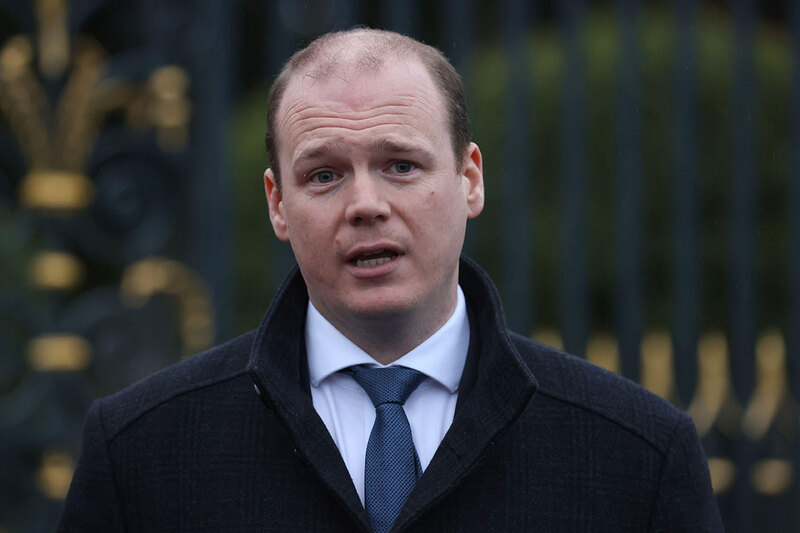 Grant rates cut for housing associations in Northern Ireland #UKhousingCommunities minister Gordon Lyons has announced a cut to the grant rates provided to housing associations in Northern Ireland #UKhousing
The changes, which will remain in place from 1 December until the end of 2026-27, mean the grant rate will reduce on average from 54% of the total cost to 46%.
This could put key projects at risk of delay or cancellation, particularly in places such as Belfast where housing associations are expected to receive “even lower rates”, the Northern Ireland Federation of Housing Associations (NIFHA) has warned.
However, communities minister Mr Lyons said he made the decision to cut grant funding “in the interest of securing the maximum possible number of new social homes” from his department’s budget of £177.5m for new social housing.
Read more
The grant rate, which has remained the same since 2023, has been changed in line with construction costs, inflation, rent levels and interest rates, according to the Department for Communities.
It estimated that “benchmark costs” for delivering new social homes – calculated from average costs across 11 council areas – will increase by 13.7 percentage points.
However, the grant associated with the development of new social housing will reduce by 7.7 percentage points on average.
“What this means is that the calculation has taken account of relevant recent changes to costs and concluded that against these higher costs and anticipated higher income from rent, the grant can reduce slightly,” the department has estimated.
On Monday, Mr Lyons also announced reviews of the grant and the design standards to which new homes are built.
He said the use of the Financial Transaction Capital mechanisms could enable housing associations to access finance at lower cost, and that plans to use government land for building are under consideration.
The Northern Ireland Executive set a target this year to start 5,850 new social homes by 2027 – a move that was welcomed by housing bodies.
Mr Lyons said: “Achieving the Programme for Government target of 5,850 social housing starts within this mandate will be extremely challenging given the constrained budget. Changes must be made; we must achieve more for less.”
The changes will “achieve better value and more social homes for those who need them”, Mr Lyons added.
The changes were announced following a meeting between the department and NIFHA, but the representative body has criticised the government’s lack of consultation with the sector.
Seamus Leheny, chief executive of NIFHA, said the changes to housing association grant rates “represent a significant shift” in how new social homes are funded.
He continued: “Housing associations have long delivered new homes by combining public grant funding with private finance, a model that has proven highly effective and efficient over many years.
“However, these reductions raise real concerns about the future viability of many projects currently in development or close to commencement, particularly in areas of highest housing need.
“These changes have been developed without detailed consultation with the housing association sector and, as a result, their full impact has not been properly assessed.
“With the new grant rates due to take effect from 1 December, there is a real risk that key projects could be delayed or cancelled, especially in places like Belfast where demand is greatest. Housing associations will now have to re-evaluate if and how many projects can progress in the short term.”
NIFHA urged the department to “engage urgently with the sector”.
In August, government statistics showed that there were no new build social housing starts in Northern Ireland in the second quarter of 2025.
As of March this year, the number of households on the country’s waiting list for social housing had grown to nearly 50,000.
Sign up for our Northern Ireland bulletin
Already have an account? Click here to manage your newsletters
Related stories