You are viewing 1 of your 1 free articles
London Assembly members call for ‘popular design principles and meaningful early engagement’ in new developments
The chair of the London Assembly Planning and Regeneration Committee has called on the mayor to “embed popular design principles and meaningful early engagement” in new developments.


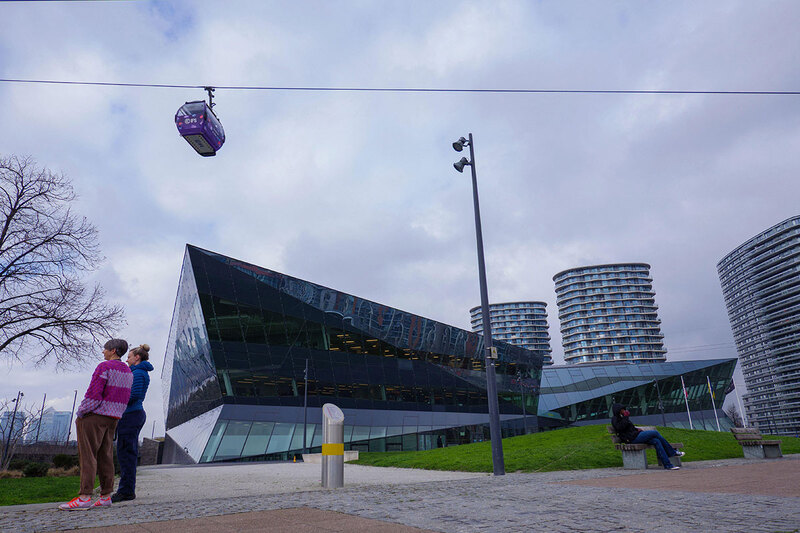 London Assembly members call for ‘popular design principles and meaningful early engagement’ in new developments #UKhousing
James Small-Edwards made the call in a letter to the mayor of London, where he warned of a growing disconnect between what Londoners want to see built in their communities and the developments that are actually being delivered.
The London Assembly member said the commitment is needed to “maintain public confidence and deliver the homes our city needs”.
The letter follows evidence heard by the committee highlighting that Londoners broadly agree on what good design looks like.
Public polling and visual preference surveys show that around 70-80% favour human-scale buildings with coherent frontages that fit local character.
Read more



Respondents also prefer traditional forms over impersonal “statement” designs, preferences that frequently diverge from what is currently built, according to the committee.
The letter states: “We showed members of the public five different buildings, ranging from traditional styles to contemporary styles.
“Some of the contemporary styles had even won awards. However, the public did not seem to agree with the award-winning buildings.”
Evidence also suggests Londoners are open to development if they are engaged early and clearly informed about what they can influence.
Earlier this year, the national government set out new build design guidance that places focus on quality and places that are resilient to climate change.
The wider proposals aim to set a clear benchmark for well-designed neighbourhoods, and ensure new developments are well connected to local shops and services.
The changes to the guidance were first announced as part of a second overhaul of the National Planning Policy Framework, just a year after the government finalised a version of the framework that restored mandatory housing targets and set out a definition of ‘grey belt’ land.
For its part, the committee is urging the mayor to use the forthcoming London Plan to embed evidence-based design principles and strengthen early-stage community engagement across boroughs.
The letter calls for updated London Plan Housing Design Standards to reflect established public design preferences, alongside greater use of borough-wide design codes developed with representative, paid community participation.
Neighbourhood Plans should be expanded to clarify locally supported design approaches, and there should be structured early-stage engagement requirements for major schemes.
Assembly members would also like to see a pan-London evidence report by August 2026 drawing on community research and visual preference studies.
Mr Small-Edwards said: “Londoners are not anti-development, they just want to be engaged early and see homes built that they find visually appealing.
“If we are to deliver 880,000 new homes over the next decade, we must close the gap between what Londoners want and what is getting built.
“Embedding popular design principles and meaningful early engagement will be essential to maintaining public confidence and delivering the homes our city needs.”
With London required to deliver 880,000 new homes over the next decade, the committee warns that failing to align new development with public sentiment risks fuelling opposition, increasing delays and undermining delivery.
This is the third report put out by assembly members so far this year. Last month, they warned that post-Grenfell evacuation laws coming into force from April will not be enough to keep deaf and disabled people safe.
Prior to that, the capital’s mayor Sadiq Khan was urged to give higher grants for “desperately needed” family-sized and accessible homes in the capital’s next affordable housing programme.
Sign up to Inside Housing’s Daily News bulletin
Sign up to Inside Housing’s Daily News bulletin, featuring the latest social housing news delivered to your inbox.
Already have an account? Click here to manage your newsletters.
Related stories