Non-compliant Birmingham housing associations paid £550m for exempt accommodation claims
Non-compliant housing associations in Birmingham have been paid nearly £550m over the past four years to house tenants in exempt accommodation, new figures from the council have revealed.


 Non-compliant housing associations in Birmingham have been paid nearly £550m over the past four years to house tenants in exempt accommodation #UKhousing
In figures charting spending on exempt accommodation in the city (see table below), Birmingham City Council revealed that £192.8m of taxpayers’ money was handed to the nine biggest non-compliant providers in the city last year alone. Over the past four years, the total spend is £547.3m. In some instances, payments made to these providers pre-date the determination of non-compliance.
Birmingham has become the epicentre of exempt accommodation in the country in recent years. The numbers exploded from only 3,679 such claimants in 2014, to just under 22,000 today.
This has resulted in the amount of money spent on this type of provision ballooning, with the city spending nearly eight times more than the second biggest spender, Manchester (£25m).
|
Provider |
2021-22 |
2020-21 |
2019-20 |
2018-19 |
|
Ash Shahada |
£27,491,789 |
£26,825,406 |
£9,789,218 |
£934,693 |
|
3CHA |
£5,268,931 |
£8,196,903 |
£8,874,722 |
£8,320,818 |
|
Concept |
£41,646,460 |
£31,795,123 |
£7,021,966 |
|
|
New Roots |
£4,734,438 |
£12,257,868 |
£14,289,927 |
£14,940,236 |
|
Prospect |
£3,300,585 |
£13,041,010 |
£17,815,442 |
£15,296,272 |
|
Reliance |
£90,076,741 |
£51,303,887 |
£17,416,339 |
£2,348,862 |
|
Sustain |
£18,183,302 |
£21,965,370 |
£24,011,759 |
£23,353,514 |
|
Green Park |
£362 |
£3,457,050 |
£4,221,442 |
£86,372 |
|
Trinity |
£2,057,431 |
£2,915,717 |
£5,864,282 |
£8,243,669 |
|
Total |
£192,760,039 |
£171,758,332 |
£109,305,096 |
£73,524,438 |
Source: Inside Housing FOI request. Figures rounded to nearest whole number
Read more

Exempt accommodation is often used to house people who have very few housing options, such as prison leavers, rough sleepers, refugees and migrants, and those experiencing substance abuse issues.
Because landlords provide loosely defined care and support services, their tenants can be exempt from housing benefit caps and providers can charge much higher rents than regular landlords.
In many cases in Birmingham, registered providers employ managing agents to provide the accommodation and support services. They enter into short-term lease arrangements with them while taking a management fee.
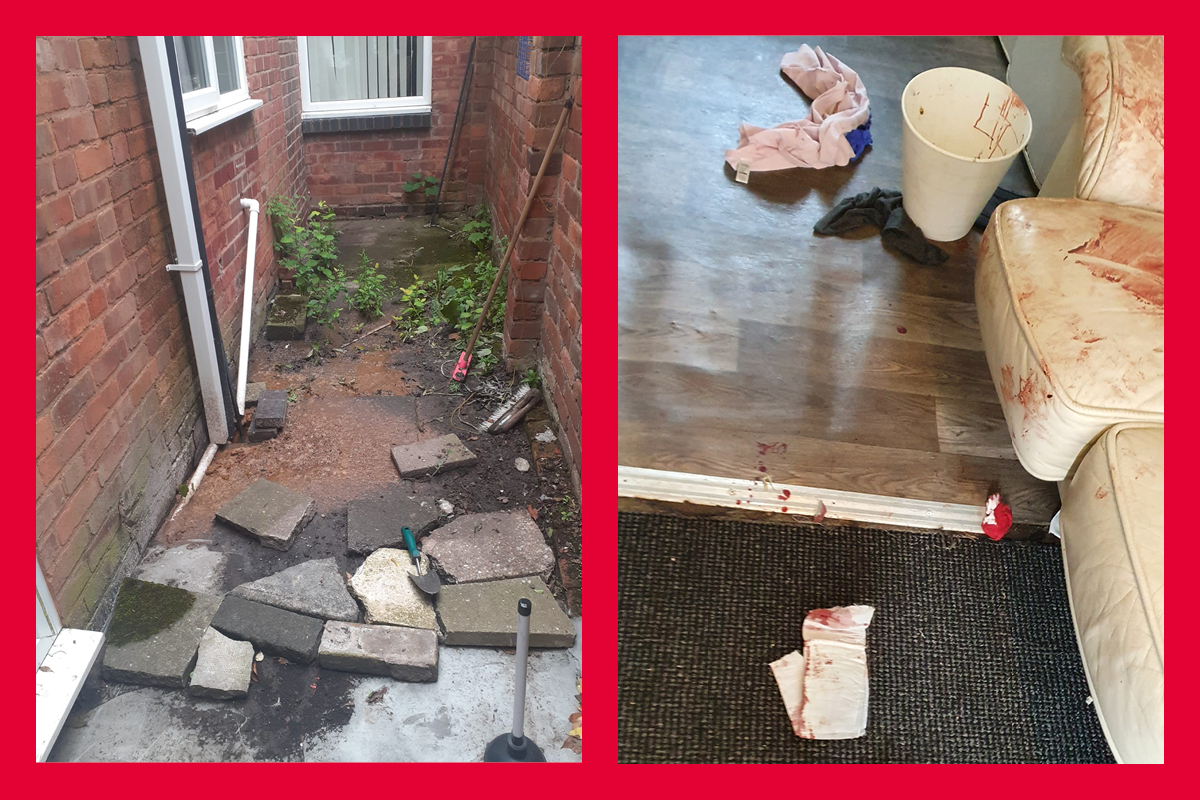
Many exempt accommodation properties are good quality, providing essential support and a roof over the heads of thousands of people who would otherwise not have this. However, for an increasing number of these properties, standards and support are not at the required level.
A recent report by the Levelling Up, Housing and Communities Select Committee described the sector as a “gold mine”, and a “licence to print money” for some providers.
According to the latest figures from the council, the spend on Birmingham’s nine largest non-compliant providers has grown each year, from just over £73.5m in 2018/19, to £192.7m in 21/22.
Birmingham City Council told Inside Housing the figures could include payment for general needs housing.
However, Inside Housing’s analysis of each provider’s annual returns show they have only a very small percentage of general needs housing in Birmingham.
The total figure includes Reliance, the city’s biggest exempt accommodation provider, which received £90m in housing benefit last year alone. This figure is well over three times higher than the total spend on exempt in Manchester. Over the past four years, Reliance has received £161m, increasing from just £2.3m in 2018/19.
Nearly all of this would be for exempt accommodation; Reliance owns only four general needs social housing properties in the West Midlands, as of April 2022.
Reliance’s growth is all the more incredible when one takes into account that it was a dormant housing association based in Gravesend in 2017 and only acquired its first supported housing property in 2018.
Since then, it has grown to be Birmingham’s largest exempt provider. It has 8,034 claimants in Birmingham, a third of all the city’s claimants.
The Regulator of Social Housing (RSH) deemed the association non-compliant in October last year. The RSH stated that Reliance had breached its standards regarding governance and finance.
The regulator found that it had failed to ensure effective governance was in place and had failed to ensure that arrangements it enters into do not inappropriately advance the interests of third parties.
Speaking in parliament on Friday, Shabana Mahmood, MP for Birmingham Ladywood, accused Reliance of “failing her constituents and exacerbating the issues within the exempt accommodation sector”.
Responding to the figures, a Reliance spokesperson said that it “does not spend all money on exempt accommodation and continues to grow its current portfolio of social housing stock, having acquired outright a number of assets in 2022 with a combined value of approximately £2.5m”.
Reliance was one of three providers paid more than £25m in housing benefit last year. Concept was paid £41.6m and Ash Shahada £27.5m. Across the four years, Concept has secured more than £80m and Ash Shahada £65m.
Both associations have also been deemed non-compliant with the regulator’s governance standards. The regulator also raised concerns over their inability to demonstrate that the arrangements they entered into do not inappropriately advance the interests of third parties.
Other providers to have received tens of millions of pounds in recent years include New Roots, which has now pulled out of the exempt sector, and Prospect Housing, which shut down last year.
New Roots decided to close after new management took over and launched a “forensic audit” into the landlord. This revealed a “complete lack of internal controls surrounding the identification, declaration and recording of related-party transactions”.
The transactions recorded in the accounts show payments to companies owned by management staff, as well as family members.
This included the former chief executive using company funds to buy a motorhome off a previous spouse.
Sustain is another non-compliant landlord in the list, with the provider receiving £87.5m in the past four years. Sustain was first deemed non-compliant in January 2019, when the regulator warned of inappropriate remuneration levels for directors. It also found that inherent conflicts of interest had arisen as a result of related-party transactions to companies owned by Sustain’s executives.
Inside Housing later revealed that the chief executive and inspections directors were paid £215,000 a year, despite the landlord only owning a few thousand homes. It was also discovered that payments of £1.3m had been made to companies that were linked to directors.
At the time, Sustain said the directors had received no salary between 2007/8 and 2016/17 and invested £1m into the business.
The landlord said the directors in question left the business last year, and all conflicts are now resolved.
Sharon Thompson, Birmingham City Council cabinet member for housing and homelessness, said: “These payments to registered providers are another symptom of the broken system which sees us obliged legally to pay them, knowing that the service they provide often lets down the most vulnerable people.
“To make a real difference, any legislation must give local authorities like Birmingham the ability to control the growth in exempt housing, the ability to withhold payments and the powers to close down bad providers.”
Full responses from listed providers
A Reliance spokesperson said: “Reliance can confirm that it does not spend all money on exempt accommodation and continues to grow its current portfolio of social housing stock, having acquired outright a number of assets in 2022 with a combined value of approximately £2.5m.”
David Fensome, chief executive of Concept Housing Association, said: “Many of our residents face significant challenges in their lives and have complex housing needs as a result. Concept is a not-for-profit housing provider that exists to help our residents have the best chance of moving on to live stable, independent lives.
“We work closely with colleagues at our local authority partners, including Birmingham City Council, helping meet the growing housing demand they see from often very vulnerable people. We ensure we provide good-quality accommodation and support through regular inspections and audits.
“Concept agreed an improvement plan with the Regulator of Social Housing to address all the points raised in our regulatory notice. Both the board and executive team have been strengthened to address governance concerns. In addition, we meet with the regulator each month to discuss progress and are currently 75% through our improvement plan to achieve full regulatory compliance. To ensure a clear focus on our improvement plan, our board decided to suspend further growth until it is assured that Concept is in a position to revisit this.
“The rents that we charge on our properties are all agreed with the relevant local authority and are in line with the market.
“We are a not-for-profit housing provider that aims to deliver the right accommodation to the people who need it. We see ourselves as part of the solution to the challenges across the sector and are committed to continuing to raise standards for our residents.”
Ash Shahada did not comment.
Ian MacGregor, acting chief executive of Sustain, said: “As a registered provider of housing, Sustain UK Ltd takes a co-regulatory approach to compliance, and is currently rated as V2/G3. Measures to ensure compliance are well underway, and we hope to achieve that shortly.
“Sustain’s priority is to always ensure that its accommodation and support services are of the right quality, and all 411 of its homes undergo a rigorous application and inspection process to ensure standards are met.
“Following recent independent inspections of its properties and support, Sustain UK has been awarded the Silver Quality Standard Award for Supported Exempt Accommodation by the Birmingham Voluntary Service Council (BVSC), in conjunction with Birmingham City Council (BCC).
“Finally, as a provider of quality exempt accommodation, Sustain is keen to add its voice of support to those taking action to raise standards in the industry, and we will follow with interest the progression of the Supported Housing (Regulatory Oversight) private members’ bill as it receives its second reading in parliament this month.”
A 3CHA spokesperson said: “We are in partnership with a number of expert managing agents who provide the bulk of hands-on management and support, while always subject to our stringent quality standards, health and safety compliance and reporting requirements, all of which are ensured by constant monitoring, inspection and engagement.
“Thus, our residents enjoy a very high staff-to-individual ratio and a high standard of service, which our local authority partners check upon continuously, with very positive results.
“All of our management partners are locally based in Birmingham.”
A Trinity spokesperson said: “In December 2020, the THA [Trinity Housing Association] board decided that they would no longer take on or renew any lease for this type of ‘supported exempt accommodation’ in the Birmingham area.
“This was mainly due to the existing commercial constraints in our lease agreements, which mean that the RSH’s rent standard cannot be met and therefore are not viable moving forward.
“Since this time, we have collaborated with our providers to exit this portfolio and have reduced the portfolio by 25%.
“In late summer 2021, we have accelerated this and begun a decommissioning process which has included serving notices to both the landlords of our properties and residents residing in them.
“We are offering, along with our providers, support and advice to our residents about moving to alternative accommodation.
“We are also working with the relevant statutory and partner agencies to find positive and well-managed housing solutions and outcomes for our residents.
“This decision does not affect THA’s other housing, and we will continue to operate and concentrate on our specialist supported housing portfolio.”
Related stories