RBKC staff were ‘rabbits in headlights’ due to lack of structure in Grenfell response, inquiry hears
An officer at the Royal Borough of Kensington and Chelsea (RBKC) reluctantly took on a “pivotal” co-ordinating role on the day of the Grenfell Tower fire, as staff rushed around like “rabbits in headlights” with no overall plan.


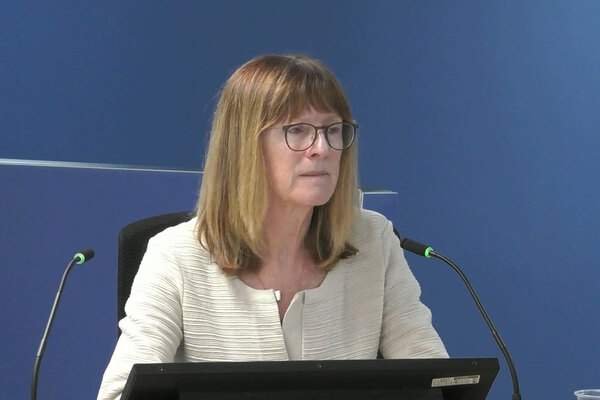 RBKC’s “confusing” humanitarian response to the Grenfell Tower fire led to staff running around like “rabbits in headlights”, senior council officer says at the inquiry #UKhousing
Sue Redmond, interim executive director of adult social care and public health at the council, told the inquiry that she was asked to take on the “pivotal” role of humanitarian assistance lead officer (HALO) only after the fire at Grenfell Tower had started.
The inquiry heard today how the emergency response left some survivors feeling angry, suicidal and abandoned in the days after the blaze.
Ms Redmond’s evidence echoed similar testimony from bereaved, survivors and council officers over the past few weeks who recalled how poor leadership impacted the response.
She said she did not think she was the right person for the HALO role as she did not have the training, contacts or connection with the local community to provide the necessary “empathetic” response needed, but “wanted to do something” despite a lack of assistance.
Ms Redmond was only brought into the council to “hold the fort” in April 2017 until a permanent director could be found, and left in October the same year. The position was part of a tri-borough arrangement between RBKC, Hammersmith & Fulham and Westminster to help save money, while sharing resources and best practice.
Ms Redmond said: “I did question whether I was the right person for the [HALO] role as I was relatively new to the borough and did not know too many people, nor [did I] have all the contact details of those both internally within RBKC and external agencies that could provide assistance.”
Read more

The inquiry heard last week how the HALO role was considered “pivotal” in the event of a significant emergency, but the council did not have the position filled in the period before the fire started.
Senior officers had been asked to take on the role, but declined, saying they were too busy.
The role involves bringing together organisations such as the police and the voluntary sector to oversee the humanitarian response.
Ms Redmond was only given the framework document that outlined the role at 2pm on the day of the fire, and the absence of this appointment was previously described by Richard Millett QC, lead counsel to the inquiry, as a “significant deficiency”.
In today’s evidence, Ms Redmond revealed that she was only asked to take on the role as the tragedy was unfolding. She said: “It surprised me that no one had stepped up to do it.”
Mr Millett asked if this amounted to what he described as a “why me?” moment. Ms Redmond agreed.
She pointed out that at the same time as filling the HALO role, she was still attempting to ensure the adult social care team could respond both to Grenfell and meet its routine care commitments.
“Did you consider at that point that there were sufficient resources available to RBKC for it to meet the humanitarian needs of those affected, as well as its routine care commitments?” asked Mr Millett.
Ms Redmond said she did not think the adult social care team could meet those needs as “they did not have very many staff” and “there was hardly any of the managers around”.
The inquiry heard that Ms Redmond had made her feelings known more than once that she did not feel she was the right person for the HALO position.
She thought the position should have been given to someone from within RBKC or the council should have appointed someone more familiar with the local community.
She said there seemed to be some confusion between the council and the British Red Cross about where responsibility for certain tasks fell.
Ms Redmond described housing staff trying to find people at hotels who were not there, “distressed people” being sent away from rest centres, and how the absence of a dedicated helpline contributed to the confusion.
She recalled entering the room where the initial response was being co-ordinated from and described a lot of people and noise from the telephones.
She had told some of her colleagues “to slow down and get some structure. Everyone is running around like rabbits in the headlights. We need to co-ordinate things”.
The responsibility for the HALO position was eventually handed over to a pan-London group called London Local Authority Gold, which took over responsibility for the response on 16 June – two days after the Grenfell fire.
Ms Redmond admitted that a lack of familiarity with HALO hindered her ability.
Later she discussed the challenges around assigning survivors with key workers in the days after the blaze.
The inquiry heard that there was a lack of clarity about the nature and scope of the key worker role as there was no management plan in place. By 19 June, 96 key workers from councils all across London had been drafted in to help with the response.
But some bereaved, survivors and families had still not been allocated a key worker.
Mr Millett read an email chain that began on 20 June from Mona Hyatt, director of the West London Clinical Commission Group (CCG) at the time.
Ms Hyatt was trying to provide assurance that the CCG would hand out appointments “as a matter of urgency” after one person had to be restrained at the Westway Sports Centre when they were told that they would have to wait a week for an appointment and others had threatened suicide.
The inquiry heard how some residents felt abandoned by RBKC as they were having to deal with key workers from outside of the borough and were angry that some had still not seen anyone from the council a week after the fire.
The inquiry continues.
Sign up for our weekly Grenfell Inquiry newsletter

Each week we send out a newsletter rounding up the key news from the Grenfell Inquiry, along with the headlines from the week
Already have an account? Click here to manage your newsletters
Related stories