Is the sector providing healthy homes?
Inside Housing ran a survey for the new Healthy Homes campaign, in association with safety tech specialist Aico, to find out how effective the sector is at creating healthy homes for residents


 Inside Housing ran a survey for the new Healthy Homes campaign, in association with safety tech specialist Aico, to find out how effective the sector is at creating healthy homes for residents (sponsored) #UKhousing
In association with:

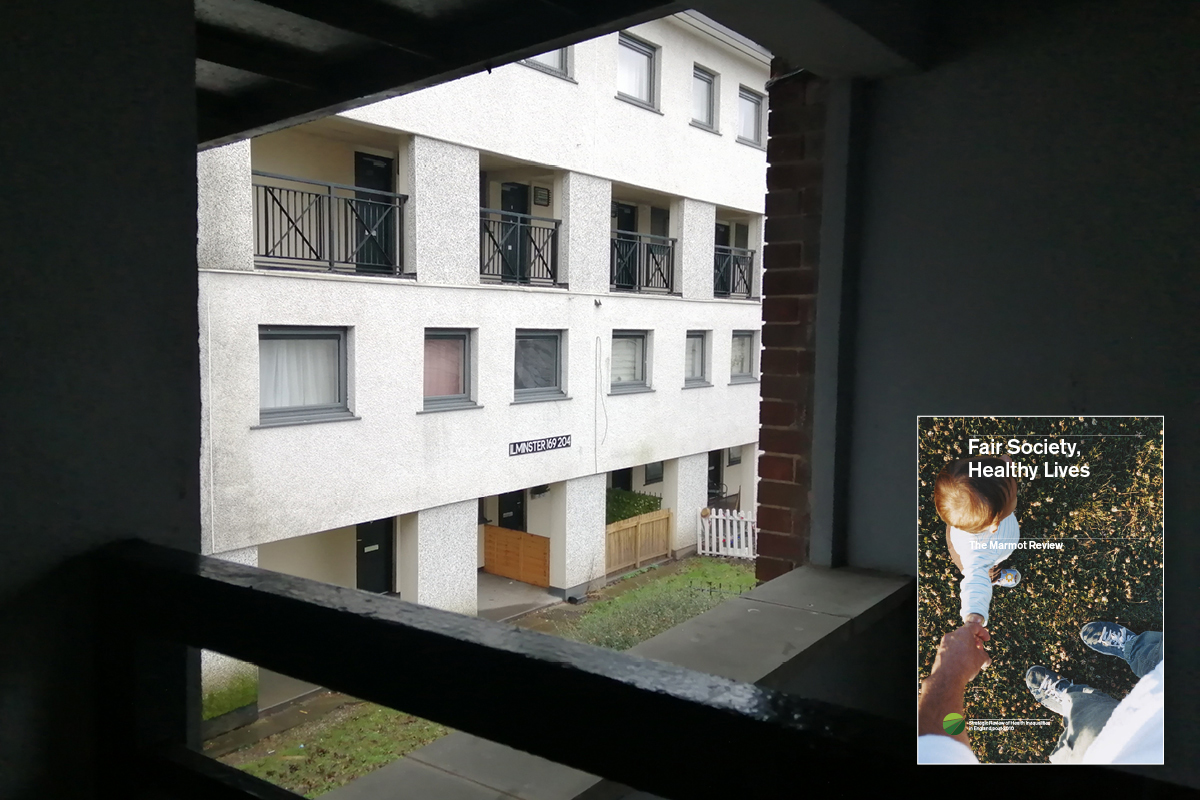
Sir Michael Marmot, an expert in health inequalities, has a simple way of summing up the impact of housing on someone’s well-being: “Poor-quality housing harms health.” Writing in a report published in 2020, reflecting on 10 years since the publication of his independent Fair Society, Healthy Lives review, the epidemiologist noted evidence showing “that exposure to poor housing conditions is strongly associated with poor health, both physical and mental”.
A growing recognition of this link, and increased attention on failings in the sector, has led to a beefed-up regulatory regime. Awaab’s Law – setting time limits within which landlords must respond to health hazards – has widespread political support. However, the election has interrupted legislative process and the details of what Awaab’s Law will mean were still in consultation prior to the dissolution of parliament. A review of the Decent Homes Standard, initially introduced in 2000 and not updated since 2006, was also progressing prior to the intervention of the election.
Financial pressures
Yet how best to create healthy homes that contribute to well-being is a challenging question, particularly given financial pressures affecting social landlords and residents alike. It is a multi-faceted and complex area, involving consideration of factors including damp, excessive cold or heat, mould, noise and overcrowding.
Read more


Thinking through such challenges is the aim of Inside Housing’s Healthy Homes campaign, in association with safety tech specialist Aico. It launched in April with a survey of over 200 people in the social housing sector, with the aim of understanding their views on how effectively the sector is creating healthy homes.
The 210 respondents were drawn from across the UK, with over half (54%) employed by a social landlord. And for many of them, how homes might be limiting the well-being of residents is a cause for concern.
When asked how well they thought social homes in the UK support the health of those living within them, two-thirds offered a cautiously optimistic view. These respondents said social homes were generally well suited to supporting the health of those living within them, but that they had concerns in some areas.
More notable, however, is that nearly a third of those who answered the survey said they had “serious” worries about how the UK’s social homes are affecting the health of those living in them.
“It is striking that 30% of people believe homes are seriously impacting the health of people in them and shows they know this is a problem that needs fixing,” says Chris Jones, chief executive at indoor air monitoring technology provider HomeLINK. On the one hand he finds this result worrying. But on the positive side, he adds: “At least it shows there’s an awareness of these issues and a motivation for change.”
The survey results suggest awareness is now particularly strong on issues of damp and mould. It was named by more than half of respondents as the area causing them the most concern when thinking about how homes might affect resident health. Interestingly, the second-most frequently named issue – overcrowding of properties, cited by 16% of those completing the survey – contributes to the most frequently named issue. Asked to explain why damp and mould was their biggest cause for concern, respondents were divided between those who thought it was the most commonly occurring health risk in social homes (42%) and those who thought it was likely to have the biggest impact on well-being (52%).
There remain worries about how well landlords are able to understand which homes are presenting such risks. A quarter of respondents described their organisation’s knowledge on this as “poor” or “very poor”. Asked to describe the main reason for such challenges, they spoke of insufficient communication – whether with residents, repairs staff or other organisations that have a relationship with residents.
In considering the biggest change social landlords could make to improve the healthiness of homes and residents, one respondent spoke of “getting to know the home and the customer”.
54%
Respondents who named damp and mould as their biggest concern related to health
16%
Those that named overcrowding as their biggest concern – second to damp and mould
40%
Respondents that said improving communication was crucial to creating healthier homes
“Just because customers don’t report everything doesn’t mean we don’t still have a responsibility to check,” continued the respondent, who is a head of
asset management. “‘We didn’t know’ is no good to anyone and a poor response in today’s world.”
Another respondent argued landlords need to “gain a better understanding of tenants’ health during the life of the tenancy”. “We only know what we know, and people’s situations and circumstances change – which we are not always aware of until there is a problem.”
Rapid response
Where there is knowledge of an issue, though, the majority of those who completed our survey expressed confidence in the ability to respond rapidly. Some 75% said their organisation was able to respond “swiftly” or “very swiftly” when an in-home health risk is identified.
Responding swiftly is not necessarily synonymous with resolving quickly. This was a theme raised by several respondents. One officer working in housing management and tenant services reported that in the past two years, their organisation had made “significant progress” on identifying damp and mould issues.
“I think the focus now needs to be on the follow-up work with residents surrounding this. We need to be continuing post-inspections to ensure damp and mould issues don’t return.”
Another respondent, an officer working in care and support for a social landlord, said: “Don’t just inspect and recommend [when a health-related risk emerges]. Actually fix, and then follow up – has it worked?”
“Responding swiftly to a health risk is important,” Mr Jones says. “But, say with damp and mould, if you respond in 24 hours, clean the mould away, paint over it and then it comes back again and the resident is afraid to complain, then you’ve not solved the problem. Perhaps the first-time fix mindset has made people want to optimise things so that if they are called out, they can leave the house on that day and show they have done a good job. But then there is the potential issue of problems coming back and getting worse.”
It is a reflection which again speaks to the role of communication in addressing in-home health risks. And while half of respondents said their organisation was good at sharing information about risks with other relevant bodies, 40% said improving such communication was crucial to creating healthier homes.
This contention is not born out of a belief that health sits outside the purview of landlords, however. Some 133 out of 210 respondents said identifying residents whose home is harming their health is a “central responsibility” for the sector. How best to discharge that responsibility, and what it means, is a matter for debate – and is at the heart of the Healthy Homes campaign.
Recent content in association with Aico
Can AI improve fire safety in homes?
Inside Housing hears from Andy Speake of safety technology specialist Aico about how social landlords can use artificial intelligence and machine learning to improve fire safety in their homes
What will our future homes look like?
As the pace of change in technology accelerates and the use of AI becomes more ubiquitous, Inside Housing speaks to Aico’s Michael Wright to find out how this will impact social housing in the future
Supporting tenants affected by fuel poverty
Inside Housing and Aico’s third Give Fuel Poverty a Voice survey – and a workshop as part of this year’s campaign – paint a mixed picture of the current status of fuel poverty in the UK
CPD webinar on demand: the importance of good quality data to good air quality
As part of Inside Housing’s CPD offering, watch the full webinar, ‘The importance of good quality data to good air quality’, and earn CPD minutes
Sensor technology to keep homes safe
Jordan Toulson, head of product at HomeLINK, explains how networks of sensors that gather data and exchange information can make homes safer, warmer and more energy efficient
How smart devices are transforming homes
Chris Jones at smart home technology provider HomeLINK explains the role technology can play in improving homes and helping residents to better understand where they live
Is the sector providing healthy homes?
Inside Housing ran a survey for the new Healthy Homes campaign, in association with safety tech specialist Aico, to find out how effective the sector is at creating healthy homes for residents
CPD module: the importance of indoor air quality
What is indoor air quality, why is it important, and how can it be improved in social housing? Professor Tim Sharpe, head of the department of architecture at the University of Strathclyde, explains. Read this article, take a quiz, earn CPD minutes
Related stories