Risks and how to manage them in 2025
An Inside Housing roundtable, in association with Switchee, discussed how providers perceive and mitigate threats to their businesses. Photography by Simon Brandon


 An Inside Housing roundtable, in association with Switchee, discussed how providers perceive and mitigate threats to their businesses #UKhousing
In association with:

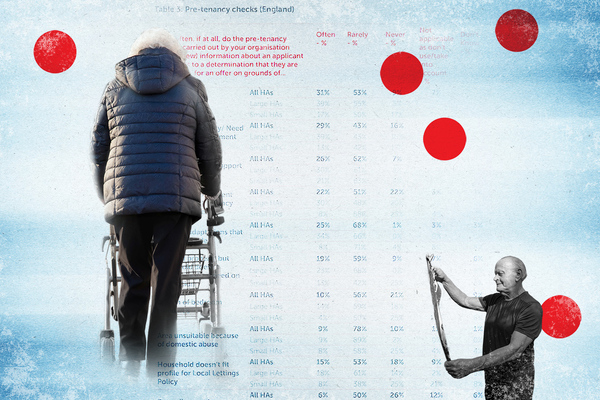
Housing providers identified more than 60 strategic risks in their recent annual reports, according to the Inside Housing Risk Register 2025. These are growing in number, scope and complexity. As well as risks common to all sectors – such as cyber threats and political and economic instability, housing providers must contend with unique regulatory, health and safety, and stock-related issues.
Inside Housing, in partnership with property technology firm Switchee, invited senior leaders to discuss how the sector views risks and what approaches it can use to mitigate them.
Martin Clemmit, principal risk consultant at Zurich Resilience Solutions, works with multiple housing providers and has seen the varying responses to risk in 2025.
“I see the biggest risk as organisations being too risk-averse,” he says. “There is so much uncertainty and volatility in the world nowadays. We need to be comfortable with that uncertainty.”
Governance is crucial
But within that, housing providers need to prioritise as they manage risks. Darren Hooker is a partner and head of social housing governance at law firm Capsticks. His work with the sector has shown him that good governance is “absolutely non-negotiable”.
He adds that “poor governance is often an early indicator that other issues are going to arise”.

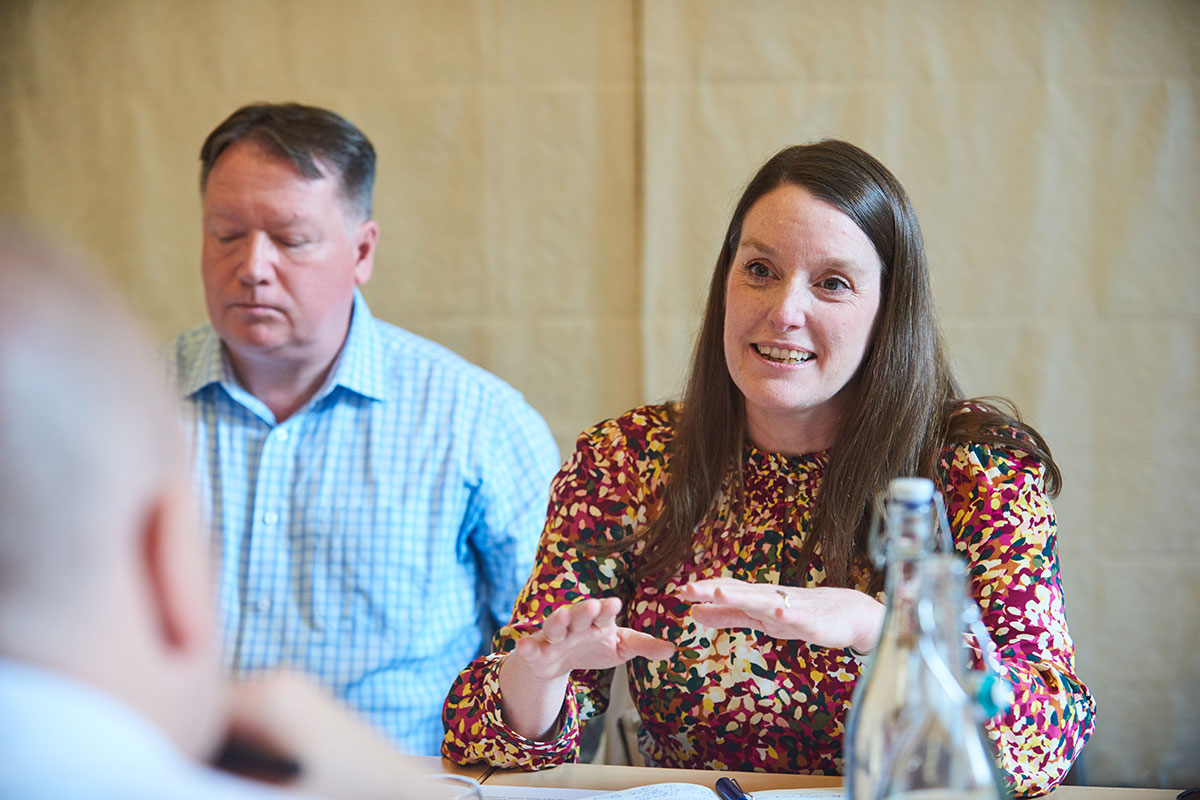
Governance, and the coveted G1 grade from the Regulator of Social Housing, are key priorities for most organisations. But the bar may yet shift in this area, according to Craig Thornton, risk and assurance director at SNG. “I do expect the regulator to have to raise its expectations of what good governance looks like and the role that risk management plays as part of your governance,” he says. “I expect to see the regulator’s expectations of what it takes to get that G1 rise as well.”
Many around the table feel that the sector – at least parts of it – has its “head in the sand” when it comes to longer-term challenges such as stock regeneration.
Phil Andrew, group chief executive at housing association Orbit, says that people are working hard to “get to the end of the week, or the end of the month, or the end of the quarter”.
“And actually, we’ve got to make sure that we’ve got an executive team who are looking out to 2050, 2060, 2065.”
Most agree that this long-term view, beyond current election cycles and the working life of today’s boards, should be influencing decisions now – however difficult that might be.
Political volatility is something that Paul Edwards, chief executive of CHP, identifies as a risk to his organisation as it plans to merge with Estuary Housing Association to become one of the largest housing associations in the East of England.
“One of our anchors in our merger process is to be able to deliver more new homes than we could do as separate entities in Essex,” he says. This will entail working with the mayor of Greater Essex (to be elected in May 2026), “so national and local politics changing constantly is a real challenge”.

While the sector seems to be able to identify, articulate and track risks, how is it mitigating them?
Those in attendance agreed that while specialist risk teams are growing in maturity, risk must be “everyone’s job” within organisations – from the board downwards. This means building a culture of managing – and being aware of – risk.
“If we don’t have that level of understanding from the top of the organisation, which flows through all levels of the organisation, I think that will be a significant concern going forward,” says Mr Clemmit.
SNG has been on a journey to improve its approach to risk and become more resilient. A key part of this, says Mr Thornton, is “using language that’s really relevant and couching it in a way that’s consumable by the different parts of the organisation”.
He says it is possible, as a risk professional, to have conversations with business leaders on their terms about objectives, risk controls and assurance without ever having to use these terms directly.
At Places for People, risk-aware language is in “the vernacular of our organisation”, says chief risk officer Judy Hardy.
“We have a culture and a principle where we’ll say, ‘Don’t walk by, do the right thing,’” she says. “That allows us to have all of those eyes and ears out there understanding very practically how these risks could be manifesting in our customers’ homes, or in our operations generally.”

Katie Shaw, head of risk and assurance at L&Q, explains that her organisation has considered how risk feeds into the company’s core strategy. This has a tangible impact on decision-making, allowing leaders to say, “Look, we’d love to do everything. But these are the risk appetites we’ve set, and this is how we’re going to make decisions, particularly when challenges come, particularly around finances – we have to make those decisions based on pre-agreed risk appetites.”
The affordable housing sector provides jobs to thousands of people and homes to millions. Knowing more about these groups can help providers predict potential risks.
Tom Robins, chief executive of Switchee, notes that as the requirements to qualify for a social or affordable home have changed over time, “the people that are leaving are a very different profile from the people that are coming in”.
“That’s making it much more complex to operate and bringing a different set of… risks that perhaps we haven’t seen before,” he says.
When it comes to risk management teams, Ms Shaw recognises that “getting the right people is crucial”. But she says that risk expertise is concentrated in finance and other industries, leading to recruitment challenges.
Gary Fulford, group chief executive of WHG, meanwhile, has spoken with other CEOs about the “real danger” of “passing [staff] around, or pinching people off other housing associations”. He describes the sector’s tendency to do so as “a bit of a merry-go-round”.
At Orbit, leaders have focused on becoming more customer-centric and have begun hiring accordingly.

“We’ve had to completely upend our customer journey,” says Mr Andrew. “And it’s also meant that I’ve been hiring at senior levels almost exclusively from out of the sector.”
As interim director of finance and resources, Jo Teare has been part of the turnaround team at Tower Hamlets Community Housing, helping take it from non-compliance in 2023 to acquisition by the Hyde Group in April of this year. He says providers should be looking to “build a performance culture”.
He believes the sector’s mindset should be: “We are professional organisations, and we have charitable objectives, but our job as leaders is to make sure that we run as effectively and efficiently as possible to maximise the charitable purpose.”
Data was another recurring theme during the roundtable. Having good data, and being able to analyse it effectively within an organisation, can tell leaders a lot about risk and how to mitigate it.
This is something that CHP has found to be true as it prepares to merge. The due diligence for this is “probably far more in-depth than an inspection would be”, says Mr Edwards.
“The key thing is… getting that dataset right, so that when we get to day one of the merged organisation, we… know everything we need to know about our homes and customers.”
Being able to overlay complex datasets about stock and residents will grow in importance, Switchee’s Mr Robins believes. He says providers can analyse how the two interact to predict successful outcomes.
“If we have a higher-risk property and a higher-risk tenant… do we understand both of those variables?” he asks. “There are some assets, some properties and some tenants that we really do need to understand. Because if it goes wrong, it will go wrong on the sort of a timescale [where] we would want to know, and we’d want to react.”
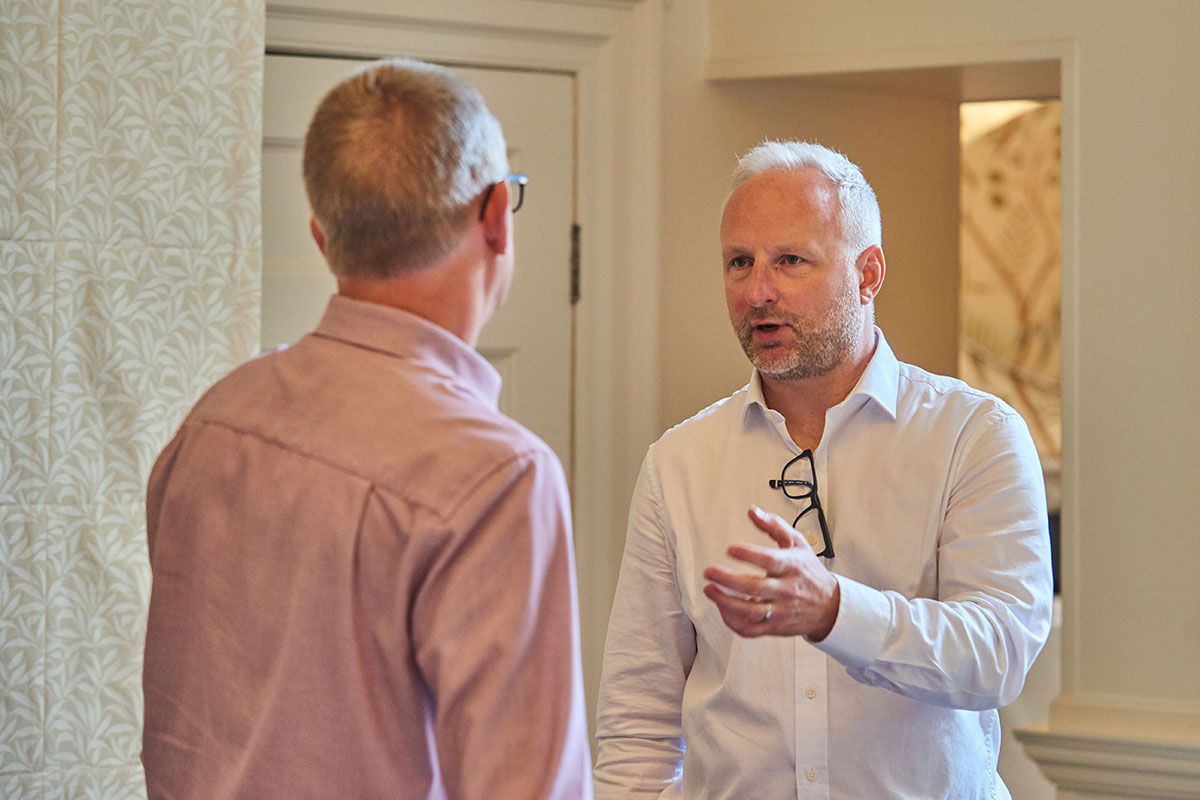
Providers must also carefully consider where their responsibilities end and how they work with other organisations to best look after residents’ needs.
“We have to be very careful about what we do and what we don’t do, and that’s partly risk-based,” says Mr Fulford. “Because it’s very easy for us to get drawn into areas that we’re not specialist in.”
However, data can be an unpalatable prospect for some organisations, especially when it brings bad news. There are reports of senior leaders (not present at the discussion) actively choosing not to seek more data on operations because they lack the capacity to act on it.
“It’s not so much wilful ignorance, as it has been perhaps the inability to comprehend what the potential risks are,” says Mr Hooker from Capsticks. “If we go back five or six years, how many providers had a global pandemic on their risk register?”
The consequences of the “head in the sand” approach, however, are existential, says Mr Teare.
“We’re talking about business failure here. That’s what will happen,” he says.
There was wide agreement during the discussion that risk could be an enabler for business rather than a blocker. It can inform better decision-making and drive behaviours that result in better customer outcomes, as well as having simple benefits like reducing the cost of insurance.
“Risk, actually, can be a really powerful tool,” says Ms Hardy. “If we can understand what’s coming over the horizon, then we can plan better to be able to be more resilient as organisations.”
Participants
Martin Hilditch (chair)
Editor, Inside Housing
Phil Andrew
Group chief executive, Orbit
Martin Clemmit
Principal risk consultant, Zurich Resilience Solutions
Paul Edwards
Chief executive, CHP
Gary Fulford
Group chief executive, WHG
Judy Hardy
Chief risk officer, Places for People
Darren Hooker
Partner and head of social housing governance, Capsticks
Tom Robins
Chief executive, Switchee
Katie Shaw
Head of risk and assurance, L&Q
Jo Teare
Interim director of finance and resources, Tower Hamlets Community Housing
Craig Thornton
Risk and assurance director, SNG
Other recent related articles
Slight dip in social homes in fuel poverty
The latest data from smart thermostat provider Switchee shows that the proportion of social homes in the UK that were deemed to be in fuel poverty in the first three months of this year was slightly down on the same period in 2024. Inside Housing analyses the figures
CPD webinar on demand: how customer journey mapping can improve the resident experience
As part of Inside Housing’s CPD offering, watch the full webinar at the end of this article in association with Switchee, ‘Customer journey mapping – how to improve efficiency without compromising residents’ unique needs’, and earn CPD minutes
Housing Fuel Poverty Index: overall improvement in fuel poverty in 2024
From September to December, there was a small rise in the proportion of social homes in the UK failing to reach 18°C in any seven-day period, but the overall picture for last year showed improvement, according to smart thermostat provider Switchee’s Housing Fuel Poverty Index
CPD webinar on demand: fostering data-driven engagement with residents on fuel poverty
As part of Inside Housing’s CPD offering, watch the full webinar at the end of this article in association with Switchee, ‘Fostering data-driven engagement with residents on fuel poverty’, and earn CPD minutes
How can social landlords use data to tackle fuel poverty?
As we enter winter and fuel bills spike, half of social tenants cannot afford to heat their homes, but identifying who those tenants are remains a challenge. Here, sector leaders discuss how better use of data could fight energy poverty

Related stories