You are viewing 1 of your 1 free articles
Masterplanning can play a role in tackling obesity in the long term
Tackling obesity is not just about diets or gym memberships, but designing places where healthy living is the default, writes Cristina Racsko, associate at Boyer Design



Cristina Racsko is an associate at Boyer Design (part of LRG)
 Tackling obesity is not just about diets or gym memberships, but designing places where healthy living is the default, writes Cristina Racsko, associate at Boyer Design #UKHousing
England faces a serious public health challenge: the prevalence of obesity has more than doubled in the last 25 years and, at current rates, is expected to double again in the next 40 years.
The root of the problem is not simply personal behaviour, but an environment that is often designed for those with sedentary lifestyles.
Local authorities are now being encouraged to use planning, development and the built environment as part of a “whole-system” approach to healthier communities. Urban designers and masterplanners of new housing schemes have a central role to play in shaping places where being active is the easiest choice.
The role of masterplanning must go beyond simply allocating plots and roads – it must be about designing places that consider the health of present and future generations.
Read more


Drawing on guidance such as the Active Design Guidance by Sport England, the National Design Guide and the National Model Design Code, masterplanners can craft a built environment that encourages movement, supports nature, nurtures social connection and promotes healthier living.
For example, by placing parking areas strategically, limiting cul-de-sacs and designing high-quality public and active-travel infrastructure, we can reduce sedentary travel and support movement by bike, foot or public transport.
The built form must prioritise walking and cycling over cars. Sport England’s guidance states that people in “activity-friendly” neighbourhoods may be physically active for up to 90 minutes more per week than those in poorly designed areas. Masterplanning should ensure direct, safe, pleasant routes between home, school, workplaces, retail, parks and public transport stops.
“We as masterplanners must integrate green spaces, tree belts, wildlife corridors and natural features into housing schemes as attractive high-quality spaces”
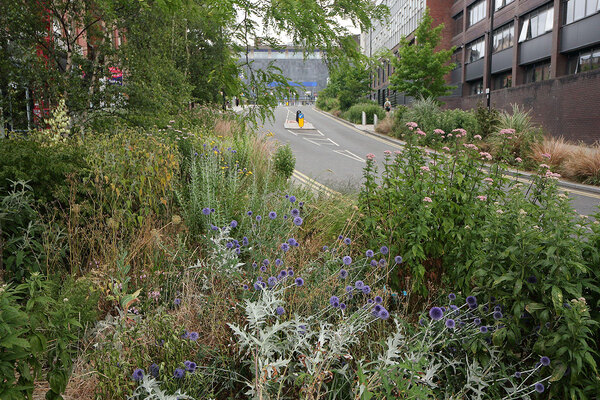
Nature is a key characteristic of the National Design Guide. We as masterplanners must integrate green spaces, tree belts, wildlife corridors and natural features into housing schemes as attractive high-quality spaces so that residents choose to spend time outdoors, become less sedentary and benefit mentally as well as physically.
A masterplan should include community allotments, orchards, edible landscapes, farm shops and mixed-use local centres so that people interact with the food system, by walking or cycling to these places and supporting the local economy. This contributes to healthier diets, stronger place-based identity and community connection.
The design of neighbourhoods must also include spaces where people meet, relax, socialise and exercise informally, such as squares, pocket greens, trails, seating, outdoor gym areas and playgrounds for all ages. Social interaction is a powerful enabler of physical activity and mental well-being.
The National Model Design Code emphasises that large-site masterplanning should cover public open spaces, connections, street hierarchy and land uses. This offers a mechanism to embed healthy-weight objectives into the very fabric of placemaking.
Masterplanners can set design codes or parameters that mandate high walkability, green networks, community food hubs, cycle routes, compact car parking and active frontage around public spaces.
For example, rejecting mono-use residential estates disconnected from amenities discourages walking, while placing children’s play and sport nodes at the heart of neighbourhoods supports everyday movement rather than just occasional gym visits.
“Ensuring routes are safe, accessible and attractive for walking and cycling encourages modest exercise many times a day rather than concentrated effort”
By designing for people first, with nature integrated, masterplanners can create genuinely healthy environments. Ensuring routes are safe, accessible and attractive for walking and cycling encourages modest exercise many times a day rather than concentrated effort.
Tackling obesity is not simply about individual diets or gym memberships. It is fundamentally about designing places where healthy living is the default, not the exception.
Masterplanners have an extraordinary opportunity to embed physical activity, nature and sustainable transport into the DNA of new neighbourhoods. Done well, this approach will reduce the burden of obesity over time, improve quality of life and deliver long-term health and economic benefits for generations to come.
We as built environment professionals have a great responsibility for future generations, and we should start by changing the old stories behind our plans and promote places designed for health and well-being. Considering car accessibility as one of the first criteria in developing a new neighbourhood is sadly still a discussion between developers and local authorities in 2025.
In my view, urban designers should aim for high standards of delivering beautiful, healthy spaces where life thrives as part of our role, otherwise we fail as professionals.
Cristina Racsko, associate, Boyer Design
Sign up for our development and finance newsletter
Already have an account? Click here to manage your newsletters
Sign up to HOMES UK and Unlock Net Zero Live 2025
Whether your focus is building safety, sustainability, development, AI and digital transformation, housing management, procurement, or resident engagement, this is a must-attend event for all UK housing professionals.
Explore opportunities to increase affordable housing supply and improve the quality and sustainability of existing homes.
Related stories