You are viewing 1 of your 1 free articles
The manifestos fail to acknowledge the need for accessible housing
As long waiting lists push disabled people into the private rented sector, political parties need to think beyond only general needs housing, writes Mikey Erhardt, a campaigner at Disability Rights UK



Mikey Erhardt is a campaigner at Disability Rights UK
 As long waiting lists push disabled people into the private rented sector, political parties need to think beyond only general needs housing, writes Mikey Erhardt of Disability Rights UK #UKhousing
“This manifesto week, I [wanted] to see a clear dedication to building more social homes,” Morayo, an experienced housing and racial justice advocate working with African heritage communities in Bristol, told me.
At the very least, the message that more social housing is the answer finally seems to be sinking in, with the Greens and Lib Dems promising 150,000 new social homes each and Labour promising a more nebulous target of “the biggest increase in social and affordable housebuilding in a generation”.
These promises and targets wouldn’t be featured without the tireless work of activists and campaigners who have fought to change our country’s relationship with housing.
But what all the manifestos lack are goals to create a more accessible housing system for the 16 million disabled people across the country.
Read more


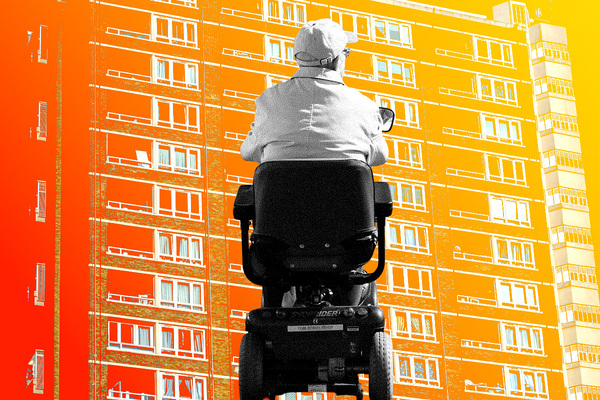
I asked Mariella Hill, policy and campaigns officer at Inclusion London, for the organisation’s thoughts on this. “What we wanted to see from the party manifestos was a reference to the homes that disabled people desperately need and are being denied – accessible social rented homes,” she says.
Our failure to create accessible social homes in this country is obvious. The Equality and Human Rights Commission estimates that one in five disabled people in social rented homes have unmet housing needs. And right now, outside London, under a quarter (23%) of new homes, let alone social homes, due to be built by 2030 are planned to be accessible.
Shockingly, just 1% of new homes are set to be suitable for wheelchair users, despite 1.2 million wheelchair users needing housing right now.
“Neither [the Labour nor the Conservative] manifesto offers anything of substance to raise the crucial issues of accessibility, affordability and safety in the social rented sector”
We need to build more accessible social homes, because social housing is so important to disabled people. After all, “these homes are more affordable and provide us with more security than in other tenures”, Ms Hill explains.
Parties promising to increase social housebuilding in their manifestos is positive. But as long waiting lists push ever more disabled people into the private rented sector, the leading parties – Conservative and Labour – seem content only to trade general homebuilding targets in their current proposals. Neither manifesto offers anything of substance to raise the crucial issues of accessibility, affordability and safety in the social rented sector.
Although the Green Party did confirm to Disability Rights UK that it supports improvements to the planning system and building control to ensure all homes are accessible in a range of ways and they champion the right to housing under universal design principles, their manifesto also neglected to mention accessibility in relation to housing.
Another disappointment is that no party has offered to take action on Section 106 agreements’ stranglehold on the supply of accessible housing.
Multiple reports, including evidence given to the Levelling Up, Housing and Communities Committee in parliament, show developers continue to abuse the viability assessment mechanism to avoid meeting the already-low targets for accessible housing provision. This is something I’ve heard plenty of shocking stories about. But no party has offered a way out of this.
We know that when housing policy is left solely in the hands of developers and housing associations, disabled people lose out. Lobbying from these unaccountable organisations has ensured previous governments failed to implement their promised new regulatory baseline for accessible homes.
And it is worrying to see party manifestos seemingly so aligned with the goal of developers, rather than the needs and rights of the disabled community.
“We know that when housing policy is left solely in the hands of developers and housing associations, disabled people lose out”
As Ms Hill emphasises, the lack of proposals to improve our social housing system is hugely worrying.
Right now, “only 9% of the existing housing stock in England contain all of the accessibility features needed to be considered ‘visitable’”, and long waiting lists “are pushing us into the private rented sector, where it can be very difficult to make adaptations to our homes or push back on rent increases without the threat of eviction”, she says.
So, what are the answers? I speak to disabled people every day about housing, and our community’s demands are clear.
Together, disabled people and our organisations have created the Disabled People’s Manifesto, which demands the introduction of a national requirement for all newly built homes to be accessible and at least 10% of all planned homes to be wheelchair accessible; investment in building accessible social housing; and the introduction of adaptability requirements into the Decent Homes Standard.
As Kevin, a tenants’ organiser, told me: “Housing needs to be recognised as a right, not a privilege.”
These simple policy changes would have a huge impact in that regard – putting us on a journey to create the accessible housing system that we all, no matter our background, class or impairment, have a right to.
Sign up for our care and support bulletin
Already have an account? Click here to manage your newsletters
Related stories