You are viewing 1 of your 1 free articles
Breaking the taboo: male victims of domestic violence
Services for male victims of domestic abuse are thin on the ground, and council budget cuts are about to make the situation worse. Keith Cooper reports


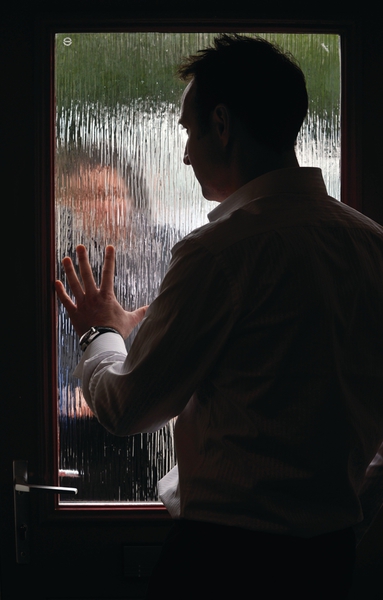
Source: Eva Bee
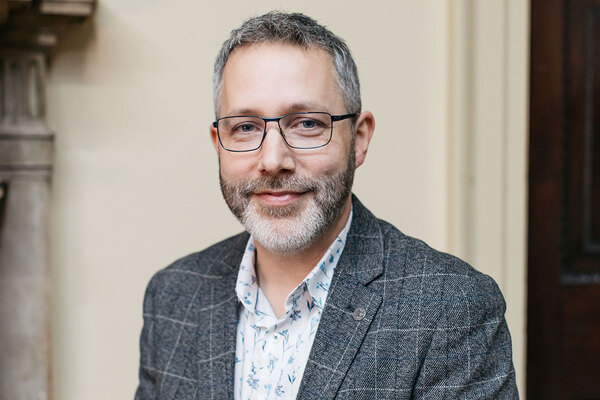
Freddie has the look of an easy going, metropolitan man. Bearded and tipping 50, he’s all hoodie, headphones, and manbag.
We’ve agreed to meet at Home Group’s Worcester headquarters to talk about his experience as a victim of domestic abuse, and how he has been helped by ‘Rejuvenate’, a service run by Stonham, the housing association’s care and support arm.
One of only a handful of dedicated services for male victims of domestic violence across the UK, it is under threat from budget cuts planned by Worcestershire County Council.
“I was in a complete fug of medication.”
Freddie’s barely sat down before he launches into his story. ‘I was in an abusive relationship for nine years,’ he begins. ‘We met on one of the early dating websites which did full psychometric testing. She had seemed like my ideal person.’
His internet date took him on as ‘her rock’, he tells me. ‘I did everything she wanted and everything she asked, and couldn’t understand why she wasn’t happy.”
The abuse came in the form of controlling behaviour, he says. She criticised the tone of his telephone calls to work clients. In response, Freddie, a successful printing and publishing executive, cut back on business trips to work from home.
By now his wife, she refused to socialise outside the home. Throwing ‘fits and tantrums’ to get her own way, she only returned to a ‘happy’ state for short periods when he’d backed down. This cycle of abuse plunged him into a perpetual state of anxiety that ‘still lingers’, he adds. ‘I spent all my time anticipating anger.’
‘I ran my own life. Now people don’t understand why I act in a cowering way,’ he says.
Putting the pieces together
After years in this dysfunctional relationship, Freddie was signed off work with mental health problems. Doctors treated what they thought was work stress with drugs, upping the dose as his mental health deteriorated.
His wife, whose behaviour had cut him off from work colleagues and friends, accompanied him on trips to see his GP. ‘It got to the point where I was in a complete fug of medication,’ he says.
Increasingly isolated, Freddie suffered a nervous breakdown without realising why. He experienced suicidal thoughts, became homeless after leaving her and was forced, at one point, to sleep in a tent.

It was only after learning about domestic abuse and meeting other victims through the Rejuvenate course (see box) that he understood the root cause of his crisis. ‘Everything dropped into place, it was an awakening and a realisation,’ he says.
In cold, hard facts, Freddie is among one in six men in the country who reports physical or emotional harm by a partner, according to the NHS - and one of a lucky few to have access to specialist support. So how much and what sort of support is out there for male victims of domestic abuse, like Freddie?
The simple and common response from those who assist male victims is: not enough. The trouble is nobody knows how far short the safety net falls.
While domestic abuse against men is gaining recognition, the vast majority of publicly funded help is directed at women - and for very sound reasons.
Official figures indicate women suffer more at the hands of male perpetrators than men do from female ones. Two women are killed each week by a current or ex-male partner, according to the charity Women’s Aid. And abuse is as common and severe among same sex couples, according to the charity Stonewall.
Measuring the level of unmet need among women for services is relatively easy. According to the latest annual survey of English services by Women’s Aid, 100 women and 84 children were turned away from refuges on just one day in 2014. Such evidence appears to have alarmed the government, which found £10m last year to help rescue refuges from closure.
But with only around 15 such places of safety for men across the whole of the UK, no similar network exists to map out where the gaps lie.
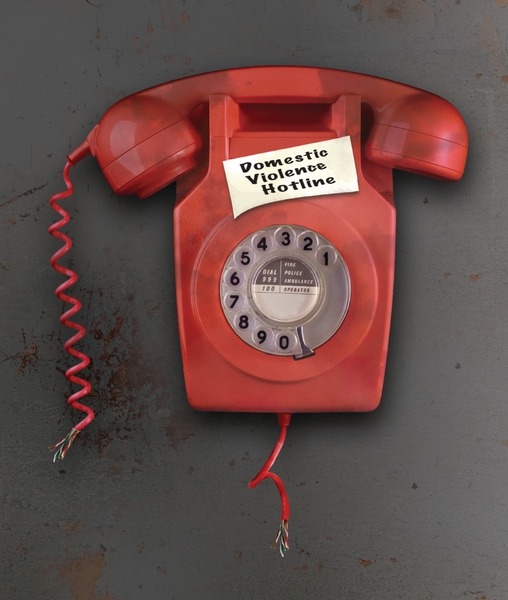
One person well placed to gauge coverage is Ippo Panteloudakis, operations director at Respect, a charity which runs the national Men’s Advice Line, a telephone line for men who are victims of domestic violence. Funded by the Home Office, this support service is the first port of call for increasing numbers of male victims of domestic abuse and those who support them. Respect has seen a huge surge in calls in recent years, from 2,732 in 2012 to some 4,500 in 2013.
Mr Panteloudakis says help for men has improved, but coverage remains patchy. He agrees not enough is known about male victims’ needs but that anecdotal evidence points to demand for extra services.
Sparse support
Help for male victims in Scotland is particularly sparse, according to two Edinburgh-based charities, which last year established the first face-to-face support service for men in the city.
“Any equitable domestic abuse service should include a range of support and accommodation options that can suit individuals and families.”
Rachael Byrne, director of care and support, Home Group
Funded with £420,000 of National Lottery cash, the Male Domestic Abuse Support Service is run by homelessness prevention charity Rowan Alba and Abused Men In Scotland, a campaign group. Kirstie McGregor, co-ordinator of the new service at Rowan Alba, tells of a ‘real lack of provision’ for men in Scotland.
The programme’s support worker helps identify abuse and advises on housing and legal issues, such as how to maintain access to their children.
‘Some men have left the family home, are still paying the mortgage, providing child support and trying to get housing provision so are struggling financially,’ Ms McGregor says. Rowan Alba expects the service to be running at full capacity within a year, she adds. ‘We won’t then be able to support any more men.’
While lottery cash has secured this service’s future for the next three years, the prospects for Home Group’s Worcestershire-based Rejuvenate scheme are not looking so sure. Rejuvenate was set up in April 2010 and originally funded as a pilot project by the Department of Health, before the tab for the service was picked up by the council as part of a wider domestic violence contract. The programme runs twice a year, and so far 91 men have passed through it. Typically, about 60 men are in contact with its support workers at any one time.
Like many authorities across England, the county council is suffering severe funding cuts. Its budget for domestic violence services is due to be cut in half next April, putting the future of Rejuvenate in it its current form at risk.
Martin Lakemen, strategic coordinator for domestic abuse and sexual violence at the Worcestershire County Council, admits the reduction means ‘difficult decisions’.
Despite diminishing public resources, Home Group remains committed to helping both women and men who have suffered domestic abuse across the 140 councils in which it operates. While the association offers services specifically for women, it ‘never divides our services to work only with women or men’, says Rachael Byrne, its director of care and support.
‘Any equitable domestic abuse service should include a range of support and accommodation options that can suit individuals and families,’ she adds. ‘While there is still a place for refuge-based services, people’s needs are changing. We need to be able to respond with a more flexible model.’
In response, Home Group has increased the proportion of services it provides as safe houses rather than refuges, saying ‘this then enables men to also be supported effectively’.
Overwhelming need
“I was a husk before Rejuvenate – it saved my life.”
Stonham’s approach is not without controversy within the world of domestic abuse, which is widely accepted as a gendered crime, disproportionately affecting women and girls. At a time of extremely curtailed resources, the extension of support to men is seen by some women’s charities as a threat.
This view appears to influence significantly some local authority commissioners. After a major review of services last year, Cambridgeshire County Council concluded ‘the greatest identifiable inequality’ in its domestic abuse services was driven by its ‘gendered nature’.
Dedicated male services do not feature as gaps in its final needs assessment paper, despite Cambridge City Council flagging up in evidence that ‘there seems to be nothing for men’. Its submission says housing advisors had been ‘repeatedly contacted’ by a man trying to leave his physically and emotionally abusive wife. ‘There was no provision for him to facilitate an escape,’ it states.
Cambridgeshire has three women’s refuges, none for men and no dedicated male support services. A spokesperson says it has ‘no evidence base’ for male-only support and it ‘typically sends high-risk [male] victims out of county to refuge provision’.
The overwhelming need for extra support for women and lack of evidence for male services, creates what Abused Men in Scotland describes as a ‘chicken and egg’ scenario.
‘The narrative is so powerful of violence against women, it completely overwhelms male victims,’ says its national development officer Nick Smithers.
‘You need services for both but that’s not happening.’
As the dozen or so men on Rejuvenate await the fate of their support service, they can only hope this vital lifeline is preserved. ‘I am not judged by my race or religion,’ Freddie tells me, when I mention the gendered status of domestic abuse. ‘But on this, I am judged by my gender. I was a husk before Rejuvenate – it saved my life.’
After hearing his story and sitting through a Rejuvenate session, this doesn’t feel like an exaggeration.
What it’s like inside a support session for male victims
Every weekly session of the Rejuvenate group begins with a ‘checking in’ and ends with a ‘checking out’, marking the start and end of the meetings.
These are the only times the dozen or so men who attend are expected to talk about their lives or about issues raised during the sessions.
A man in his twenties manages the fewest words. Relatively new to the group, he’s tensed up, clutching a water bottle, from which he nervously sips. His brevity is met with words of support from other members of the group. You sense they know how he’s feeling.
“People think because you’re a bloke, you don’t have an emotional side. They don’t want to know about it.”
Another checks in by telling the group he’d met an old friend that week, someone from whom he had become isolated as a result of his partner’s controlling behaviour. Like many checking ins, it’s a tale of the everyday which is difficult to tell; the words catch in his throat.
A stocky man in his forties says his mum helped him pick up the children from his ex. He looks despondent and sighs as the group murmurs support. At their last meeting, his ex jammed her car in the exit to the car park, I’m told after he leaves.
After each man has checked in, the two support workers take the group through a series of exercises, which together make up the 14-week Rejuvenate programme.
It provides both one-to-one support and access to these sessions. Some members still have contact with their abuser.
Rejunate aims to teach participants how to manage conflict in their relationships, understand what healthy relationships look like and confronts them with ‘The Spiter’, an archetype of the abusive partner.
They learn that behaviour previously dismissed as bossy or bad mannered could actually be abusive, and what a caring relationship looks like.
The Spiter stops you seeing friends, demands sex, calls you pathetic, criticises your ‘sh*t job’, attacks, spreads lies, cries…the list goes on.
As a learning tool, it has clearly caught on with the men in the group. It is easier to focus on an objectified abuser than remember their ex, one man says.
The sense of solidarity is strong in the group. ‘It brings the guys together so they are not alone,’ Jack Webb, the support coordinator running the session tells me.
Like so many services for male victims, Rejuvenate is only officially open during office hours.
But with peer support groups such as this, the men can and do turn to each other after the service shuts. Being an abused man is a lonely existence, a man called James tells me.
‘People think because you’re a bloke, you don’t have an emotional side. They don’t want to know about it.’


Related stories