You are viewing 1 of your 1 free articles
How Jane Porter helped to shape the modern housing sector
Southern Housing’s chief operating officer announced that she was stepping down from her role late last year. As she prepares to leave, Martin Hilditch speaks to her about a career which has done much to shape the modern affordable housing sector. Photography by Paul Read


 Southern Housing’s chief operating officer Jane Porter announced she was stepping down from her role late last year. As she prepares to leave, Martin Hilditch speaks to her about a career which has done much to shape the modern affordable housing sector #UKhousing #HousingHires
Few people have done more to shape the evolution of the modern housing sector than Jane Porter.
“I love change,” she says during our conversation, and there is no doubting it. Within one five-minute period, Ms Porter enthuses about three entirely separate projects she has worked on with the words, “Nobody had done it, it was breaking the norms”, “It wasn’t something that people did in those days” and “It was breaking new ground”. The latter could probably stand as a coda to her career.
Pick any major policy development over the past 40 years, and Ms Porter probably played a part in its implementation. From tenant voice to homeownership, net zero to stock transfers and mergers, she has pursued new ways of working whenever the chance has arisen. She has continued the trend in her current role as chief operating officer at Southern Housing, bedding in change after Optivo and Southern Housing Group’s merged to form a new 77,000-home landlord in December 2022.

Even for someone who loves change, next month marks a gigantic shift. At the end of last year, Ms Porter announced that she was leaving her role at Southern.
To mark the occasion, Inside Housing met her at Southern’s head office, just around the corner from Farringdon station in central London, to reflect on a career that tells the story of both an individual and affordable housing as we know it.
Community and customer service
Ms Porter grew up on a farm in a rural community in Ayr in Scotland – “no street lights, that kind of stuff” – and went to school at the nearby Cumnock Academy, in a mining community in “the heartlands of [Labour Party founder] Keir Hardie. Keir Hardie Hill is the main road,” Ms Porter observes. She was the first in her family to go to university, and did her dissertation on the Scottish Special Housing Association as part of a home economics degree at Queen Margaret University in Edinburgh. This opened the door to a career in housing.
It is easy to see why her background made it a natural fit. The way she talks about the close-knit communities from her early years and her feelings about the sector have direct parallels.
“It was that community in housing, the people, the camaraderie; it was right for me,” she says about her early career. “It felt like I was coming into a kind of family where we all looked after each other.”
Looking out for others is characteristic of people who work in the sector, she thinks.
“We care about our jobs, we care about the people in our homes, we care about the services we’re delivering and we care about each other. I think that still exists.”
Community and customer service are probably the great themes of Ms Porter’s working life. She began as a housing officer for East London Housing Association after university, quickly moving to a senior housing officer role, and then area housing manager. “I’m incredibly proud of starting my career as a housing officer,” she states. “You learn from the roots up.”
As Ms Porter’s career blossomed, the tectonic plates of the sector were shifting. The 1988 Housing Act brought in mixed funding and private finance for housing associations, making it easier to transfer homes from councils to housing associations. Shared ownership was also slowly emerging as an option, following the 1980 Housing Act. As a result, East London Housing Association [which later became East Thames] moved to set up a homeownership subsidiary, Boleyn and Forest Housing Society. Ms Porter took a leap of faith and moved into a new field.
“I saw that as a bit exciting – new opportunities,” she says. “It was about growth, but it was still doing the stuff I knew well – about delivering great services.”
It turned into both the making of a career and a fledgling sector.
“I enjoyed the ambassadorial stuff, because my role was going out talking to local authorities, because this was new. It was about selling concepts. It was about thinking ahead and looking at what could come of this.”
That pitch included both how it could help fulfil the aspirations of residents and the benefits of “mixed tenure, cross-subsidy. That was breaking new ground for many people in housing associations and local authorities. The minute people started to see you can get cross-subsidy from this, so it can help you build more social homes, it was a bit of a no-brainer,” she adds.
Other opportunities to grow were embraced, too. At one stage Ms Porter pitched for, and then took on, Right to Buy sales for Newham Council as its agent. “Managing for others was not something that people did in those days.”
Ms Porter was driving the sector forward in other areas as well. This included pushing (successfully) for resident representation on the board. “Nobody had it [at that time],” she says. “It was breaking the norms in terms of saying, ‘Let’s hear the residents’ voice’.”
This has been a feature of her career ever since. Southern Housing stands out among other large associations for the number of tenants it has on its board and its approach to co-production.
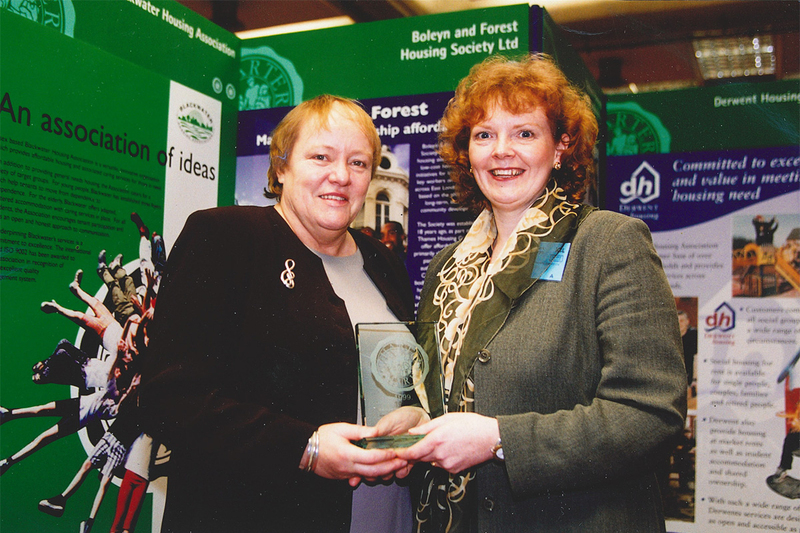
By the year 2000, homeownership was becoming a mainstream part of affordable housing delivery. At the same time, Ms Porter realised she was becoming “pigeon-holed” in homeownership, and jumped to become director of operations at Kelsey Housing Society. “What I wanted to do is ultimately be a chief executive,” she states. “I’ve never made it, but I thought, ‘I will never make it there just having homeownership on my CV’.”
Again, the sector was shifting. The Labour government was driving, Ferrari-speed, the large scale voluntary transfers of council homes to housing associations to generate private finance to improve the condition of social housing. Hundreds of thousands of homes transferred in the early 2000s, as councils ceded their position to housing associations, which became the biggest owners and managers of social housing in England for the first time.
In March 2004, weeks after the birth of her daughter, Elizabeth, Ms Porter completed the transfer of four tower blocks from Gosport Borough Council to Kelsey, a project she had led. “People came to my house, and we had project meetings with Elizabeth in the car seat on the dining room table. I had to deliver this. She was weeks old, but I was so committed.”
“We care about our jobs, we care about the people in our homes, we care about the services we’re delivering and we care about each other. I think that still exists”
The role involved an early sector foray into modern methods of construction, with Kelsey importing prefabs from Canada, designed to Passivhaus-equivalent standards.
A year after the stock transfer and Kelsey was no more, as it became part of A2Dominion. The trend for mergers in the sector continues to this day.
“I ended up out of a job,” Ms Porter says. “That’s when I stepped back a bit and said, ‘I’ve worked non-stop, it’s time to reflect on what I really want to do and where I am going’.”
A period of taking on interim management roles followed until a position at AmicusHorizon, which had been placed under supervision by the Housing Corporation (the English housing regulator at the time), morphed into a permanent job. “I loved consultancy, because I loved going in and fixing things, but you don’t have the same collaboration. You don’t have the same belonging,” she says.
“I suppose some of that goes back to my roots again,” she adds. “When you live in a rural community, everybody knows everybody. You’re all part of it, delivering something.”
Changing regulatory environment
From the start, the one constant at AmicusHorizon was change. “It was about taking an organisation that was in trouble and really embracing change and doing things differently to deliver [better] outcomes,” she recalls. “The outcomes being: we want to build more homes [its development funding was cut], we want to deliver great services, we want to be hearing from and listening to our residents.”
The organisation turned a corner, first with “inspirational” boss Steve Walker, who led it out of supervision, and then Paul Hackett, who joined pledging to turn it into the best large landlord in England. Satisfaction improved as Ms Porter, innovating again, introduced patchless working. Since then, 28,000-home AmicusHorizon regenerated first into 45,000-home Optivo and then 77,000-home Southern Housing as it grew through mergers.
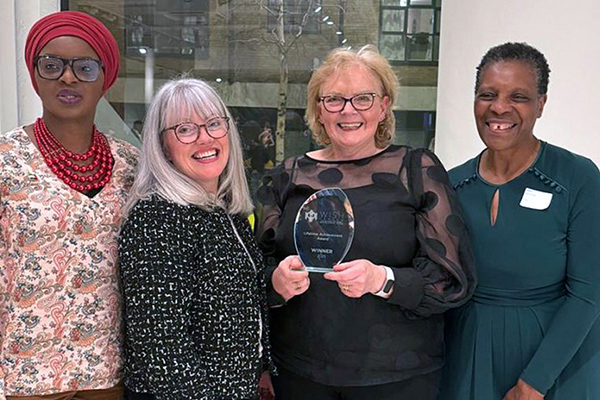
Despite extensive experience of working on mergers, the most recent, which completed in December 2022, was in some ways the most tricky, Ms Porter says. This was because it completed against a backdrop of political upheaval and a changing regulatory environment that has brought increased scrutiny on the sector.
Even for someone who has built a career on embracing new ways of working, this “cacophony of change” was an added complication, she says, citing the more than 200 recommendations the Housing Ombudsman made in its Spotlight reports as just one of the factors that had to be taken into account.
It might have been a complicating factor, but Ms Porter threw herself into influencing emerging practice in regulation, too, sitting on the Regulator of Social Housing’s sounding board for the development of tenant satisfaction measures. She also fed into the development of building safety policy, as a member of the Ministry of Housing, Communities and Local Government’s (MHCLG) building safety best practice group on resident engagement, and of the Home Office and MHCLG steering group reviewing the ‘stay put’ fire safety strategy.
As someone who spent a significant chunk of her career working in homeownership and building the cross-subsidy model, she’s keen to get involved in other sector debates, particularly when it comes to criticism of shared ownership. Last year, the parliamentary Housing, Communities and Local Government Committee called for urgent action to reform how schemes operate.
“About 34% of residents have identified themselves as having a disability or a vulnerability, and the majority of that is a mental health issue”
Ms Porter says she finds it “quite difficult” when people suggest it’s “not a good tenure”.
“Actually, that’s not true. It’s misunderstood, and it’s been conflated with issues around service charges. I’m not condoning bad behaviour, because there is definitely bad behaviour by some, but what we are doing is building much more complex buildings.”
Issues like rising energy prices and fire regulations have driven up costs and thus charges, but this would affect other tenures too, she argues.
The changing support needs of the sector’s residents is also a concern, and one she feels the government needs to be much more aware of. “About 34% of residents have identified themselves as having a disability or a vulnerability, and the majority of that is a mental health issue. That’s a [roughly] 10% shift on where we’ve been before, and that is at a time when external funding is reducing,” she says.
Those cuts to funding and what it means for individuals and for housing providers deserve much wider attention, she feels.
However, as she prepares to leave her role at Southern at the start of April (she’s not leaving the sector completely, as she will be doing consultancy), Ms Porter is as passionate as ever about working in the sector – and thinks more people should look to do so.
“Housing is like a family,” she says again. Despite the evolution of the sector over the course of her career, it’s good to know that has been the one constant.
Recent longform articles by Martin Hilditch
How Jane Porter helped to shape the modern housing sector
Southern Housing’s chief operating officer announced that she was stepping down from her role late last year. As she prepares to leave, Martin Hilditch speaks to her about a career which has done much to shape the modern affordable housing sector
Ian McDermott talks Peabody’s big merger and the future of social housing
Ian McDermott, chief executive of Peabody, sits down with Inside Housing’s editor Martin Hilditch to talk mergers, housing management at one of the sector’s biggest landlords and how the sector can build more homes
‘The North really needs that voice’: 50 years of the Northern Housing Consortium
2024 marked the 50th anniversary of the Northern Housing Consortium. Chief executive Tracy Harrison talks about her proudest achievements with Inside Housing editor Martin Hilditch – and what the future holds for the North’s housing providers
Sign up to our Best of In-Depth newsletter

We have recently relaunched our weekly Long Read newsletter as Best of In-Depth. The idea is to bring you a shorter selection of the very best analysis and comment we are publishing each week.
Already have an account? Click here to manage your newsletters.
Related stories