You are viewing 1 of your 1 free articles
Will the soaring costs of metal slow down cladding remediation?
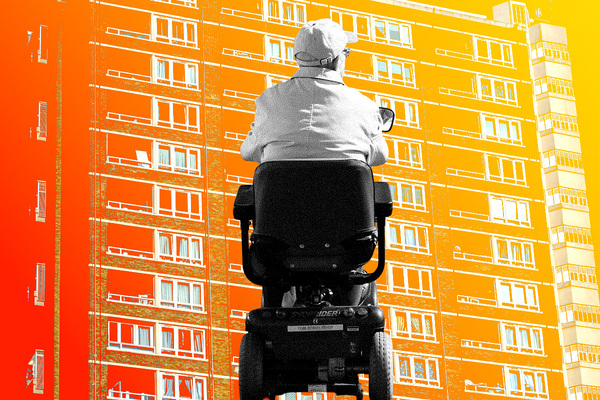
Replacing dangerous cladding on blocks of flats has already been horribly delayed. Now, the economic turmoil that has resulted from the pandemic and the war in Ukraine threaten to slow the process even further. James Wilmore reports


 Will the soaring costs of metal slow down cladding remediation? @jamescwilmore reports for @insidehousing #UKhousingReplacing dangerous cladding on blocks of flats has already been horribly delayed. Now, the economic turmoil that has resulted from the pandemic and the war in Ukraine threaten to slow the process even further. @jamescwilmore reports #UKhousing“The government has allowed it to get to this situation. If they had acted the day after Grenfell, all of these buildings would have been fixed at a fraction of the cost,” says Ritu Saha from @UKCAG #UKhousing
On reflection, it seems incredible. Five years since the Grenfell Tower fire killed 72 people, the work to fix other unsafe buildings is still nowhere close to being completed, and in some cases is only just beginning.
For those in affected blocks, the mental toll and anguish has been well documented. But while housing secretary Michael Gove is attempting to get a grip of the situation, another problem is creeping up, related
to turmoil in the economy elsewhere: the rising cost of remediation projects.
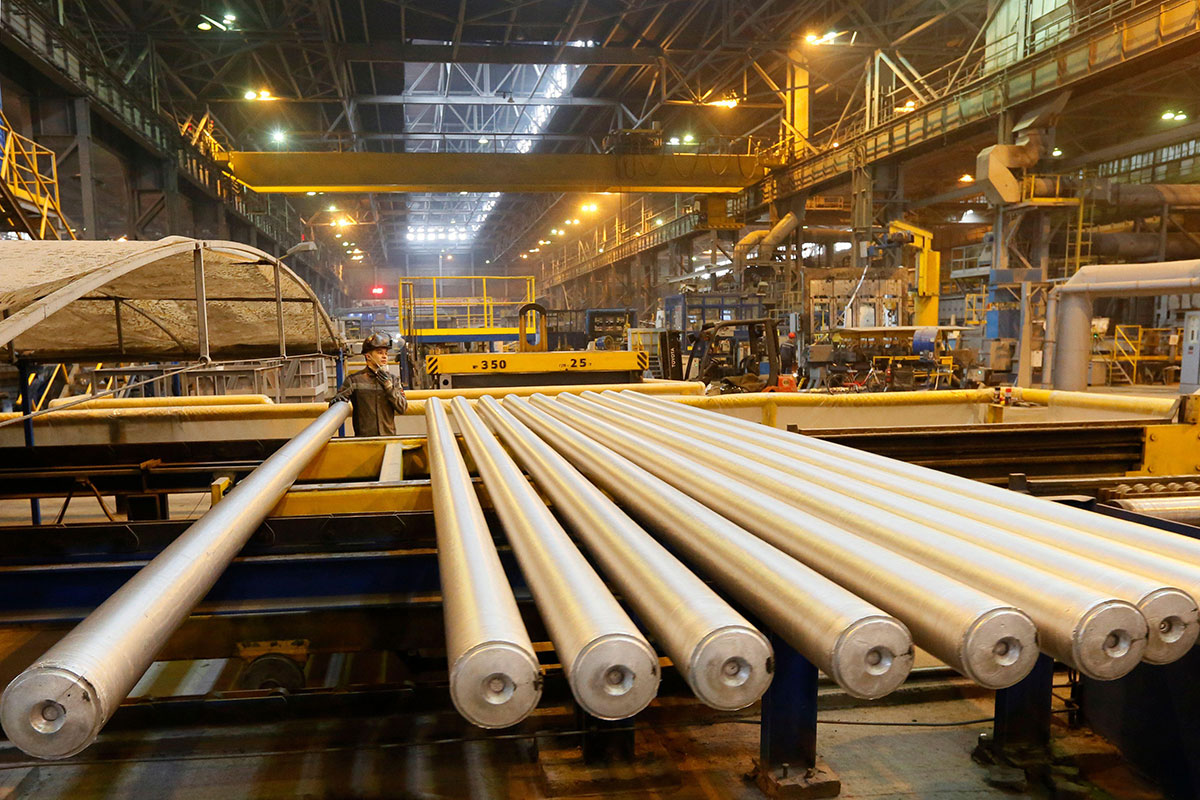
Prices have been soaring as a perfect storm of factors have come to a head. Brexit has affected the supply of construction workers and materials, while the pandemic has disrupted projects, leading to a spike in demand for labour and materials. On top of that has come further spiralling material costs – particularly for steel and aluminium – due to Russia’s invasion of Ukraine.
“The government has allowed it to get to this situation. If they had acted the day after Grenfell, all of these buildings would have been fixed at a fraction of the cost”
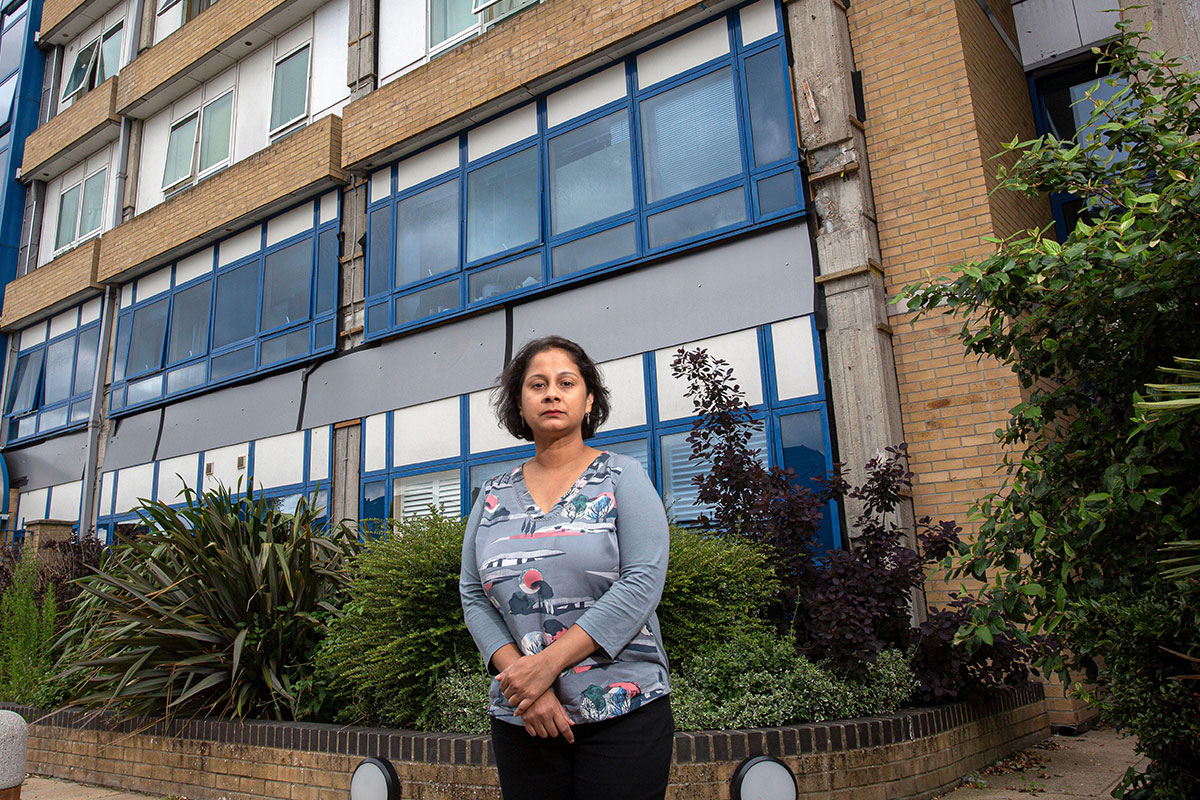
“It’s quite a desperate situation frankly,” says Ritu Saha, a leaseholder at the high-profile Northpoint building in Bromley, south London, and a founding member of the UK Cladding Action Group (UKCAG).
“The government has allowed it to get to this situation. If they had acted the day after Grenfell, all of these buildings would have been fixed at a fraction of the cost.”
In Ms Saha’s case, she and her fellow leaseholders have experienced a series of delays since issues were identified in November 2017.
Read more
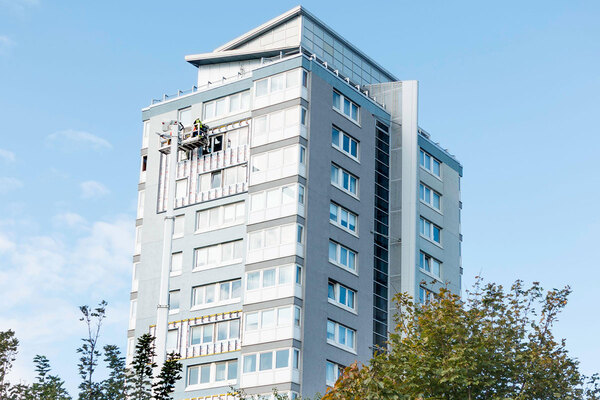
The 10-storey building had Grenfell-style aluminium composite material (ACM) cladding, high-pressure laminate cladding and missing fire barriers, among other issues. The ACM cladding was removed in 2020 after money was secured from the government’s initial ACM fund.
However, since then, leaseholders have struggled to reach an agreement with the government over funding for replacement cladding, with a deal having being struck only in January.
All the while, the leaseholders at Northpoint have seen remediation costs for the building increase. A letter from their contractor in January said overall costs were increasing by 14%. Part of this was down to a 15% increase in cladding costs and a 22% rise in scaffolding costs.
“There is a risk that the contractor decides to walk away from the project. This would mean a need to re-tender the works, which could have further cost and programme implications”
The letter said: “The biggest issue we are experiencing is tying down our supply chain from a cost perspective as they in turn are not getting any cost certainty from their suppliers because of unpredictable price changes.” And this was before the Ukraine war.
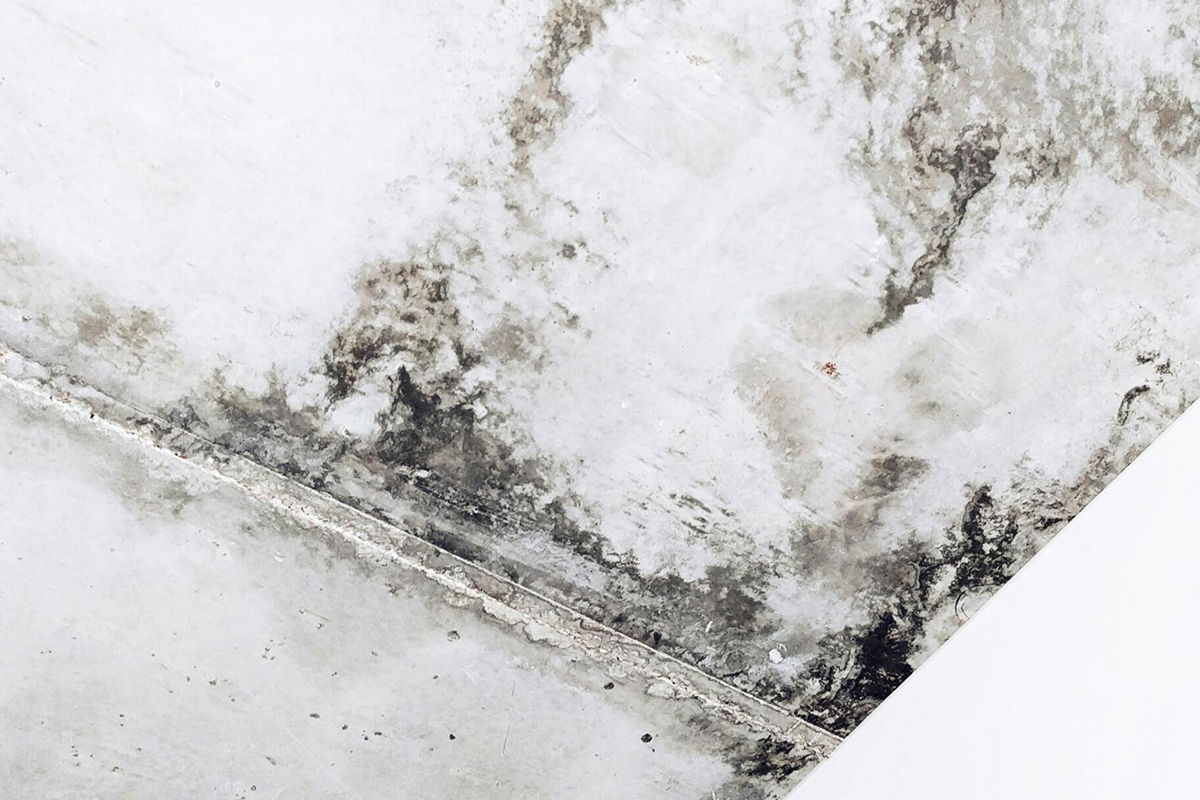
The leaseholders have also had to cope with water ingress at the building, as a result of the cladding not being there, leading to damp and mould. “We had to get abseilers in to carry out temporary waterproofing,” Ms Saha says.
She says the other issue is that quotes from contractors are for a limited time period – often only for seven days.
Headache for BSF applicants
Elsewhere in the country, leaseholders are mired in similar problems. At a building in North West England, leaseholders have been warned that delays to fix their building are likely to lead to higher prices.
“The longer this situation drags on, the more likely that we will be affected by cost increases due to inflation,” leaseholders were told in an email from their management company and seen by Inside Housing.
It added: “There is a risk that the contractor decides to walk away from the project. This would mean a need to re-tender the works, which could have further cost and programme implications.”
Scott Mason, founder of Clad To Help, which advises on cladding remediation projects, is aware of the problems.
“Contractors are inundated with demand for remedial work and wider supply chain issues are affecting material prices and lead times, creating a headache for Building Safety Fund (BSF) applicants who find themselves chasing their tails,” he says.
He echoes Ms Saha’s experience around contractor quotes. “In the current climate, contractors can’t hold their price as long as they would have a few years ago,” he says.
“I had a situation where I just wanted a small amount of metal cladding for training purposes, which I would normally have got within a week. But it got to the stage where there was an eight-week wait”
Further difficulties are found in this matrix. Contract negotiations between applicants and a contractor often cannot be finalised until a grant is formally offered, Mr Mason explains.
“But this offer can be months after the fund’s stage-two submission due to prolonged governance,” he says. “It is only at the conclusion of contract negotiations that the price effectively becomes locked in between the applicant and the contractor, whereas the amount applied for and offered by the BSF is based on the contractor’s tender price pieced together months before.”
Mr Mason says that with his own situation, they included a contingency allowance of 3.5% to cover cost rises in the four months before submitting an application to the BSF. However, he says, the contract price increased more than 6% by the time the work needed doing. “We had no choice but to eat into a separate general contingency sum that was intended for other unknown risks,” he says.
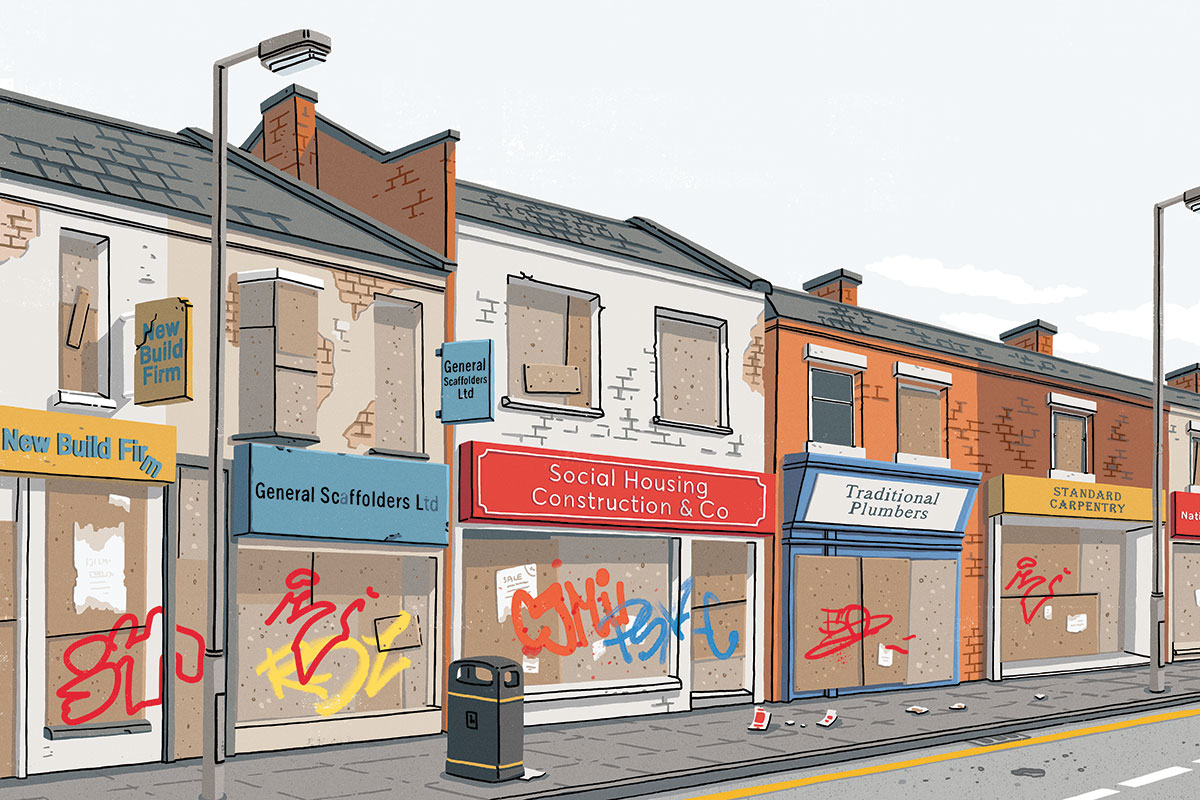
Tying contractors down to do the work is also a recurring theme. Giles Grover, from the End Our Cladding Scandal campaign, says: “I think there’s some contractors that can almost cherry pick what projects they work on, because there’s that many out there.”
Of late, the issue of rising materials costs has also very much loomed on the horizon. It was a problem prior to Russia’s invasion of Ukraine, but has since been ratcheted up by the conflict.
Steel prices in particular have surged amid supply being disrupted across Europe, with Russia being the world’s fifth-largest steel producer. Meanwhile, in March, British Steel hiked its prices by 25% – reportedly its highest-ever one-off increase.
“Just because you see a double-digit increase in materials and product costs, it doesn’t mean you see total building costs rise by double digits”
Noble Francis, economics director at the Construction Products Association, says that steel and aluminium have been affected by a double whammy of a spike in commodity prices and energy, with both materials being energy-intensive products.
He believes there could be “significant impacts” on cladding remediation projects into next year, although he suggests that the spikes could even out within the next six months if there are no further one-off shocks.
He is keen to point out, however, that two-thirds of contractor costs are usually labour costs. “Just because you see a double-digit increase in materials and product costs, it doesn’t mean you see total building costs rise by double digits,” he explains. “Labour costs are still at single-digit inflation.”
Carlton Jones, director of the Metal Cladding and Roofing Manufacturers Association, says he has also noted the sharp rise in steel and aluminium costs since Brexit and the pandemic.
He has seen the price of some steel double from £800 a tonne to £1,600 a tonne. “I know a supplier of coated steel who increased their prices four times over the space of eight or nine months,” he says.
‘Brexit is not sorted’
Supply timescales have also been an issue. “I had a situation where I just wanted a small amount of metal cladding for training purposes, which I would normally have got within a week,” says Mr Jones.
“But it got to the stage where there was an eight-week wait.”
It also depends where products are sourced from. “Steel supply could be from the UK, Europe or the Far East. And people might feel that Brexit is sorted, but as far as the industry is concerned, Brexit is not sorted. The trade agreements and the customs and the CE marking – all of that is causing an issue.”
Jonathan Evans, chief executive and chair of cladding supplier Ash & Lacy, notes the significant impact of the war in Ukraine.
“One of the world’s biggest manufacturers of aluminium is (Moscow-headquartered) Rusal,” he says. “But obviously, due to sanctions, that means around 12% of the world’s global aluminium supply is being affected. That’s not helping the situation.”
In numbers
14%
Increase in overall remediation costs at Northpoint in Bromley
25%
Hike in steel prices by British Steel in March
Mr Evans says the impact on aluminium and steel would normally be worse, but demand from the car industry is down as a result of the global supply shortages of crucial parts stunting vehicle production.
“When that problem sorts itself out, usually the automotive manufacturers are very much the first in line for aluminium and steel and every other industry takes a back seat,” he says. “So that’s more upward pressure.”
Mr Jones says the other issue for cladding remediation projects is the lack of qualified installers. “But there’s an awful lot of work out there and the government wants the remediation projects to happen quickly,” he says.
When contacted by Inside Housing about the issues, a spokesperson for the Department for Levelling Up, Housing and Communities said: “We’ve already allocated over £1bn of funding to remediate buildings and we expect this work to be completed at pace.”
“Our main advice to customers has been to try to be flexible, so don’t necessarily commit yourself to one particular supply chain because if that supply chain has difficulties in procuring some materials for your project, then you’re stuck”
But looking ahead, Mr Evans suggests there is “no light at the end of the tunnel” over cost pressures.
“We’ve been telling people that, if you wait, it’s only going to get worse because there are inflationary pressures on raw materials from all directions, whether it be production, capacity, logistics, labour costs and energy costs. I don’t think that is going to get any better.”
Any other words of advice, then?
“Our main advice to customers has been to try to be flexible, so don’t necessarily commit yourself to one particular supply chain because if that supply chain has difficulties in procuring some materials for your project, then you’re stuck. For remediation projects, our strong advice is for people to remain as generic as possible so they can shop around when they need to.”
It appears certain, though, that these pressures may cause the already protracted remediation process to drag out even further and cost even more. And that is a situation that benefits no one.
Sign up for our fire safety newsletter
Already have an account? Click here to manage your newsletters
Related stories