You are viewing 1 of your 1 free articles
Council takes home from EPC D to A in four weeks with new retrofit model
A London council has taken a property from an Energy Performance Certificate (EPC) D rating to an A in four weeks with a new retrofit model.


 Council takes home from EPC D to A in four weeks with new retrofit model #UKhousing
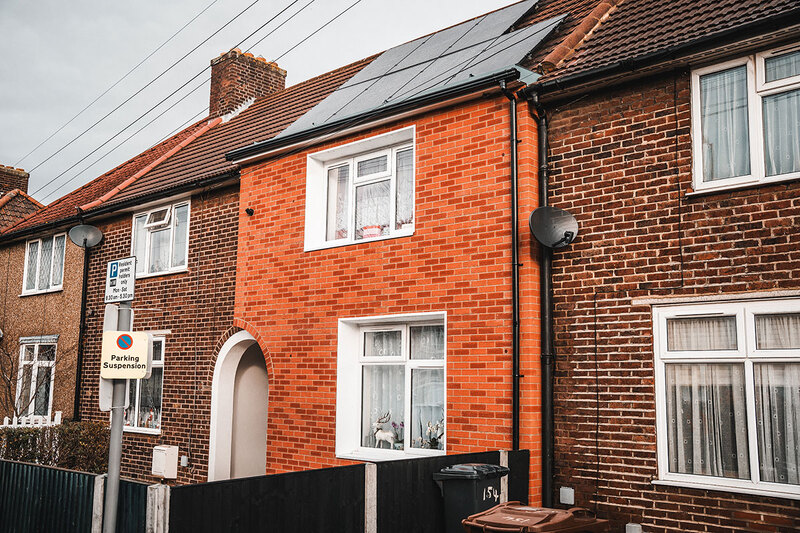
The London Borough of Barking and Dagenham said it took a home on the Becontree estate from EPC D to an A in four weeks, and at half the cost of similar schemes it had worked on in the past.
The council completed the retrofit of the demonstrator home in partnership with Transform-ER, a new community interest company.
The home was fitted with external wall insulation, ventilation, plumbing and solar panels. The demonstrator project was funded by Innovate UK and Thames Freeport, and was carried out in December 2025.
It was the first retrofit delivered by Transform-ER, which was founded by contractor Bow Tie Construction, KIN sustainability consultants Energiesprong UK and data company Planarific.
Read more

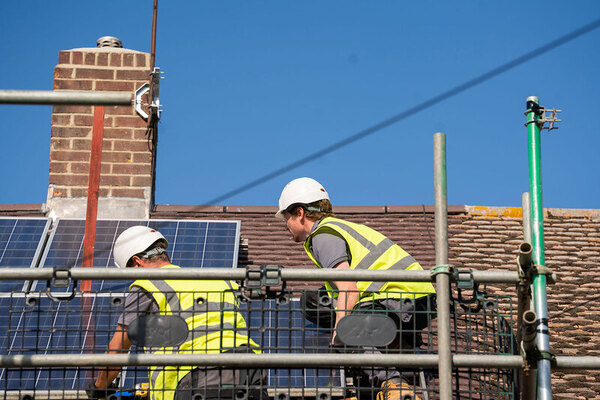
The project’s phased delivery approach was key to its success, Transform-ER said. Preparation and main works were separated with a deliberative buffer.
This was combined with a “highly collaborative” approach to delivery, cross-trade design co-ordination before onsite work, and resident engagement that identified and resolved issues in the home before installation began.
Neil Pearce, head of sustainability at Barking and Dagenham Council, told Inside Housing the council is looking at applying the new model to 50 new retrofits across the same estate.
The council launched a retrofit programme in 2020 and has now completed over 2,000 retrofits, but was struggling with costs and delays on “deep retrofits” that went beyond simple insulation and renewables.
In 2021 it launched a deep retrofit pilot that ended up taking 150 days, “which was not how it was sold to the tenants originally”, he said.
“We wanted to try whole-house retrofit solutions that were manufactured offsite, that could be deployed at scale, at speed, and I think we tested that model to destruction.
“We were trying to do something innovatively but still deploying the same old traditional methods of tenant engagement, of principal contracting. It was a bit of a mess, if I’m honest.”
Transform-ER began when its four member organisations worked together on a 22-month consortium funded by Innovate UK to rethink retrofit delivery and overcome barriers to scale, speed, quality and resident satisfaction.
The community interest company said that the biggest challenges to retrofit include: poor landlord data, which prevents manufacturers planning production; poor resident communication, which drives drop-out rates; and procurement frameworks that do not enable collaboration, meaning everyone carries more risk.
“With this pilot, we’ve learned that we can do the kit-of-parts approach,” Mr Pearce said.
“We can do the fabric first, keep the cost down, and then we can add other bits and pieces to it should we need to.”
Lillian Lochner, project manager at Energiesprong UK, said that once the contractors began work on the house, they realised the windows “had quite a lot of life left in them” so decided not to replace them.
Initially, the idea was to replace the boiler with an air source heat pump, but the boiler “ended up being in really good condition” so the contractors took a “heat pump-ready approach”, sorting the pipework and electrics so a heat pump could be attached in future.
Ms Lochner said the latest project used drone photography to get “proper data from the properties we’re looking at, rather than [a] desktop-type survey”.
The organisations also looked at “incentivising that engagement with tenants, offering them something a little extra”, she said. Tenant-guided improvements such as extra loft storage were built into the retrofit.
Rather than transactional contractor relationships, the project brought together landlords, manufacturers and installers around shared risk and reward.
Ms Lochner said the contractors “weren’t concerned about IP issues”.
She added: “They were trusting and tried to fix technical problems, while working with the resident and making sure the resident was involved and informed at all times.”
Amber Fahey, sustainability associate at Be First, a council-owned urban regeneration company, said councils looking to improve their retrofit programmes should “not be afraid to try something new”, but also to “work with internal teams to get that asset data”.
“Try and get it to be as accurate as possible, to help inform decisions around a wider programme of retrofit,” she added.
Rafael Delimata, director of Bow Tie Construction and Transform-ER, said: “This is the first project where I have walked away feeling genuinely satisfied.
“The conditions were against us from the start: -5°C, a flooded garden, funding deadlines. We delivered anyway, on time and on budget. This method is ready to scale.”
Sign up to Inside Housing’s Sustainability newsletter
Sign up to Inside Housing’s weekly Sustainability newsletter, featuring our in-depth coverage of the sector’s journey to delivering net zero.
Already have an account? Click here to manage your newsletters.
Related stories