Grenfell Tower Inquiry oral evidence completes with final presentations relating to trapped victims
The Grenfell Tower Inquiry’s mammoth second phase completed its oral evidence today, with harrowing presentations relating to a family of five and a group of four residents trapped in the burning building.


 The Grenfell Tower Inquiry’s mammoth second phase completed its oral evidence today, with harrowing presentations relating to a family of five and a group of four residents trapped in the burning building #UKhousing
Across two-and-a-half years and 308 days of evidence, the inquiry has meticulously progressed through mountains of evidence covering the complex backstory to the Grenfell fire, which killed 72 people in June 2017.
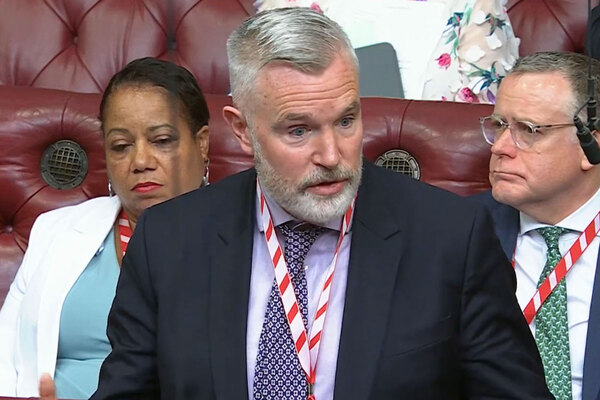
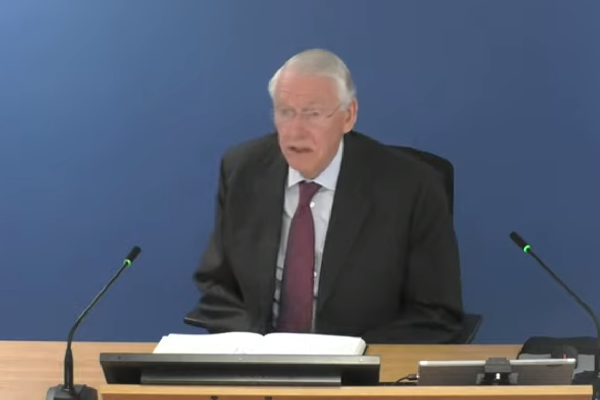
Closing the session today, inquiry chair Sir Martin Moore-Bick did not give a date for the publication of its final report. He said: “As the hearings come to an end, we enter the next stage of our work and it may appear to some that the inquiry is no longer active. But I want to assure you that is not the case.
“The task facing the panel is now one of considerable proportions… When seeking to identify the causes of a major tragedy in which so many people died, it is important that criticism be directed at those who truly bare substantial responsibility for what occurred.
“I cannot say therefore at this stage how long it will take us to produce our report. We are of course acutely aware that all those who have an immediate interest in the outcome of the inquiry, and I think particularly of the bereaved, survivors and local residents need us to complete our work as quickly as possible.
“We ourselves are anxious to do that, but we also know that if our report is to carry weight and the recommendations it contains are to have real force, it must be comprehensive, well reasoned and persuasive. It is not possible to produce a report which meets all of those requirements overnight.”
Read more

Sir Martin asked everyone to “bear with us” as the panel carry on this work. Sources have suggested the publication, which could run to many thousands of pages, is unlikely to emerge before autumn 2023 at the earliest.
The panel must consider more than 300,000 pages of evidence and 15,000 witness statements, as well as the oral evidence.
The inquiry will return for overarching closing statements in the week commencing 7 November, which will need to be taken into account by Sir Martin and the panel.
A police investigation into the events is continuing to gather evidence and build cases against those responsible, but will not progress until the report is published.
Earlier the inquiry had heard details of the tragic deaths of Mohammad Alhajali, Denis Murphy and Zainab and Jeremiah Deen who all died in Flat 113 on the 14th floor.
None of them lived in this flat, but were moved to it by firefighters who reached their floor at 1.51am. The firefighters did not believe they would be able to evacuate the eight people trapped on the floor down the smoke-filled staircase and therefore advised them to stay put in the least affected flat.
The firefighters had tried to radio for help, but their radios were not working and they were running low on air.
A further crew reached the flat at 2.23am after descending from a higher floor and entered it, but did not rescue the residents or, apparently, report their presence to the bridgehead lower in the tower.
A crew dispatched at 2.27am, reached the flat and knocked on the door minutes later.
“The events that follow remain the subject of an evidential dispute,” said lawyer Danny Friedman QC. “However, the tragic result is clear: four of the occupants... were guided down the stairs by the firefighters, while the other four occupants − Denis Murphy, Mohammad Alhajali, Zainab Deen and Jeremiah Deen − were left behind.”
The group were described as “the forgotten ones” by family lawyer Allison Munroe QC.
Despite multiple 999 calls, starting at 1.30am, where call handlers repeatedly assured the residents that they would be found and rescued, no further firefighters reached the trapped group.
Further crews were deployed to the flat, but they were either waylaid by residents they found on the stairs or “inexplicably redeployed to fight fire and carry out general search and rescue on lower floors”.
Members of the trapped group are estimated to have died at various times at around 4am in the morning – more than three hours after the fire started.
Denis, 58, who lived in Flat 111 on the 14th floor, was part of a “large, loving Irish family” and had grown up in Hammersmith, west London.
“The loss of Denis has been immeasurable to the Murphy family,” said Ms Munroe. “The family told me that they had a BBQ this last weekend gone. Denis would have been there, of course had he been alive. There was an empty chair, and that was Denis’.”
Zainab and her two-year-old son Jeremiah lived in Flat 115 and were also moved by firefighters into Flat 113.
Zainab, who was said to have mental health and learning difficulties, had recently secured a tenancy in the flat and a job following a difficult period in her life and was delighted to finally be offering Jeremiah a secure future.
She was described as “beautiful young woman” who “loved being a mother”. “She was so bubbly and fun, and her energy and enthusiasm was infectious,” said one friend in a statement.
During several harrowing calls, Zainab described the worsening smoke conditions in the flat and pleaded for help, telling the operator she had a baby with her.
But she was continually told the fire was in fact lower down the building and advised to place wet towels along gaps in doors and wait for help.
“Zainab is being told she is wrong and she should disbelieve the sight of her own eyes and the sounds of her own ears,” said Ms Munroe. “One can only imagine how this would have been received by someone like Zainab.”
She was occasionally told to “remain calm” and “stop shouting” by call handlers, who also wrote “difficult to understand, possibly African” in notes about the call.
“It is difficult to remain calm when your baby’s life is at risk from smoke and fire raging on the exterior of the building,” said Ms Munroe.
Zainab lost consciousness while on the phone to a firefighter outside the building, who had been passed the phone by her friend Francis. The sound of Jeremiah crying, coughing and falling silent was also audible on the call.
“She said her boy was dead and she wanted to be with him,” said Ms Munroe.
Mohammad also died after being trapped in the flat. Mohammad had come to the UK from Syria in 2014, fleeing the civil war with his two brothers, one of whom was with him in their flat on the night of the blaze.
They had pleaded with firefighters to help them out, but were told to shelter in Flat 113 and await further help. Mohammad’s brother was led out by firefighters, but in the confusion Mohammad was left behind.
He spoke to his brother on the phone shortly before he died, asking to speak to their mother and listening to passages from the Holy Qur’an.
“In 2014, Mr and Mrs Alhajali sent their sons to a safe country to avoid the perils of a civil war,” said Mr Friedman. “In his kindness and his other many qualities… Mohammad represents the very best of those forced to leave their homes to start a better life.
“These are exceptional people and we are so sorry they have lost someone in Mohammed who was so loved and so special to them.”
The inquiry also heard a presentation concerning the El-Wahabi family: Abdulaziz and his wife Faouzia and their children Yasin, Nur Huda and Mehdi.
The family became trapped on the 21st floor after being repeatedly told to stay put by the emergency services during several calls from 1.38am onwards. It is estimated they could have escaped until as late as 2.45am had they been advised to flee.
Abdulaziz’s sister, Hanan Wahabi, who lived in Flat 66 on the ninth floor had fled earlier and was watching the progression of the fire from outside the building.
She repeatedly told her brother to flee with his family, but he remained due to smoke on the landing and the repeated assurance that firefighters would rescue them.
In a call that started at 2.39am, with the family sheltering under the bed, they were finally advised to leave by call handlers.
“I could have got out a long time ago, we could have but they said, ‘Stay in the flat, stay in the flat,” Abdulaziz told the call handler.
“Flat 182 should have been a priority for evacuation as it was known there were children in the flat,” said Ms Munroe.
In contrast, his sister Hanan and her family on the ninth floor had fled in the early stages without calling 999 because fire had penetrated their flat very quickly.
“One branch of the family survived,” said Ms Munroe. “They became aware of the fire early on and fled their flat shortly after seeing the flames. They evacuated, they survived, they lived to mourn their loss and question why.
“The other branch of the family on the 21st floor did not survive. Abdulaziz and his entire family, his beloved wife, his cherished three children, they all died that fateful night.”
The session concluded with Richard Millett QC, lead counsel to the inquiry, reading the names of the 72 victims and a 72-second silence in their honour.
Sign up for our weekly Grenfell Inquiry newsletter
Each week we send out a newsletter rounding up the key news from the Grenfell Inquiry, along with the headlines from the week
Already have an account? Click here to manage your newsletters
Related stories