You are viewing 1 of your 1 free articles
The York and North Yorkshire (YNY) Housing Partnership has launched a new standard for affordable homes, including a framework for Section 106 properties.


The Affordable Homes Standard is the first of its kind to be adopted outside London and sets a “consistent, high-quality benchmark” for all new affordable homes in York and North Yorkshire.
All 23 members of the partnership, which includes Yorkshire Housing, Home Group and Together, have signed up to the standard, as well as two local authorities in the region, City of York Council and North Yorkshire Council.
Those that have signed up to the agreement have pledged only to develop and acquire homes that meet the standard. They have also agreed to collaborate so that they “pay a fair price for high-quality homes”.
Under the agreement, homes must meet National Described Space Standards as a minimum, be “indistinguishable from market sale homes” and reflect local housing need.
Developments must be tenure blind and homes should be accessible or adaptable to suit the changing needs of residents.
The Centre for Ageing Better describes a fully accessible home as a property that has all four basic accessibility criteria that make it visitable for most people. These are: a toilet at entrance level, sufficiently wide doorways and circulation space for a wheelchair, a main entrance free of obstructions, and no steps between the entrance door and pavement.
The charity recently published research that described finding such a home as a “postcode lottery”.
The standards also stipulate that homes should either have high levels of insulation and low-carbon heating systems or be designed to enable easy retrofitting. Developments should also “protect and enhance the natural environment”.
The Section 106 framework requires developers to align with the sustainability and environmental targets of providers, agree fire strategies at an early stage and provide information requested under the Housing Ombudsman’s complaint-handling code on time.
A recent report from the National Audit Office said that a lack of transparency in Section 106 agreements and concerns over the quality of homes have led to social landlords avoiding taking on properties.
This new standard also covers the inclusion of mortgage protection clauses and stipulates that service charges should be minimised and a two-year defect liability period should be included in the contract.
Nick Atkin, chair of the YNY Housing Partnership and chief executive of Yorkshire Housing, told Inside Housing that the partnership has a set of shared priorities that were “reviewed last year to align more closely” with the mayor of York and North Yorkshire’s housing ambition for the region.
The standard started from that review and was extended beyond applying only to Section 106 homes to “every single new home that’s built across the region for social or affordable rent”, he said.
“It’s that shared commitment by all of us in the partnership to raise the bar on design, energy efficiency and long-term sustainability and create homes that are going to last and adapt to changing needs, as well as supporting communities,” Mr Atkin said.
“Our take on this is that it won’t cause problems for the vast majority of developers, because it’s simple things like meeting National Described Space Standards,” he said.
“If you’re building homes now, and given the cost of living crisis that we’ve been through for the last three years, why wouldn’t you be increasing levels of insulation and reducing your carbon footprint?”
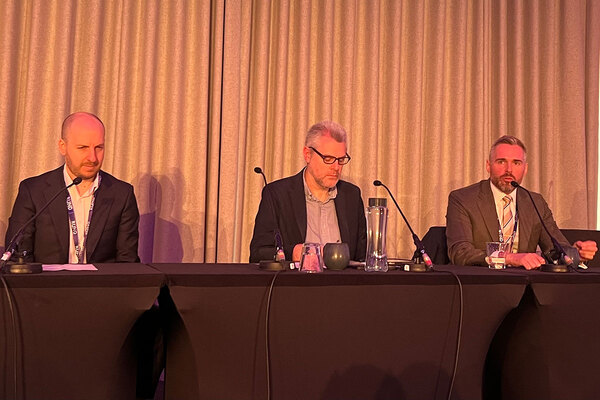
The standard was formally launched in York last week (4 July) at an event attended by David Skaith, mayor of York and North Yorkshire, the leader of City of York Council and the executive member for housing from North Yorkshire Council.
In April, the G15 group of London landlords published its own guidance for successful collaboration between social landlords and developers, stressing early engagement on new projects.
Already have an account? Click here to manage your newsletters
Related stories