You are viewing 1 of your 1 free articles

Safeguarding children
We must not forget our role in protecting children from abuse and neglect, says Michelle Meldrum




As housing providers, we are currently dealing with a range of challenges including welfare reform, the rent decrease, new housing supply models, rationalisation in some organisations and rapid growth in others.
However, we should never forget the significant role we can play in safeguarding vulnerable children and young people, particularly those living in our tenancies.
Every child deserves the opportunity to grow up in a home that is decent, safe and secure… not just in terms of the physical environment, but the emotional aspects too.
Child abuse and neglect can happen to any child, in any family setting, in any home.
This has been highlighted recently in the high-profile historic child abuse cases such as those involving Jimmy Savile.
Abuse and neglect is more frequent in families who struggle to raise their children due to poverty, homelessness, social isolation and other challenges they face in their lives.
The sobering statistic that over half a million children are abused in the UK every year (source: NSPCC (2013) How Safe are our Children?) should make us all sit up and want to do something to improve this unacceptable situation.
So what can we do? As a housing sector the answer is ‘lots’.
For the purposes of this article I will focus on the following three key issues:
- Leadership and buy-in from the top
- Early identification through spotting the signs
- Partnership working and information sharing
“Abuse and neglect is more frequent in families who struggle to raise their children due to poverty, homelessness, social isolation and other challenges they face in their lives.”
Leadership and buy-in from the top
To truly instil a passion for safeguarding across an organisation, it must be led from the top.
The importance of the agenda and an understanding of the positive impact we can have as a housing provider must be understood and championed by senior leaders.
The agenda should therefore be recognised at both a strategic and operational level. It is clear that services work best when there are strong relationships at both levels.
When was the last time this issue was discussed at your leadership team meeting?
Early identification
All of our frontline staff can get involved in identifying the signs of abuse and neglect at the earliest stage.
This of course requires some level of investment in training and communication. We need to train staff on what to look for and how to report any relevant observations in a way that keeps everyone safe.
Across the sector, consider the number of face-to-face customer interactions frontline housing and maintenance practitioners have with tenants and their families each year.
Nationally, this is mind-blowing and provides us with the opportunity to make a dent in this disease that is child abuse.
Partnership working and information sharing
If your organisation is not proactively involved with local safeguarding children partnerships and processes, then I would encourage you to get involved.
Poor housing, homelessness and high mobility all feature highly in serious case reviews which are carried out when a child has died or suffered serious harm. The reviews aim to establish whether lessons can be learned from the case.
Multiple house moves are often part of a proactive plan by abusers to avoid being challenged by social care departments, however, in some cases it may be involuntary and be a sign of complete instability and chaos.
Information sharing protocols between children’s services and housing providers can provide critical information which may lead to housing stability for children and their families which can reduce the risk of local authorities losing track of vulnerable children.
There may be families that under normal circumstances would be excluded from your housing list, however, we must, as responsible businesses, weigh up the whole situation and consider the impacts on these vulnerable children when making such decisions around rehousing.
In summary, there’s lots going on for all of us at the moment and with the significant challenges facing the housing sector, it is sometimes easy to forget or dilute our focus on important matters such as our role in protecting the most vulnerable including the children that live in our homes.
I would urge you not to let this slip. Now, more than ever, our input and involvement is required in this agenda.
If you’re not currently involved, please get involved. We really can make a difference.
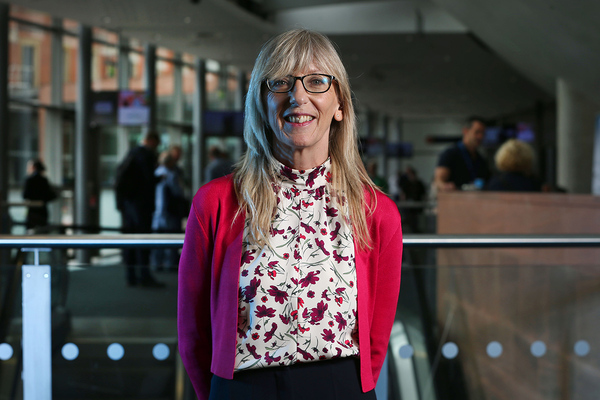
Michelle Meldrum, managing director, Gentoo Operations
Related stories